



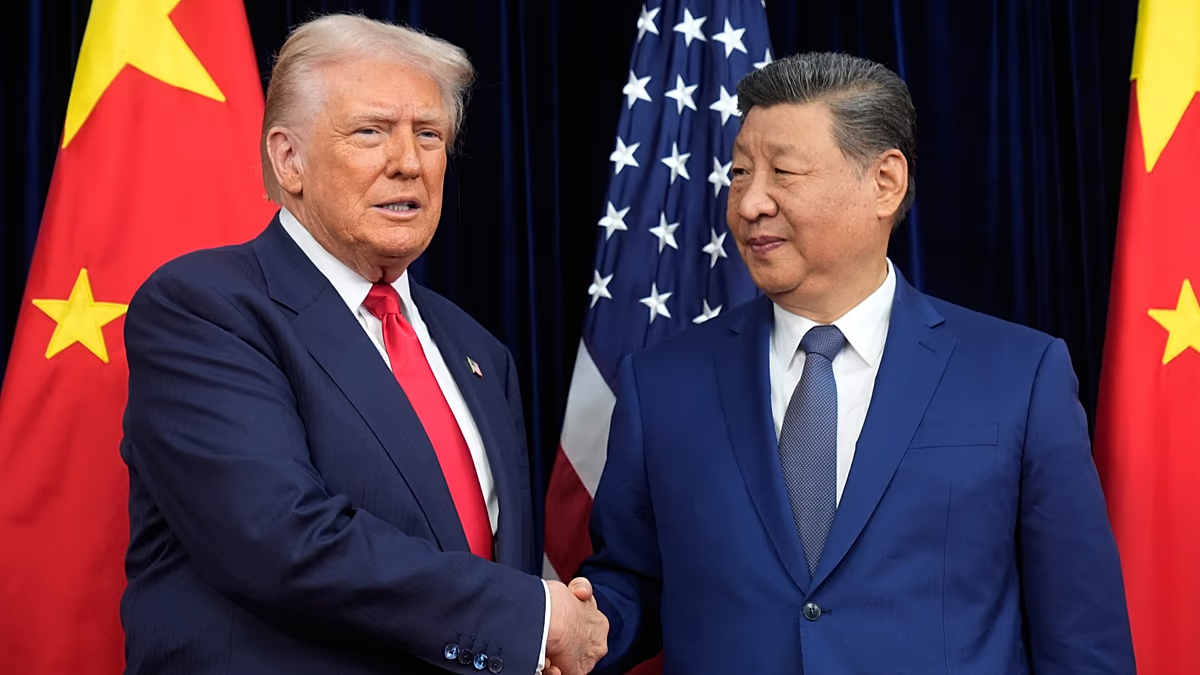
In a significant diplomatic engagement, the world’s attention turns to Beijing as U.S. President Donald Trump prepares for a three-day state visit to China, commencing on Wednesday, May 13th. The invitation, extended by Chinese President Xi Jinping and formally confirmed by a Chinese foreign ministry spokesperson, marks a high-level attempt to navigate the complex and often contentious relationship between the globe’s two foremost powers. This visit, the first by a sitting U.S. president in nearly a decade since Trump’s own 2017 trip, carries the weight of both history and immediate geopolitical necessity. As noted by U.S. Principal Deputy Press Secretary Anna Kelly, the journey holds “tremendous symbolic significance,” serving as a public testament to the ongoing dialogue between Washington and Beijing, even amidst profound disagreements.
The symbolism, however, is underpinned by a pressing agenda of hard-nosed negotiation. Central to the discussions between the two leaders will be the intertwined issues of trade and Iran. President Trump is expected to urge President Xi to leverage China’s considerable economic and political influence with Tehran to pressure the regime into striking a new deal with Washington. This request places China in a delicate position, as it remains a key customer for Iranian oil, a relationship that provides Iran with a crucial economic lifeline and China with a strategic energy source. The visit thus becomes a stage where global energy markets, non-proliferation concerns, and great-power diplomacy converge, testing the practical limits of the leaders’ much-publicized personal rapport.
Indeed, the personal dynamic between Trump and Xi forms a unique backdrop to these tense negotiations. President Trump has frequently praised his relationship with the Chinese leader, describing it as “extremely good” and vital to maintaining positive ties between the nations. This personal chemistry, often highlighted in Trump’s social media posts, offers a channel of communication that can sometimes bypass more rigid bureaucratic structures. It introduces a human element into a relationship often defined by abstract forces like GDP numbers and military budgets. Yet, this camaraderie exists in stark contrast to the substantive rifts dividing the two countries, reminding observers that warm words between leaders do not automatically resolve deep-seated national conflicts.
Those conflicts are substantial and will loom over every handshake and banquet. Beyond Iran, the United States and China remain deeply at odds over trade tariffs, a legacy of a recent economic struggle that has affected global supply chains and markets. Furthermore, the perennial issue of Taiwan—which China claims as an inalienable part of its territory—represents a persistent flashpoint with the potential to derail broader relations. The U.S. maintains unofficial but robust ties with the self-governing island, a position Beijing views as a challenge to its core sovereign interests. These issues illustrate that for all the focus on personal diplomacy, the summit is a meeting between two nations with fundamentally different visions for the international order and their respective places within it.
The meticulously planned schedule for the visit reflects its blended nature of ceremony and substance. According to the White House, President Trump’s itinerary will include a formal welcome ceremony, a critical one-on-one meeting with President Xi, and a cultural tour of the historic Temple of Heaven in Beijing. The following evening will feature a state banquet, an event rich in diplomatic tradition and pageantry. The visit will conclude on Friday with a working lunch between the two presidents before Trump’s departure. This structure, alternating between private talks and public displays of mutual respect, is designed to foster negotiation while presenting a united front to the world, signaling a commitment to manage disagreements without succumbing to outright hostility.
This visit, originally anticipated for late March but postponed due to regional tensions, ultimately proceeds at a pivotal moment. It represents not a resolution to the myriad disputes between the United States and China, but a necessary act of sustained engagement. As Anna Kelly emphasized, President Trump “never travels for symbolism alone,” and the American public will expect tangible outcomes. Whether the discussions yield progress on Iran, trade, or other issues, the very act of meeting face-to-face serves a crucial purpose: it keeps the lines of communication open between two giants whose decisions irrevocably shape the security and prosperity of the entire planet. In an era of strategic competition, that ongoing conversation, however difficult, remains indispensable.