


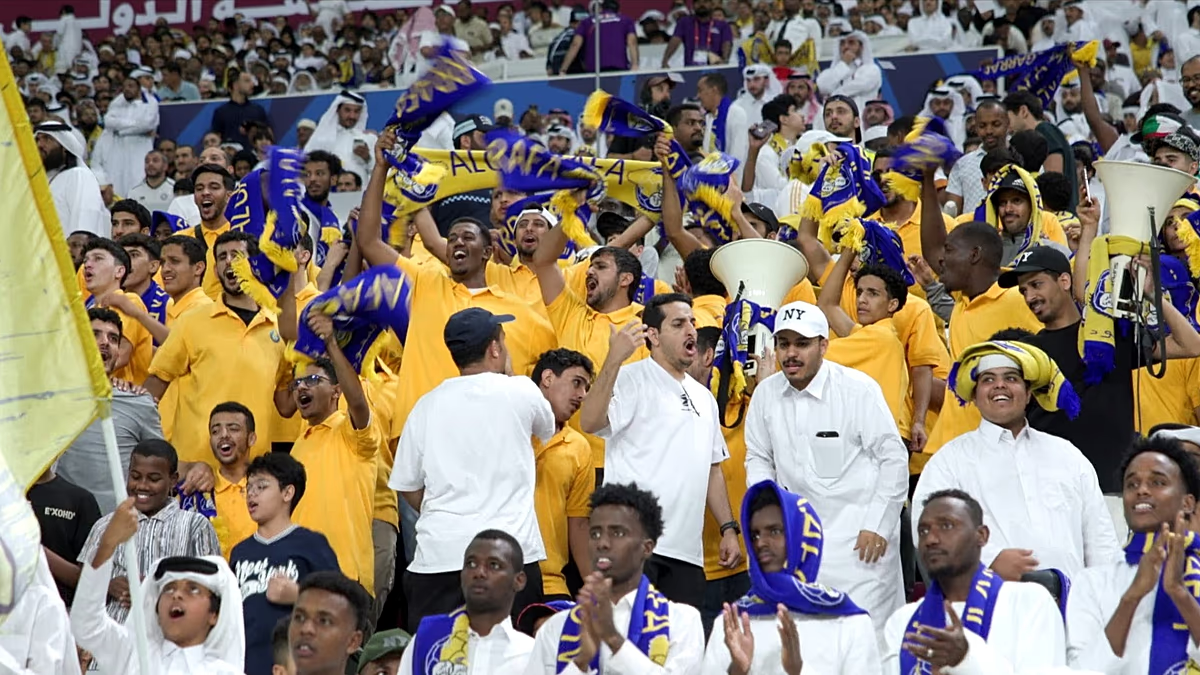
On a warm Saturday evening in Doha, the floodlights of Khalifa International Stadium shone as a beacon, drawing a crowd of 37,823 fans into its embrace. This was no ordinary match; it was the Amir Cup final, a clash between Al Gharafa SC and Al Sadd SC that transcended sport. For many in attendance, the event symbolized a profound and collective sigh of relief. The match unfolded against a backdrop of recent regional tensions that had cast a pall over daily life, keeping people cautious and indoors. The vibrant, packed stadium, therefore, represented more than a championship decider—it was a powerful, visible declaration that community life and public joy were reawakening. As the players took to the pitch, the roar of the crowd signaled that football was once again taking center stage in Qatar, serving as a unifying force and a catalyst for a return to normality.
Inside the stadium, the atmosphere was electric, a vivid tapestry of sound and color. Supporters waved flags, sang anthems throughout the match, and created a wall of noise that fueled the action on the field. The game itself was a showcase of sporting dominance, with Al Gharafa SC securing a decisive 4-1 victory to retain the prestigious Amir Cup title. However, the true story was written in the stands. For an Indian expat attending her first football match in Qatar, the experience was deeply emotional. She recounted arriving in the country just as tensions escalated, describing a landscape where “people were nowhere to be seen.” Now, surrounded by tens of thousands of cheering fans, she marveled, “I can say maybe the whole Qatar is here. It feels delightful… I can see that Qatar is living again.” Her words captured a shared sentiment of rediscovery and communal healing.
This sense of restored normalcy was a recurring theme among families who had come to share the experience. One fan, attending with his two children, highlighted how the simple act of bringing his family to a major public event helped dissolve the lingering stress of recent weeks. “After the stress days, we feel more comfortable. Everything is perfect actually,” he shared, adding with gratitude, “Alhamdulillah, life became normal again. Everything is safe.” These personal reflections underscored the event’s deeper social significance. It wasn’t merely a distraction but a restorative ritual, a collective step back into a rhythm of life marked by celebration, shared excitement, and public togetherness, free from fear.
The ceremonial significance of the evening was elevated by the presence of His Highness The Amir Sheikh Tamim bin Hamad Al Thani, who attended the final and later crowned the victorious Al Gharafa team. His presence underscored the cup’s national importance. Ali Al Salat, Head of Media for the Qatar Football Association, framed the event as a deliberate celebration for the people. Speaking to Euronews amid the festivities, he expressed joy at seeing order restored, stating, “Today we have the prestigious competition, which is the Amir Cup. So it’s a time to celebrate football with fans.” He noted that the return of fans had been building through league matches, describing this final as “the cherry on the cake” of the season—a perfect culmination of football’s return to its central role in Qatari culture.
Adding a layer of historic nostalgia to the night was the venue itself. The final serendipitously marked the 50th anniversary of Khalifa International Stadium, one of the nation’s oldest and most revered sporting arenas. The iconic stadium, having witnessed decades of athletic triumphs, now provided the stage for a different kind of victory: the triumph of community spirit over uncertainty. Long after the final whistle confirmed Al Gharafa’s win, the celebrations continued. Fans lingered in the stands and on the pitch, savoring the moment, reluctant to let the night end. The stadium, filled with the echoes of cheers and songs, stood as a testament to resilience, hosting not just a football match but a powerful affirmation of a society moving forward together.
In the end, the 2026 Amir Cup final was remembered not only for Al Gharafa’s commanding performance but for its role as a societal turning point. It demonstrated the unique power of sport to gather people, to heal communal anxieties, and to loudly proclaim a return to joyous normalcy. From the expat feeling the pulse of a nation anew to the father sharing a safe adventure with his kids, the event wove individual stories into a larger narrative of recovery. The images of a packed, jubilant stadium, crowned by the Amir himself, sent a clear message to the world: through football, Qatar had not just hosted a final, but had celebrated its enduring spirit and the resilient hope of its people.