


Here is a humanized summary, expanding the provided details into a comprehensive narrative while adhering to the requested structure.
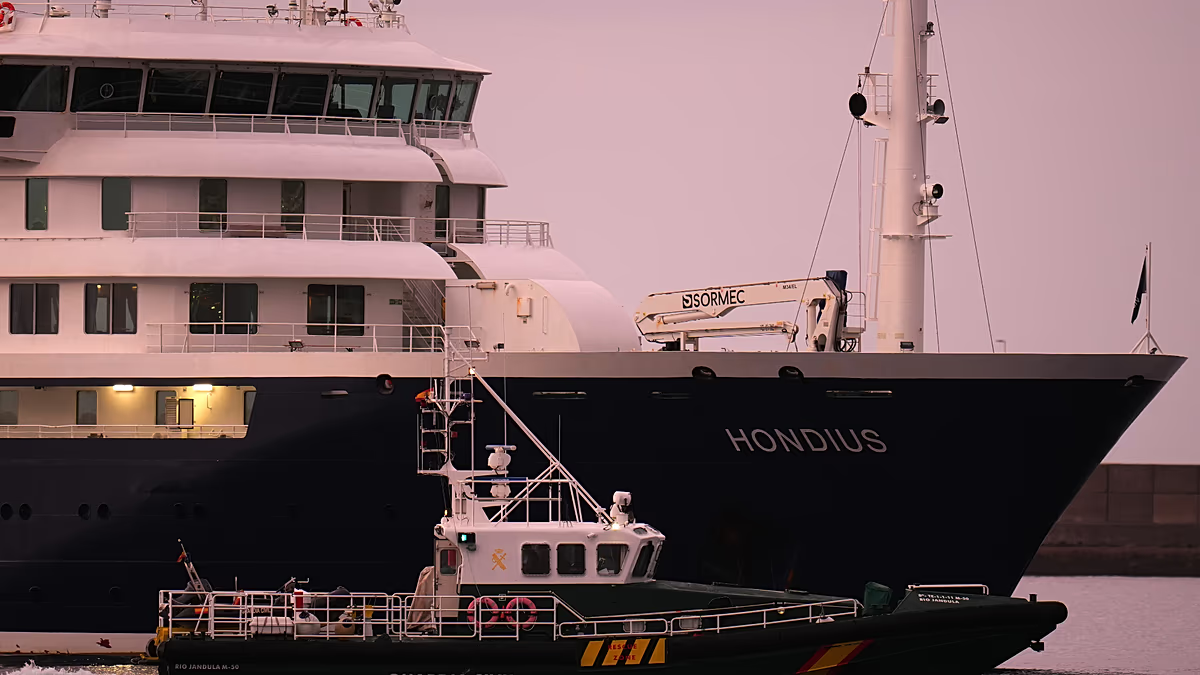
The tranquil arrival of the cruise ship MV Hondius at Granadilla port in Tenerife on Sunday was overshadowed by an atmosphere of cautious urgency. Instead of the usual scenes of joyful reunions and holiday beginnings, the operation unfolding on the quayside was one of meticulous, clinical precision. The ship, now infamous as the “hantavirus-hit” vessel, sat anchored offshore, its festive purpose transformed by the shadow of a public health alert. Small boats, acting as sterile ferries, began the delicate process of shuttling passengers to land. Each traveler was clad in protective gear—a visual reminder of the unseen threat that had rerouted their voyage from a pleasure cruise to a controlled evacuation. This was not a disembarkation; it was a carefully staged extraction, designed to safeguard both the individuals on board and the community on shore.
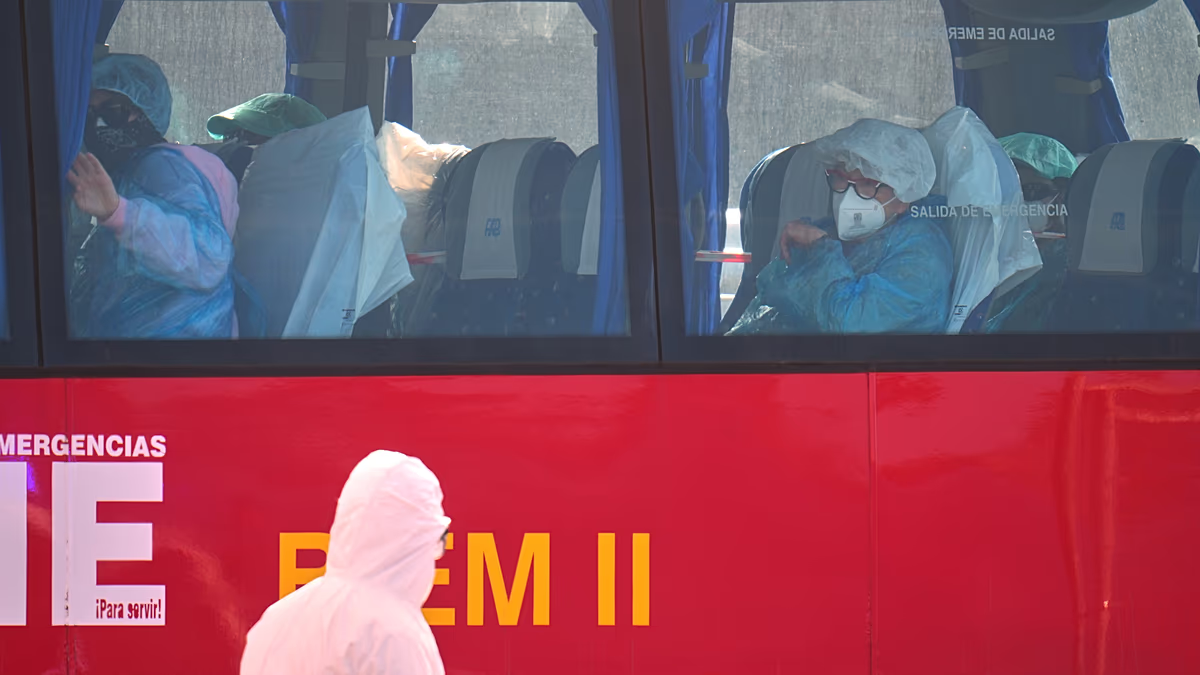
On the docks, a fleet of buses stood waiting, their purpose clearly medical rather than touristic. The footage circulating from the scene showed passengers boarding these vehicles under the watchful eyes of health and port authorities, every movement governed by tight protocols. The process was orderly and silent, stripped of the usual cruise terminal chaos. Spanish nationals were prioritized in this first phase, a practical decision likely aimed at streamlining initial logistics and integrating them into domestic healthcare and quarantine systems more efficiently. This prioritization, while administrative, carried a human element—it meant that those closest to home would be the first to reach a place of definitive safety and information, alleviating anxiety for them and their families.
A critical, reassuring detail underpinned this tense operation: authorities confirmed that no one on board was currently showing active symptoms of hantavirus. This fact was the linchpin of the entire strategy. It meant the response was proactive, a precautionary containment to prevent a potential outbreak rather than a reaction to an ongoing one. The virus, which can be spread through contact with infected rodents or their droppings, poses serious health risks, including respiratory and renal complications. By acting while the threat was still latent, officials aimed to create a firewall against its spread. The focus shifted from treating illness to preventing it, allowing for a managed evacuation rather than a medical crisis.
The human dimension of this event stretches far beyond the port. For the passengers, this marked a brutal interruption of their journey, replacing relaxation with uncertainty. Their memories of the voyage would now be defined not by destinations visited, but by protective suits worn and emergency buses boarded. The crew, too, faced extraordinary pressure, having to manage both the routine operations of a ship and the exceptional demands of a bio-hazard alert. Meanwhile, for the residents of Tenerife, the arrival of the ship brought a mix of professional duty and community concern, as local services mobilized to execute a plan that balanced compassion with rigorous safety.
With the passengers safely transferred to medical facilities for assessment and to Tenerife South airport for their eventual journeys home, the story of the MV Hondius was set to enter a final phase. Authorities announced that the now-empty vessel would continue its journey northward to Rotterdam. There, in a dedicated port facility, it would undergo a thorough and complete disinfection process. This deep cleanse is the essential final step to reset the ship’s status from a potential health risk back to a safe passenger vessel. It represents the systemic closure of the incident, ensuring that the physical environment that may have harbored the pathogen is rendered safe for future crews and travelers.
In conclusion, the event at Granadilla port stands as a stark example of modern crisis management in a globally connected world. It showcased a chain of response: from initial detection and alert, to a coordinated, precautionary evacuation executed with clinical calm, and finally to a planned remediation of the source. While driven by science and protocol, the operation was fundamentally human—protecting lives, managing fear, and ultimately aiming to restore normalcy for all involved. The buses departing Tenerife carried not just passengers, but a collective sigh of relief that a potential crisis had been contained through vigilance, coordination, and decisive action.