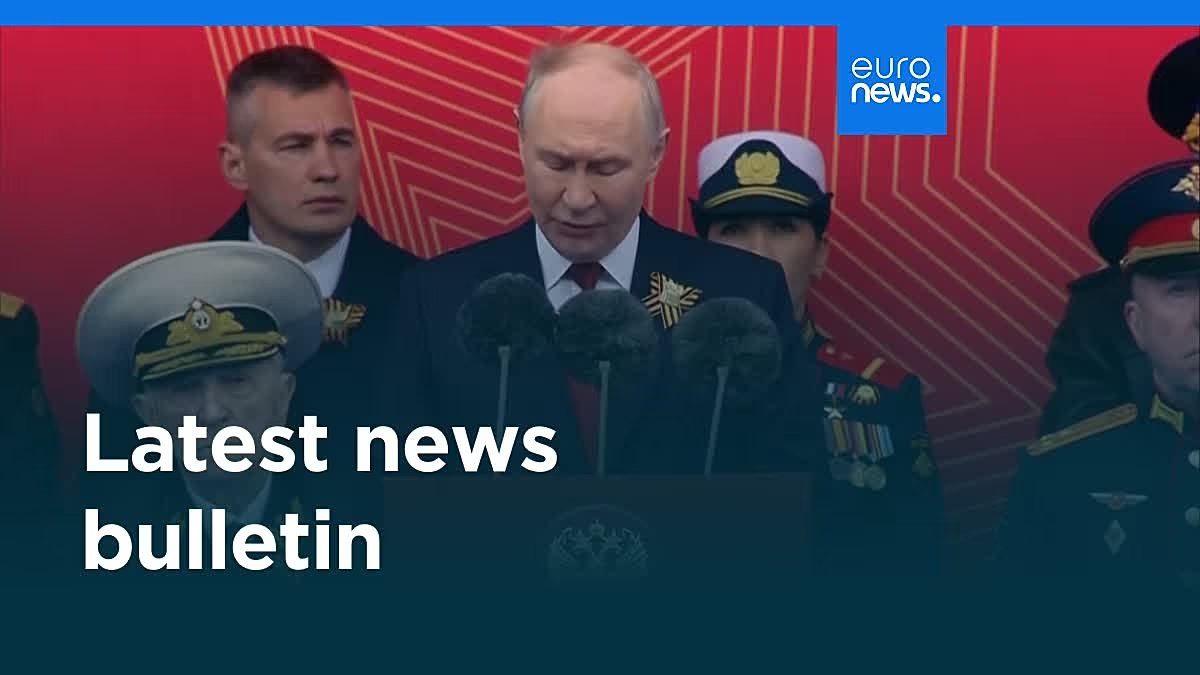



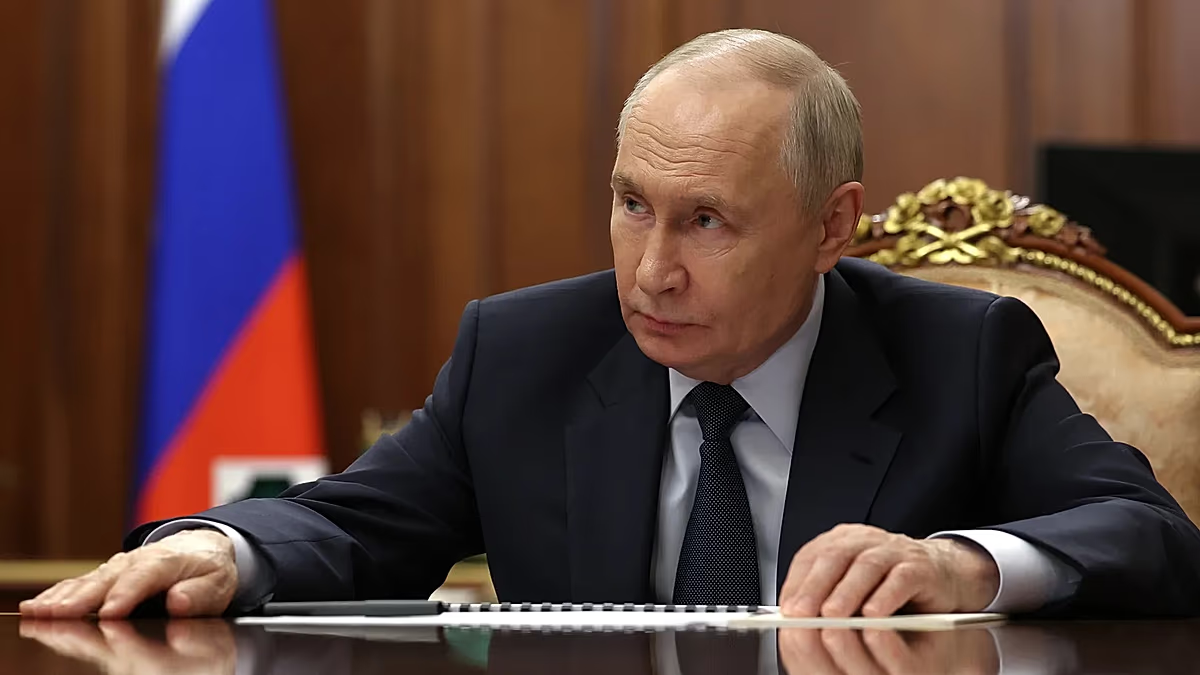
On a somber and scaled-down Victory Day in Moscow, Russian President Vladimir Vladimir Putin declared that the war in Ukraine was “heading to an end,” while simultaneously lashing out at Western nations for their sustained support of Kyiv. The annual parade, which commemorates the Soviet defeat of Nazi Germany, has been a cornerstone of Putin’s narrative of Russian resilience and greatness. This year, however, the event was starkly diminished—absent of the usual gleaming military hardware and attended only by a handful of allied leaders—a visual testament to the strain and insecurity brought by the prolonged conflict. In his address, Putin framed the ongoing invasion as a continuation of the historic fight against aggression, telling soldiers they were confronting a force “armed and supported by the entire NATO bloc,” and insisting that Russia’s cause was “just.”
The atmosphere in Moscow contrasted sharply with the official rhetoric. Security concerns due to recent Ukrainian long-range attacks led to intermittent internet shutdowns, casting a practical and symbolic shadow over the day. Public fatigue was palpable; one economist interviewed simply stated, “Nothing,” when asked about her feelings on Victory Day, prioritizing her need for internet access over the parade. This disconnect highlights a nation grappling with the realities of a four-year war that has evolved into Europe’s deadliest conflict since World War II itself. The pared-back ceremony, with leaders from only Belarus, Malaysia, Laos, Uzbekistan, and Kazakhstan in attendance, stood as a muted symbol of Russia’s current geopolitical isolation compared to previous years.
Putin’s comments following the parade expanded on his complex position. He accused Western countries of having “ratcheting up the confrontation with Russia,” claiming they had anticipated a collapse of Russian statehood and were now “stuck in that groove.” While asserting the conflict’s trajectory toward an end, he underscored it remained “a serious matter.” On the prospect of peace talks, he set a stringent condition: a meeting with Ukrainian President Volodymyr Zelensky could only occur in a third country after all terms of a potential agreement were settled, not as a starting point for negotiation. This stance emphasizes Russia’s insistence on predetermined outcomes rather than open diplomacy.
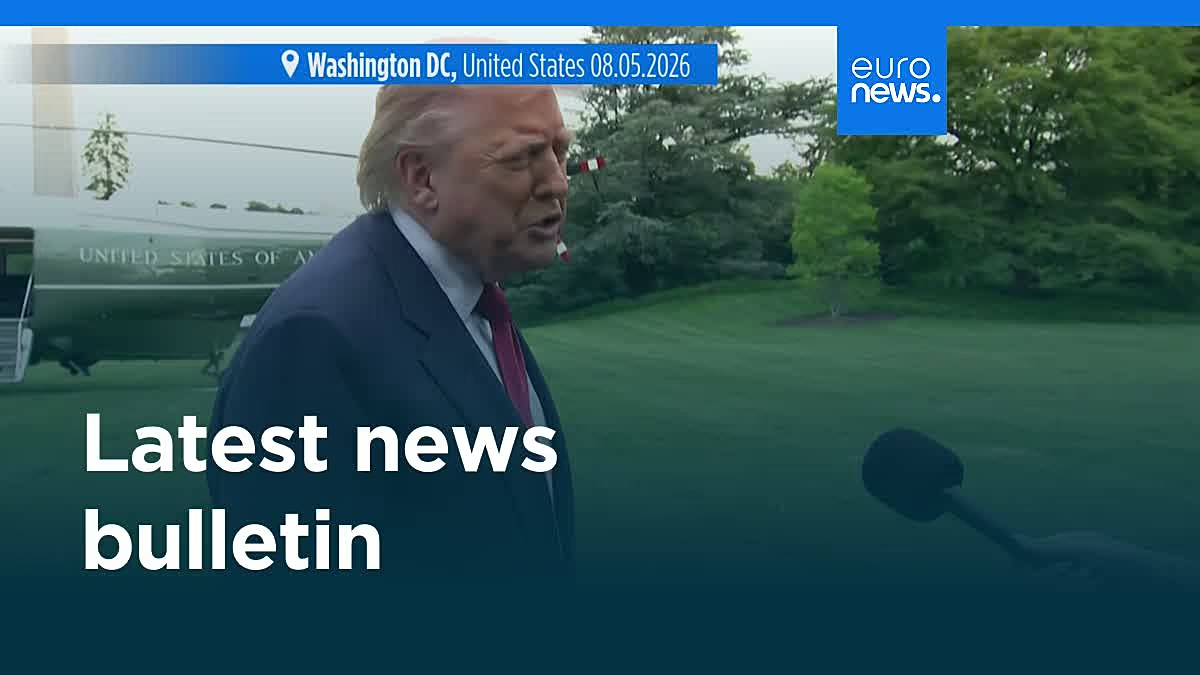
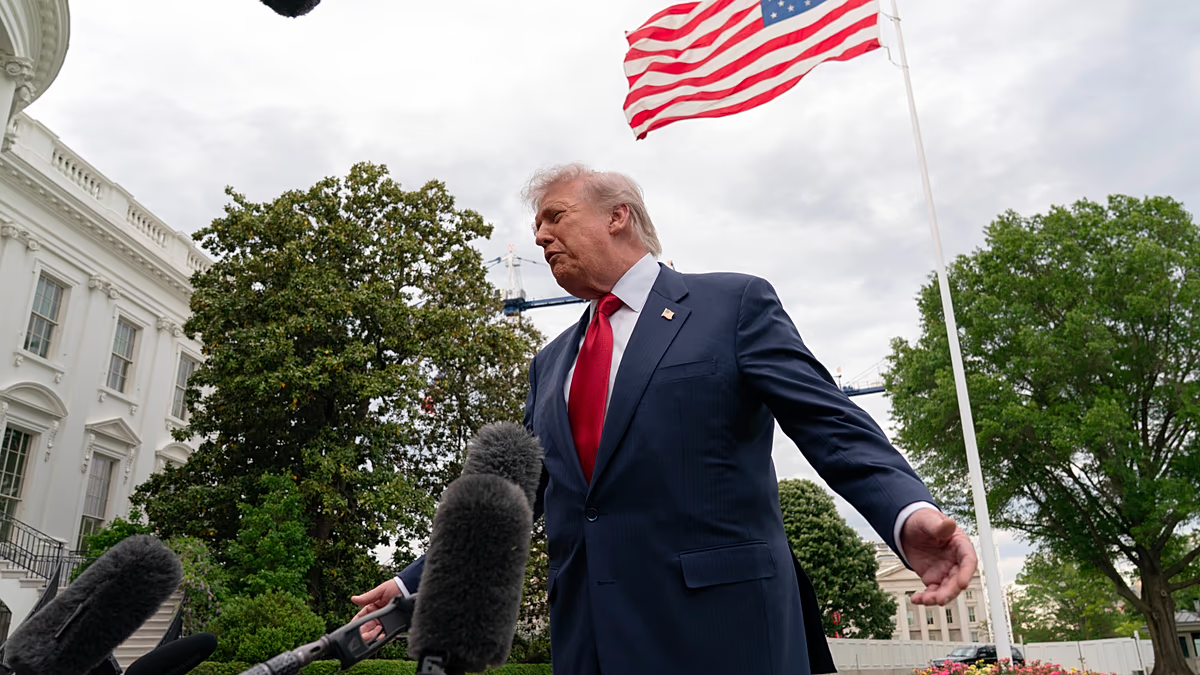
Meanwhile, the first day of a three-day ceasefire, brokered by U.S. President Donald Trump and announced just the day prior, unfolded with familiar tensions. Both Moscow and Kyiv accused each other of violations, though no major strikes were reported. The ceasefire was intended to accompany a large-scale prisoner exchange—1,000 prisoners from each side—yet Putin claimed Russia had not received any formal proposals from Ukraine on the matter. Trump expressed optimism on his social media platform, stating, “Hopefully, it is the beginning of the end of a very long, deadly, and hard fought War.” However, the Kremlin indicated there were no current plans to extend the truce beyond the initial three days, leaving its longer-term impact uncertain.
This moment represents a fragile and contradictory juncture. Putin’s declaration of a winding-down war conflicts with his continued mobilization of historical mythos to justify the ongoing “special military operation.” The scaled-down Victory Day parade itself can be read as both a security necessity and a metaphor for a war that has drained resources and morale. The U.S.-mediated ceasefire, while a significant diplomatic intervention, immediately faced the trust deficits that have plagued all previous attempts at truces. The prisoner exchange, a potential humanitarian breakthrough, remained mired in procedural disputes even as it was announced.
Ultimately, the events of this day encapsulate the entrenched nature of the conflict. There are gestures toward de-escalation—a ceasefire, talk of an end, prisoner swap plans—yet these are enveloped in accusations, conditional demands, and palpable public weariness. The war, now in its fifth year with hundreds of thousands lost, persists as a brutal stalemate. The path to a genuine conclusion remains obscured by profound mistrust, competing narratives of justice and aggression, and the sheer inertia of a “very long, deadly, and hard fought War.” The reduced parade in Moscow, devoid of its usual pomp, may be the most honest reflection of the current state: a nation marked by conflict, both projecting strength and revealing its costs.