

In a world of jam-packed itineraries and “must-see” lists, a quiet revolution in travel is taking root. The trend of the “calmcations” has emerged as a powerful antidote to the exhaustion of modern life, prioritizing deep rest, mental reset, and gentle connection over ticking off landmarks. While this concept might naturally conjure images of remote cabins or silent retreats, the beauty of this movement is its accessibility. You don’t need to flee to a distant wilderness to find peace; the urban calmcation is a testament to the fact that serenity can be cultivated even within the bustling heart of a city, transforming a familiar metropolis into a sanctuary for the soul.
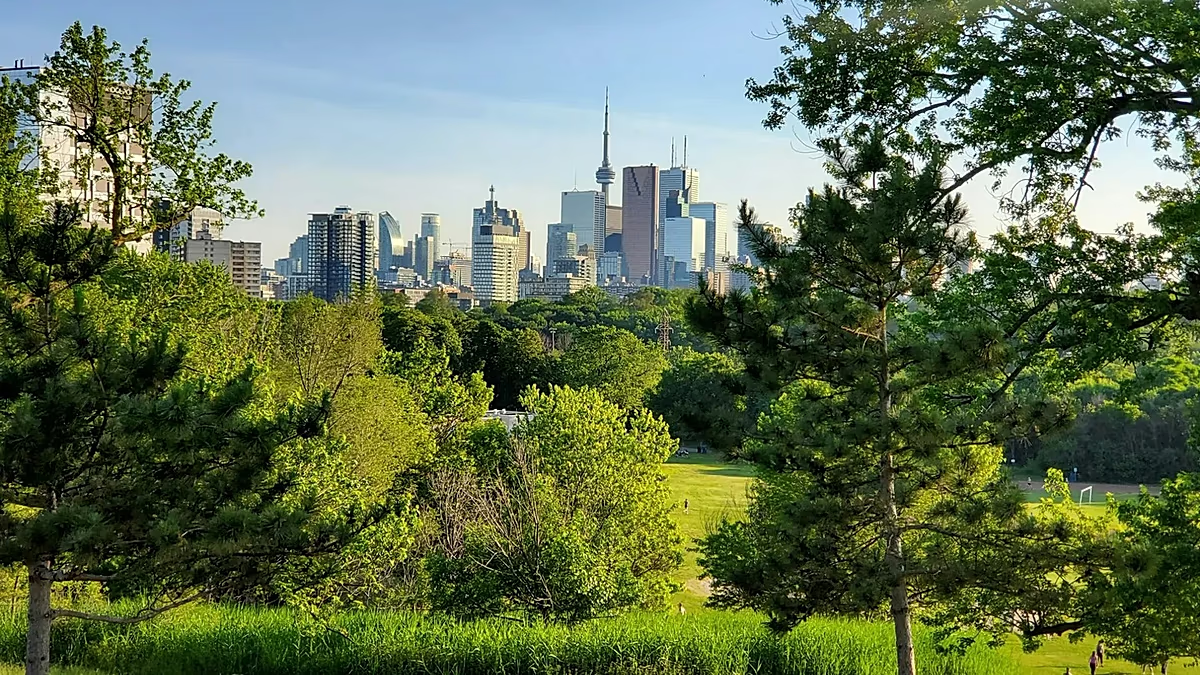
The cornerstone of any calmcation, urban or otherwise, is a tangible connection to the natural world. Science consistently shows that time in green spaces reduces stress, lowers blood pressure, and lifts our mood. Fortunately, cities are often laced with these vital oases. One can escape the concrete jungle not by leaving it, but by diving into its green lungs. Imagine a bracing hike up the dramatic volcanic rise of Arthur’s Seat in Edinburgh, where the cityscape falls away to reveal sweeping vistas. In Paris, the rewilded Petite Ceinture railway line offers a secret corridor of wildflowers and birdsong, running parallel to the ring road yet feeling a world apart. Even in vast London, Richmond Park’s 2,500 acres of ancient woodlands and roaming deer provide a profound sense of rural escape. These spaces remind us that nature is not a separate destination, but a layer woven into the urban fabric, waiting to be explored with quiet intention.
An urban calmcation requires a conscious shift in pace, a deliberate embrace of slow living. This means swapping crowded commercial avenues and crowded attractions for the city’s quieter, more authentic rhythms. Instead of a hectic department store, seek out the independent shops and weekly markets of a residential neighbourhood, like Florence’s Oltrarno district or Barcelona’s innovative Poblenou. The simple act of buying groceries becomes a sensory and communal experience. Crucially, find a peaceful perch—a café nestled in a park, such as the 19th-century greenhouse of Serra dei Giardini in Venice or a garden café in Berlin’s botanical gardens. Here, with a book or a journal, and ideally a temporary digital detox, you can practice the art of simply being. It’s about listening to the city’s hum without being overwhelmed by it, observing daily life as a gentle participant rather than a frantic consumer.
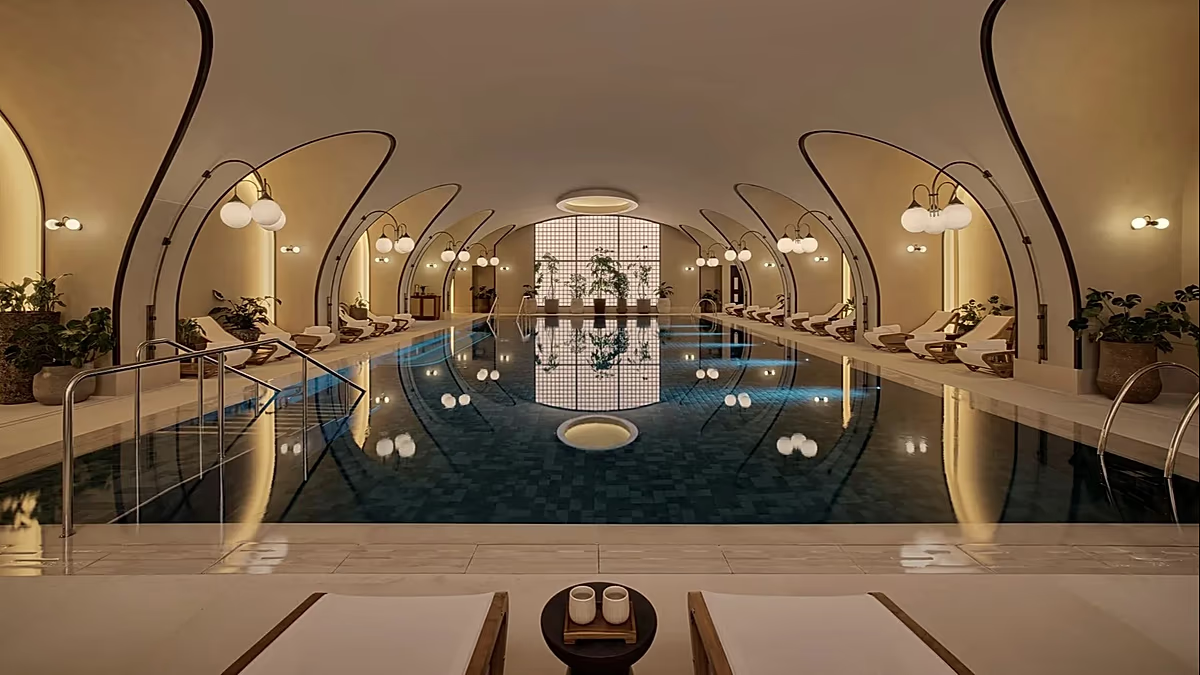
Furthermore, the global wellness movement has beautifully infiltrated cityscapes, moving beyond the domain of luxury spas. Urban wellness is now about accessing local traditions and communal facilities that promote holistic well-being. In Milan, the stunning Terme di Montel, set within historic stables, offers a sprawling thermal water park with pools and saunas right in the city centre. For the authentic sauna experience, Tampere, Finland, is a global capital, boasting over 50 public saunas, including rustic smoke and lakeside options. Oslo’s harbour-front saunas, like Sørenga Badstue, combine Nordic tradition with stunning urban views, while Istanbul’s historic hammams offer a deeply ritualized cleansing of both body and mind. These practices invite you to partake in age-old local rituals of heat, steam, and massage, integrating wellness into your day as a cultural activity rather than an isolated treatment.
The invigorating practice of wild swimming also finds its urban expression, offering a potent blend of physical challenge and mental clarity. Cities built on rivers or lakes provide accessible, exhilarating spots for a cold plunge. In London, the network of historic lidos like Brockwell or the naturally filtered Hampstead Heath Swimming Ponds offer a cherished, year-round tradition. In Munich, locals and visitors alike brave the clear, cold currents of the Isar River flowing through the city, and in Zurich, orderly badis (bathhouses) like Seebad Enge provide structured access to the pristine waters of the lake. This elemental connection—the shock of cool water, the rhythm of your breath, the feeling of buoyancy—is a powerful reset button, washing away mental clutter and fostering a profound, immediate presence that is the very essence of a calmcation.
Ultimately, the urban calmcation is a mindful reimagining of the city itself. It is an invitation to peel back the hectic top layer and discover a parallel city of quiet parks, neighbourhood haunts, restorative traditions, and hidden waterways. It proves that a truly restorative break does not require a long-haul flight to an exotic locale, but rather a shift in perspective right where you are. By intentionally seeking connection—with nature, with local rhythms, with your own body and mind—you can transform a weekend in your own city or a trip to a European capital into a journey of genuine restoration. The goal is not to see everything, but to feel something deeply: a sense of peace, renewal, and a joyful rediscovery of the quiet spaces that exist, often unnoticed, in the world’s great metropolises.