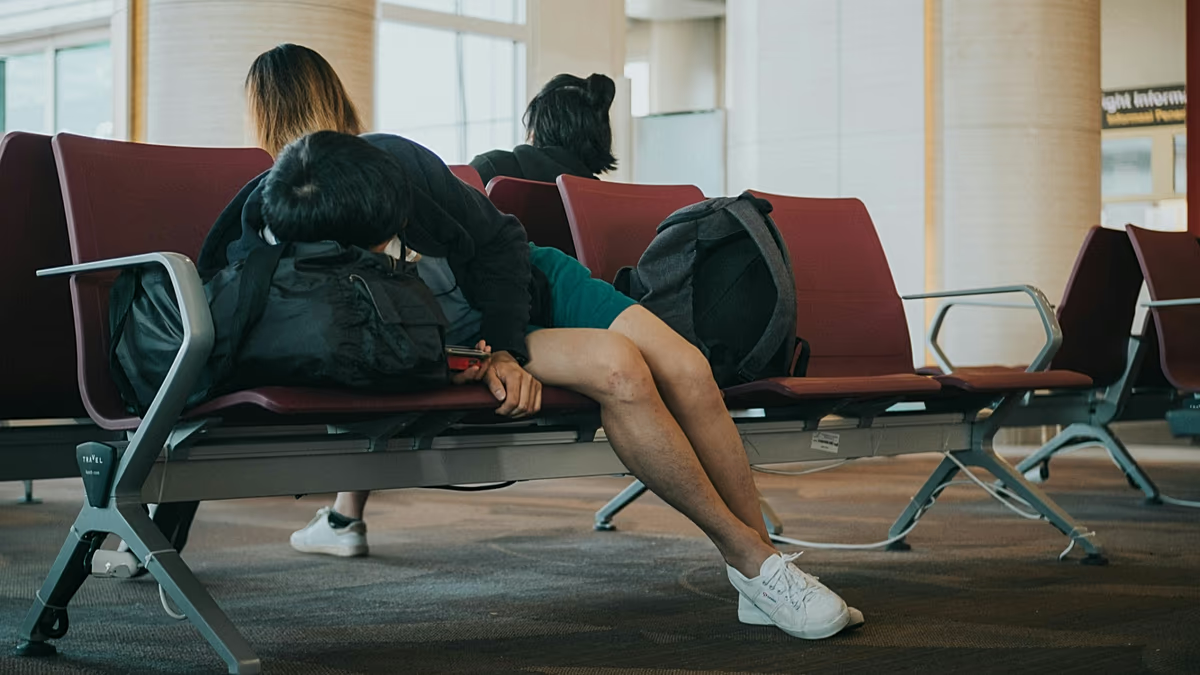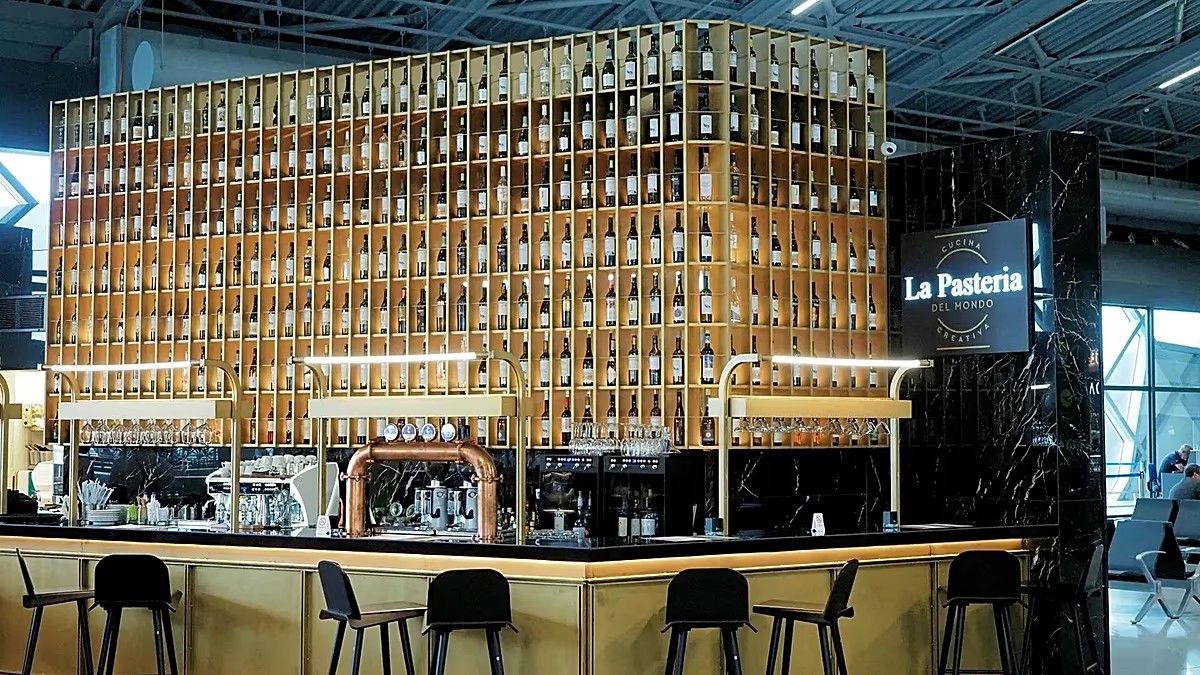
Of all the places we build, airports are perhaps the most surreal. They exist in a perpetual state of in-between, a collective limbo divorced from the rhythms of the outside world. Within the same terminal, a bleary-eyed traveler might be sipping their first coffee at dawn, while another, fresh off a long-haul journey, is contemplating a glass of wine with what feels like dinner. This temporal dislocation is woven into the very fabric of the airport experience, where day and night blur into one continuous operational daylight. It’s the reason why you can order a full English breakfast or a steak at any hour, and, most notably, why the bar taps are always open. The normalization of this timelessness means that clinking glasses of prosecco at sunrise barely raises an eyebrow—it’s simply part of the ritual of travel, a small celebration of departure or a necessary comfort for anxiety.
However, this long-standing airport culture is now facing a stern challenge from one of Europe’s most prominent airline executives. Michael O’Leary, the outspoken boss of Ryanair, has called for a ban on early morning alcohol sales and the implementation of a strict two-drink limit per passenger. His argument stems from a troubling statistic: nearly one Ryanair flight per day is being diverted due to unruly passenger behavior, which he directly attributes to excessive drinking before boarding. “I fail to understand why anybody in airport bars is serving people at five or six o’clock in the morning,” O’Leary stated, highlighting the absurdity of the practice through a lens of safety and pragmatism. He proposes that boarding passes should be scanned at the point of sale to enforce any limit, arguing that preventing intoxication is far easier than managing its dangerous consequences at 30,000 feet.
The issue, as O’Leary frames it, is compounded by the unique circumstances of air travel. Passengers may be stressed, anxious, or sleep-deprived, and many are consuming alcohol on an empty stomach or alongside a first meal at an unconventional time. This potent mix can lower inhibitions and accelerate intoxication, leading to behavior that is not merely annoying but genuinely hazardous. Ryanair maintains a zero-tolerance policy, and the consequences for passengers are severe, as illustrated by a recent case where two individuals caused a London-to-Ibiza flight to divert to France. They received suspended prison sentences and were ordered to pay over €10,000 in combined penalties—a stark reminder that disruptive conduct is treated as a serious criminal offense.
Unsurprisingly, O’Leary’s proposal has not been met with universal agreement, particularly from the hospitality industry. Sir Tim Martin, founder of the UK pub chain Wetherspoon, which operates numerous airport locations, criticized the idea as “extraordinarily difficult to implement, short of breathalysing passengers.” His chain contends that a significant portion of alcohol sales in their airport pubs are accompanyied by a meal, suggesting a more moderate dining context. Furthermore, they warn that overly restrictive policies could simply push the problem elsewhere, encouraging travelers to drink more heavily at home or in off-airport lounges before they even reach security, where monitoring is impossible. This perspective frames the airport bar as part of the solution, with trained staff and strict serving protocols, rather than the root of the problem.
The legal landscape surrounding intoxication on flights adds another layer of complexity. While the UK’s Air Navigation Order, for instance, prohibits anyone from being drunk on an aircraft, it does not provide a strict legal definition of drunkenness. Individual airlines fill this gap with their own “Conditions of Carriage,” which typically allow crew to refuse boarding to anyone whose condition—whether from alcohol, drugs, or other causes—could pose a danger to themselves, others, or the safe operation of the flight. This places a significant burden of judgment on airline staff and gate agents. In 2019, the European Union Aviation Safety Agency launched the #NotOnMyFlight campaign, a broader initiative aimed at curbing all forms of disruptive behavior, underscoring that this is a sector-wide concern that extends beyond any single airline.
Ultimately, the debate over airport drinking encapsulates a larger tension between personal liberty and collective safety in the unique, high-stress environment of commercial aviation. On one side is the argument for personal responsibility and the adult’s right to a relaxing drink before a journey. On the other is the compelling case for preventative measures to guard against a minority whose actions can cost hundreds of thousands in diversion fees, delay thousands of fellow passengers, and—most critically—compromise safety. Finding a balance is the challenge. It may not require an outright ban, but perhaps a more rigorous, industry-wide standard for responsible service, better passenger education on the severe penalties for misconduct, and a shared cultural shift away from viewing air travel as an extension of a rowdy pub crawl. After all, the shared goal is for every passenger to arrive safely at their destination, a outcome that is jeopardized when the timeless bubble of the airport leads to timeless trouble in the skies.