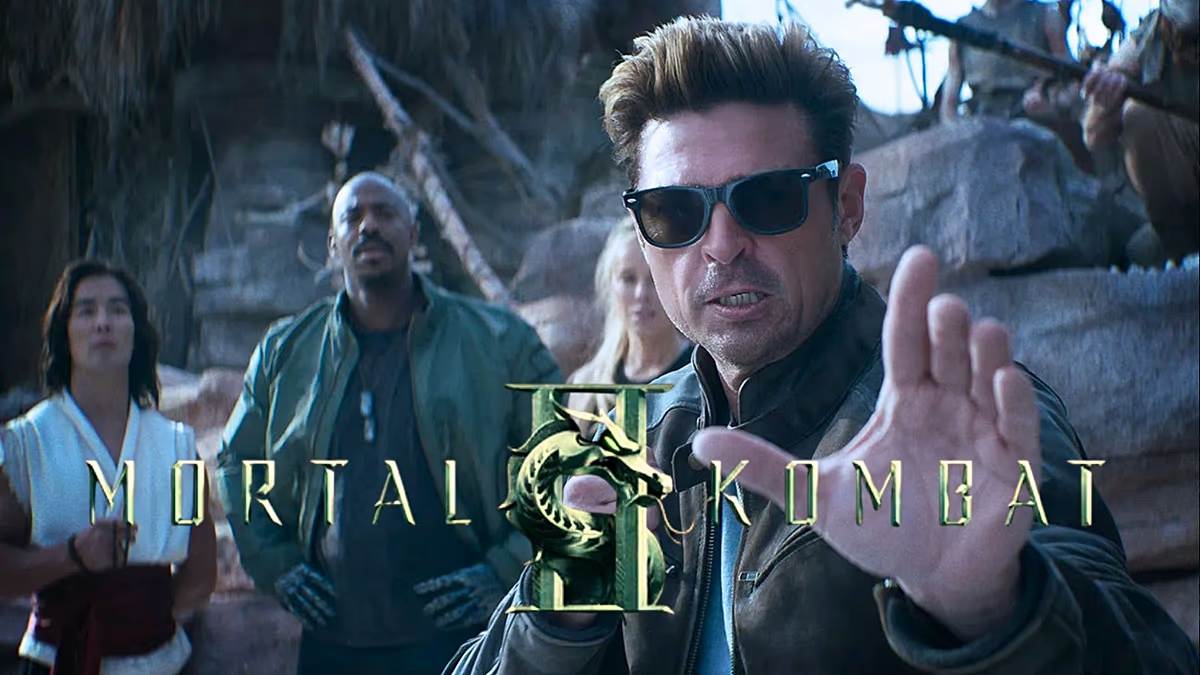
Released on August 5th, 2026, Mortal Kombat II serves as a direct sequel to the 2021 franchise reboot, entering a cinematic arena already crowded with a mixed history. Since the original 1995 film, there have been five follow-ups, including sequels, animated features, and reboots. The general consensus is that this long line of adaptations has largely failed to capture the essence or quality of the iconic video game series. While the 2021 live-action film showed slight promise for dedicated fans, it still underscored Hollywood’s persistent struggle to successfully translate video games to the big screen. Big-budget successes like Minecraft or Super Mario might rake in money, the article argues, but financial triumph doesn’t automatically mean artistic merit. From the outset, the piece sets a skeptical tone, bluntly stating that this latest entry is not the movie that will finally break the infamous “video game adaptation curse.”
The film continues the story from the 2021 reboot, which notably avoided the franchise’s central premise: the actual Mortal Kombat tournament. In a puzzling narrative shift, it sidelines the previous film’s protagonist, Cole Young, in favor of new leads. The story now focuses on Princess Kitana of a mystical realm, who is enslaved by the villainous Outworld emperor Shao Kahn, and Johnny Cage, a washed-up, foul-mouthed action movie star reluctantly pulled into the conflict. The stakes are classic Mortal Kombat fare: Shao Kahn has won nine consecutive tournaments against Earthrealm’s champions, and a tenth victory would mean the end of the world. Amidst this setup is a subplot involving a mystical amulet, which the review criticizes for sapping the film’s momentum and adding unnecessary runtime to an already straightforward plot.
For a very specific viewer, the movie might offer some enjoyment. If your primary desire is to see simple, one-dimensional characters engage in spectacularly violent fights with minimal narrative complexity, then Mortal Kombat II delivers what the review terms “dumb fun.” The action sequences are praised for their creative and impressively gory fatalities, featuring the series’ signature elements like fireballs, razor-edged hats, and teleportation portals. However, these moments are reportedly undercut by heavy editing that can disrupt the flow. The portrayal of Johnny Cage, effectively transformed into a Deadpool-like figure of constant meta-commentary and profanity, is highlighted as a central element. Yet, this introduces the film’s core problem: a jarring inability to balance its crude humor with its R-rated violence.
This tonal inconsistency is pinpointed as the film’s critical failing. The review argues that director Simon McQuoid and writer Jeremy Slater never find a steady rhythm between wisecracks and gruesome action, resulting in severe “tonal whiplash” for the audience. This flaw ultimately renders the movie another forgettable entry in the genre—a “disposable crash-bang-wallop” experience that meets the low expectations set by its predecessors. The piece concludes this assessment with a definitive “Flawless victory? Hardly,” signaling that the film doesn’t achieve the excellence its source material sometimes embodies. This critical reception did not go unnoticed by those involved with the production, sparking a defensive reaction.
The article details how producer Todd Garner publicly lashed out at early negative reviews on social media. Garner criticized reviewers for being unfamiliar with the video games, their lore, and what the fanbase truly wants, citing one critic’s bafflement over a character having a “laser eye.” He repeatedly asserted that the film was “made for the fans,” implying that critical opinions from those outside this group were irrelevant or invalid. The author of the article pushes back strongly against this common defense. They contend that critics are inherently fans of cinema and that their professional opinions are valid, expected, and part of a healthy cultural discourse. The response advises that if poor reviews are distressing, the options are to avoid criticism, change professions, develop resilience, or simply aim to make better movies.
In closing, the summary reiterates that Mortal Kombat II is now in theaters, presenting itself as another contentious chapter in a troubled adaptation lineage. It encapsulates the cyclical battle between filmmakers claiming to cater to a loyal fanbase and critics evaluating a film’s broader artistic merits. The piece leaves us with the enduring idea that in the world of film, a plurality of opinions is not only inevitable but valuable. Some may find mindless fun in the film’s brutal spectacle, while others will see it as further proof that to earn acclaim, the quality of the movie itself must rise above the legacy of its title. The journey from arcade to cinema remains, it seems, a particularly brutal fight.