


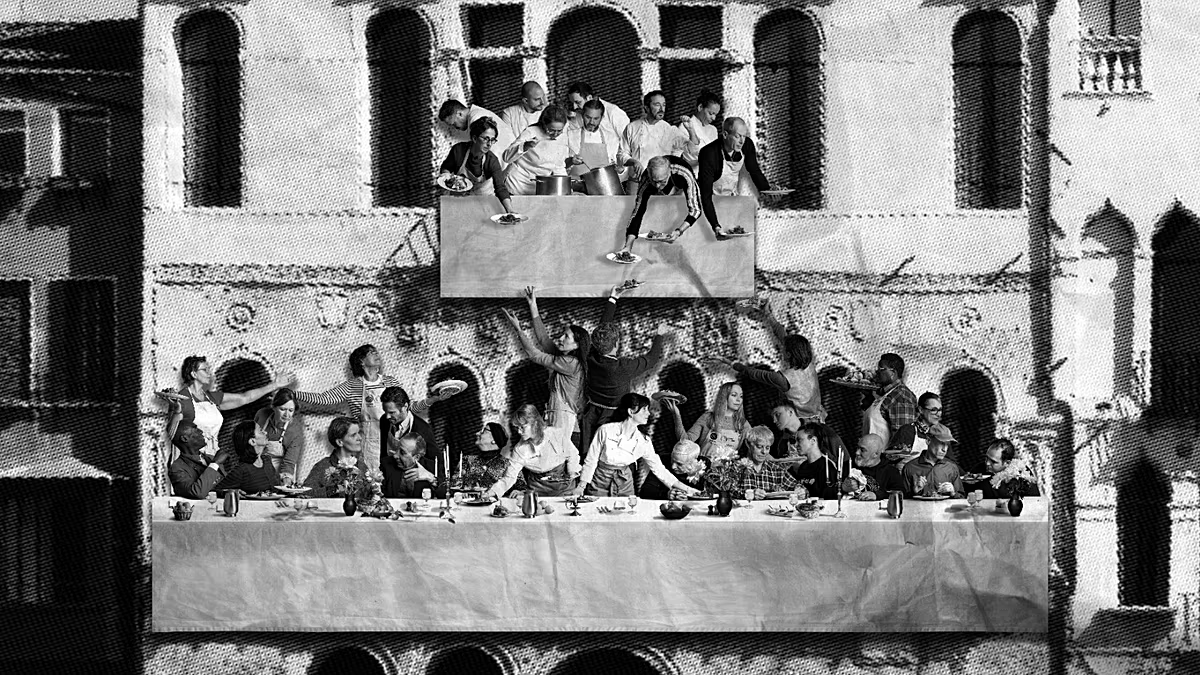
The renowned French artist JR has once again transformed the urban landscape into a profound dialogue, this time on the venerable facade of the Palazzo Ca’ da Mosto—now the Venice Venice Hotel—for the 61st International Art Exhibition of the Venice Biennale. His monumental temporary installation, Il Gesto, draws direct inspiration from Paolo Veronese’s 1563 masterpiece, The Wedding at Cana. Where Veronese depicted a biblical miracle of transformation—water into wine—within a lavish, choreographed banquet, JR harnesses that same spirit of metamorphosis to illuminate a contemporary social miracle. The hotel’s historic exterior becomes a dynamic canvas, not for biblical figures, but for 176 individuals from the Refettorio Paris community: a project that combats food waste by transforming surplus ingredients into elegant meals for those in need. Thus, JR immediately establishes a powerful continuum, linking a 16th-century allegory of abundance to a 21st-century act of reclamation and community.
Il Gesto is far more than a visual homage; it is a living, breathing archive of human dignity. Each figure pasted onto the palazzo’s stones is a portrait of a real person—a volunteer, a chef, a guest of Refettorio Paris. Their collective image forms a new “banquet,” but this table symbolizes not opulence, but equality and shared humanity. The installation brilliantly layers experience: each portrait contains a scannable recording, allowing visitors to hear the voice and story of the individual depicted. This fusion of sight and sound ensures these participants are not silent symbols, but active narrators of their own lives. Their gestures and gazes, peering from windows and blending with ancient Venetian-Byzantine architecture, invite a fundamental question: who is visible in our society? JR turns the Grand Canal into an audience, challenging every passerby to consider who is traditionally “invited to the table” of both art and society.
Inside the palace, the experience deepens and expands. The installation begins in the grand salon of the Second Piano Nobile, where visitors encounter a mirrored table and a monumental tapestry. This tapestry itself is a testament to sustainable artistry, woven from yarns of virgin wool, recycled plastic, washi paper, and organic cotton, nodding to Venice’s rich textile history. The mirrored surfaces reflect the viewer, literally inserting them into the composition and implicating them in the narrative of community. The space becomes an immersive environment where the boundaries between the artwork outside and the observer inside dissolve. The interior thus functions as a sanctuary for contemplation, amplifying the external spectacle’s message through intimate materiality and reflective space.
JR’s artistic intervention is deeply contextual, engaging directly with the concept of postvenezianità—a style that reinterprets Venetian heritage through a modern lens. The Venice Venice Hotel, a 13th-century palace with a 20th-century avant-garde interior, is the perfect vessel for this. Il Gesto does not merely adorn the building; it activates it, creating a dialogue between the historic piani nobili and the contemporary lives displayed upon them. The ultra-lightweight panels used for the exterior installation ensure the palace’s fabric is respected while temporarily transforming Venice itself into an open-air stage. This is public art at its most potent: non-extractive, participatory, and deeply woven into the city’s physical and social fabric, extending an invitation to residents and global visitors alike to partake in a shared cultural moment.
In his own words, JR poses the essential questions driving Il Gesto: “What idea of community are we building today?… What does it mean, at the deepest level, to share a meal?” Here, the shared meal is the ultimate metaphor. Refettorio Paris’s act of converting waste into nourishment finds its parallel in JR’s act of converting individual, often-overlooked stories into a celebrated collective masterpiece. The banquet becomes a “necessary space of encounter,” where beauty is democratized. This mission resonates with JR’s iconic past works, from challenging stereotypes in Parisian suburbs with Portrait d’une Génération, to highlighting migration issues with the giant infant Kikito at the U.S.-Mexico border, to playing with perception at the Louvre. In each, he uses scale and juxtaposition to make the invisible visible.
Ultimately, Il Gesto is a profound meditation on visibility, transformation, and collective care. By reimagining Veronese’s miracle, JR celebrates a modern, ongoing miracle: the act of coming together, of listening, and of sustaining one another. The installation is temporary on the stones of Venice, but its core message aspires to permanence in the conscience of its audience. It argues that true abundance lies not in the spectacle of wealth, but in the deliberate, creative, and inclusive act of sharing. As the faces on the palazzo gaze out, they permanently alter the vista of the Grand Canal, reminding us that the future of community—and of art itself—is built by ensuring everyone has a seat at the table.