


Of course. Here is a summary and humanization of the provided content, expanded into six paragraphs.
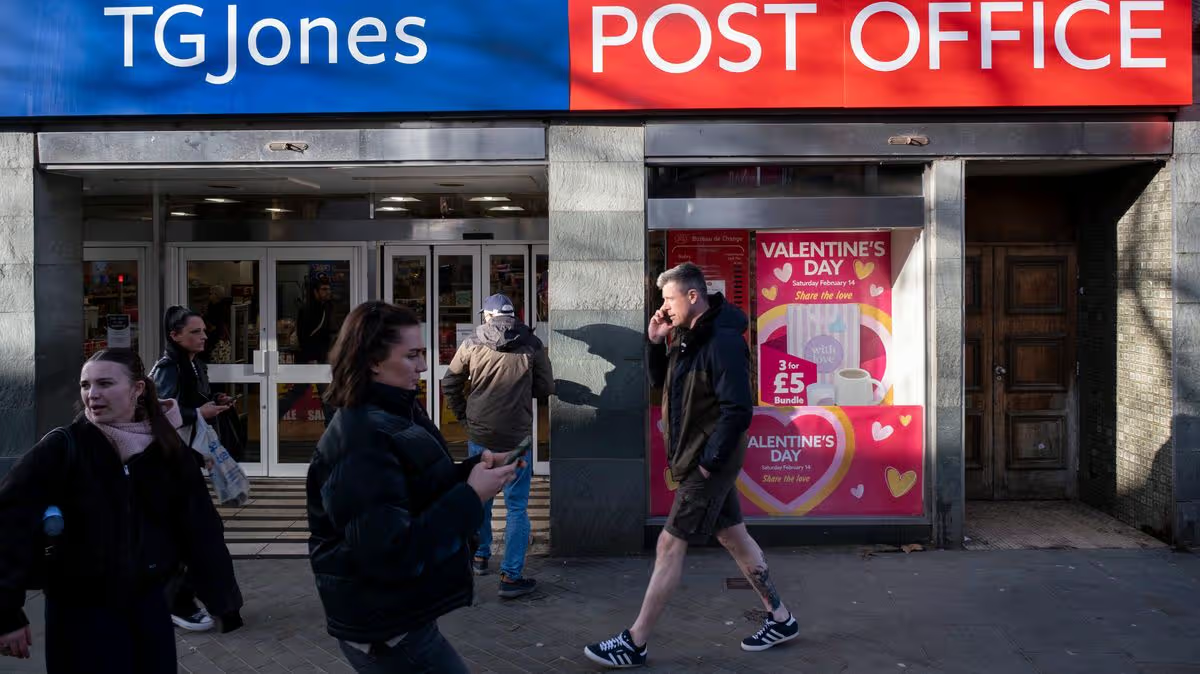
The British retail landscape is weathering another brutal storm, with the iconic high street name TGJones—formerly known to generations as WHSmith—announcing plans to potentially close 150 stores. This devastating news, putting hundreds of jobs at risk, follows hard on the heels of the complete collapse of other familiar chains, Claire’s Accessories and The Original Factory Shop. The announcement paints a picture of a venerable institution brought to its knees by a perfect storm of economic pressures, shifting consumer habits, and profound structural changes in how we shop. For communities across the UK, it signals not just the loss of a convenient retailer for stationery, books, and magazines, but the fading of a 234-year-old piece of social fabric, a constant presence on high streets and in train stations that many assumed would always be there.
The company’s statement points a firm finger at external forces for its dire situation. TGJones leadership cites “highly challenging trading conditions” directly stemming from “government policy and recent geopolitical events.” They describe a relentless pincer movement: consumers, squeezed by the ongoing cost-of-living crisis, have sharply reined in discretionary spending, while the business itself has been hammered by rising operational costs. A significant, and arguably self-inflicted, wound is also acknowledged—the rebranding from the beloved, universally recognised WHSmith name to TGJones following its 2023 purchase by investment firm Modella Capital. This move, intended perhaps as a fresh start, instead “negatively impacted consumer awareness,” severing a powerful emotional connection with shoppers even as the company insists the actual in-store offering improved.
However, insolvency experts argue that while current economic headwinds are fierce, they have merely accelerated an inevitable decline. The retail transformation from physical stores to online platforms was already a mighty tide; the pandemic and subsequent cost-of-living crisis have become a tsunami, washing away businesses that might have clung on for a few more years. Molly Monks, an insolvency specialist at Parker Walsh, notes that footfall in many town centres remains stubbornly below pre-pandemic levels, creating a ghost-town effect that stifles surviving shops. She also highlights a critical competitive imbalance: the burden of business rates continues to disproportionately penalise brick-and-mortar retailers, a cost their digital rivals do not bear. This systemic issue, she argues, is one the government has persistently failed to address, leaving high street shops fighting with one hand tied behind their backs.
The human cost of this corporate restructuring is immense and heartbreaking. TGJones’s statement, while dry and corporate, hints at the anxiety unfolding behind the scenes, recognising “the impact this uncertainty will have on colleagues, their families and the communities we serve.” Promises to “preserve as many jobs as possible” and to conduct “appropriate consultation” offer little concrete solace to employees facing the prospect of redundancy in a troubled economic climate. These are not just statistics; they are shop managers, assistants, and logistics workers whose livelihoods are now in jeopardy. Their uncertainty echoes that of the staff from Claire’s Accessories and The Original Factory Shop, who have already endured the closure of their entire networks, a sobering precedent that underscores the severity of the current retail crisis.
This situation reveals a painful paradox of modern retail investment. Modella Capital, the owner behind TGJones, also presided over the demise of the other two recently failed chains. This track record raises difficult questions about the strategies employed by some private investment firms when acquiring struggling high street brands. Is the goal long-term revitalisation, or a short-term restructuring aimed at extracting remaining value, often leaving a hollowed-out shell or a pile of redundancies in its wake? The transformation of WHSmith into TGJones—a move that discarded immense brand equity—suggests a jarring disconnect between financial engineering and the nuanced, community-focused reality of successful high street retail.
Ultimately, the plight of TGJones is a potent symbol of a high street at a crossroads. It is a story about more than just one chain’s struggles; it is a narrative of how inflation, policy, competition from online giants, and sometimes questionable corporate strategy are combining to reshape our towns and cities. As Molly Monks starkly warns, “this pipeline of closures is far from over.” Each shuttered storefront leaves a physical and emotional void, diminishing the variety and vitality of community hubs. The survival of this “iconic 234-year-old business,” as its spokespeople call it, is now in grave doubt. Its fate will serve as a crucial indicator of whether there is still a viable future for the traditional, broad-range high street retailer, or if we are witnessing the end of an era, where the comforting, familiar presence of a local WHSmith becomes merely a memory.