



Here is a humanized summary of the content, expanded to six paragraphs:
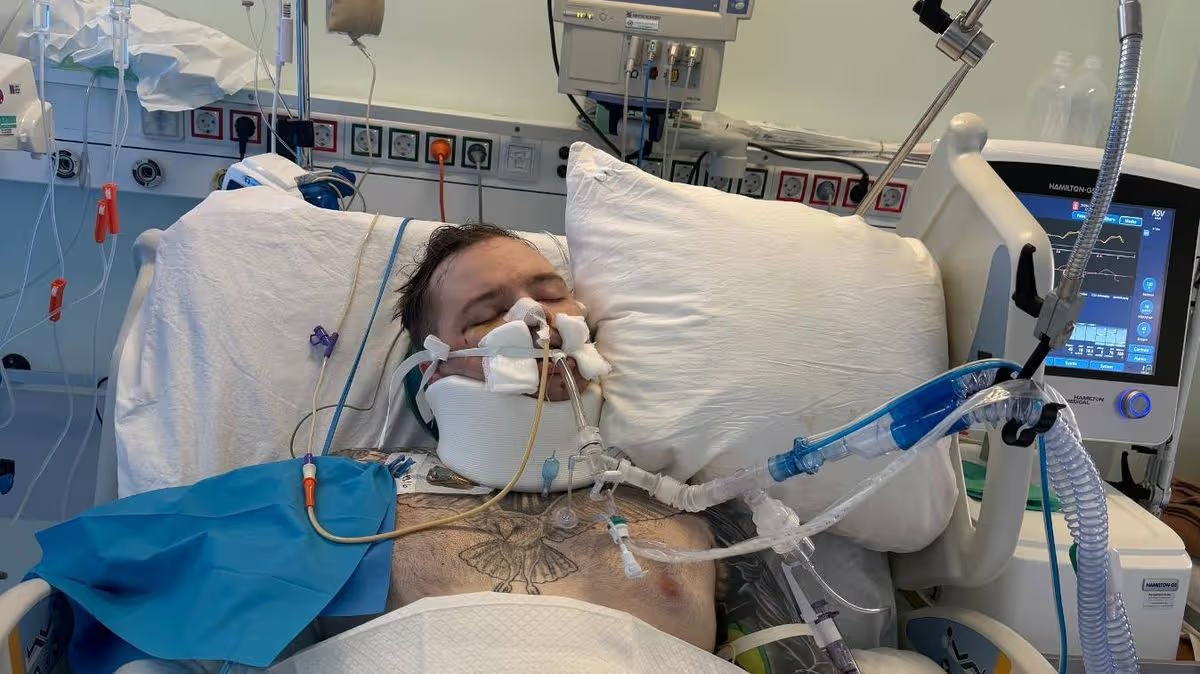
In a tragic story that underscores the perils of compassion and the devastating spiral of addiction, a Shrewsbury chef named Alexis De Naray lost his life in an act of brutal betrayal. Alexis, described by his heartbroken family as a profoundly caring and loving man, had extended a hand of kindness to a stranger, only to be murdered by him. The 45-year-old’s journey to this fatal encounter began when he collapsed and was admitted to the Royal Shrewsbury Hospital for treatment on June 23rd of last year. It was in the sterile, anonymous setting of the hospital in the early hours of the next day that his path fatefully crossed with that of Adam Rowson, a 26-year-old homeless man. Both men, grappling with alcoholism, formed a fleeting connection amidst their struggles.
Driven by a seemingly generous impulse, Alexis offered the homeless Rowson a place to stay, despite having never met him before. This act of humanity led them to an abandoned building near Shelton water tower, where Rowson had been squatting. What transpired next in that derelict space remains shrouded in the exact timing of violence, but police believe that late on June 24th or in the early hours of June 25th, Rowson launched a savage attack on his benefactor. The assault was so brutal that Alexis suffered a brain injury and broken ribs, though none of these injuries alone were determined to be the direct cause of his death, painting a picture of a sustained and vicious ordeal.
For days, Alexis’s body lay undiscovered in the attic of the abandoned building. It was Rowson himself who finally reported finding a dead man, phoning the non-emergency police line on the morning of June 27th and remaining at the scene when emergency services arrived. His performance of a concerned citizen quickly unraveled. As detectives pieced together the timeline, they uncovered a chilling sequence of events: Rowson admitted to an altercation with Alexis days prior, claiming he had simply left him there. More damningly, a murder investigation revealed that in the days following the killing, Rowson had callously used Alexis’s bank cards to fund a spree of purchases for alcohol, scratch cards, food, clothing, and travel tickets, as well as making cash withdrawals.
The callous theft from his victim laid bare Rowson’s utter lack of remorse in the immediate aftermath of the crime. His actions stood in stark, horrifying contrast to the portrait of Alexis painted by his grieving younger brother, Alexandros. In a victim impact statement read to the court, Alexandros spoke of a deep fraternal bond, calling Alexis his best friend and expressing a love beyond words. He articulated the searing, daily pain of sudden loss, clinging to the hope that his brother felt no pain in his final moments and had finally found peace away from the struggles that had plagued him.
Following a 12-day trial at Stafford Crown Court, Adam Rowson was convicted of murder. On May 6th, he was sentenced to life imprisonment, with a minimum term of 16 years before he can be considered for parole. The sentence marked a formal conclusion to the legal proceedings, but it offers scant consolation for a family shattered by a act of violence that exploited kindness. The case is a bleak reminder of how vulnerability and addiction can intersect with deadly consequences, and how a single moment of human connection, intended as an act of grace, can be twisted into a final, fatal chapter.
Ultimately, the story of Alexis De Naray is one of profound loss—the loss of a “caring and loving” man remembered by his family, and the loss of trust in the simple, dangerous act of reaching out to another person in need. His death, born from an offer of shelter, leaves behind a legacy of sorrow and a cautionary tale about the complex, often hidden dangers faced by those living on society’s margins, where desperation can sometimes eclipse humanity. While justice has been served in a courtroom, the void left by Alexis’s absence remains a lifelong sentence for those who loved him.