



Paragraph 1
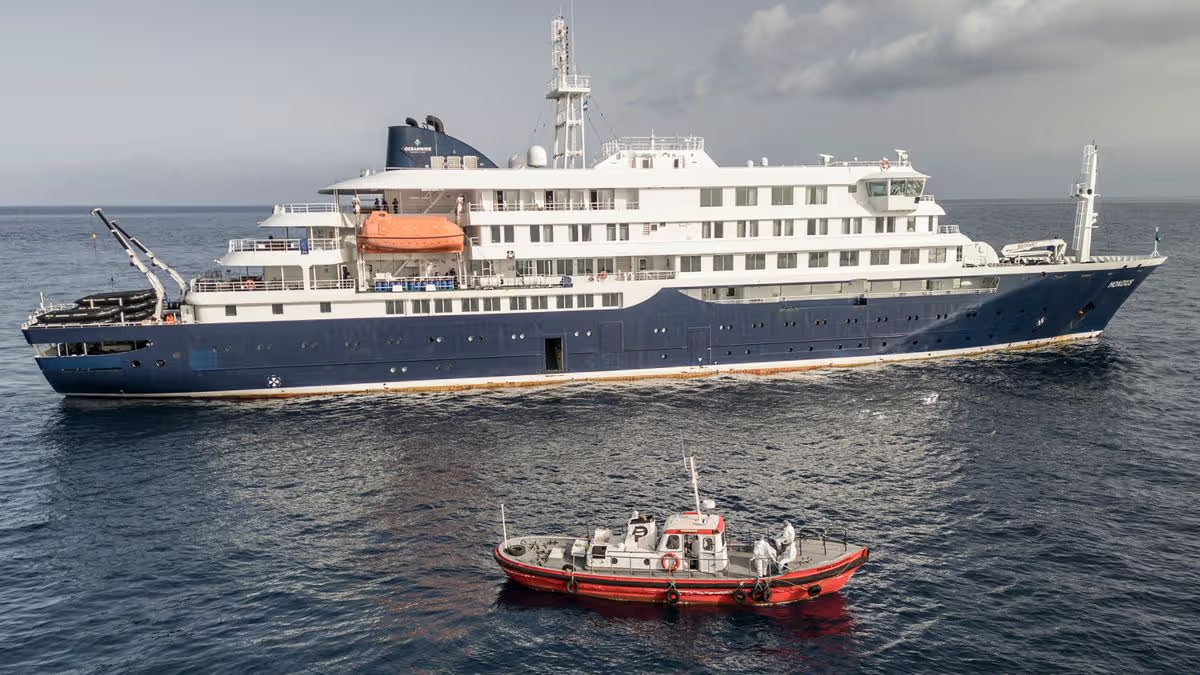
A complex and arduous journey for passengers aboard the cruise ship MV Hondius has reached a critical juncture, with health authorities implementing stringent measures to contain a potential outbreak of hantavirus. The vessel, which became the center of an international public health response, is currently stationed off the coast of Cape Verde. The situation escalated when three individuals, including one British national, displayed symptoms consistent with the rare viral infection, leading to their medical evacuation to the Netherlands for specialized care. This event triggered a comprehensive effort to manage the risk for all remaining passengers and crew, many of whom are now facing an extended period of uncertainty and isolation far from home. The focus has sharply turned to the welfare of the passengers and the meticulous steps required to prevent any further spread, underscoring the challenging intersection of global travel and infectious disease control.
Paragraph 2
For the British citizens onboard, the path home is now being carefully charted. The UK’s Foreign, Commonwealth & Development Office (FCDO) is urgently working to repatriate 23 British nationals who remain on the Hondius. Officials have confirmed that none are currently reporting symptoms, but they are under close monitoring. The plan is to facilitate their return once the ship arrives at its next port, with a structured support system awaiting them in the UK. This system, orchestrated by the UK Health Security Agency (UKHSA), will involve a period of self-isolation, regular testing, and access to healthcare professionals. This measured approach aims to balance the imperative of bringing citizens home with the absolute necessity of safeguarding public health, ensuring that their return is managed with the utmost caution and support.
Paragraph 3
Meanwhile, two British passengers who disembarked the vessel earlier in its voyage, during a stop at St. Helena in late April, are already in the UK and have been placed into self-isolation. While他们也 show no signs of illness, the UKHSA has adopted a supremely cautious stance, advising them to isolate for a period that could last up to eight weeks. This lengthy timeframe, based on the maximum known incubation period for the virus, reflects the agency’s commitment to a safety-first protocol. Professor Robin May, the UKHSA’s chief scientific officer, emphasized that this initial duration is the “most cautious scenario” and may be adjusted as the individuals are closely monitored in the coming weeks. This action is accompanied by contact tracing for their journey home, a process designed to leave no stone unturned in mitigating any potential, however small, for community transmission.
Paragraph 4
Throughout this evolving situation, health authorities have consistently sought to calm public concern, stressing that the overall risk to the general population is judged to be “very low.” This assessment is shared by the World Health Organization (WHO), which notes that hantavirus is not easily transmitted between people and typically requires prolonged close contact with an infected person or, more commonly, exposure to rodents or their droppings. Dr. Meera Chand of the UKHSA reiterated that the agency’s primary focus is on supporting those directly affected and implementing robust measures to prevent onward transmission. The response highlights a modern epidemic management strategy: deploying rigorous, targeted controls around a specific at-risk group while providing clear, reassuring communication to the wider public to prevent unnecessary alarm.
Paragraph 5
The human dimension of this incident is profound. Passengers who embarked on what was likely a dream expedition to remote and beautiful locations now find themselves in a state of limbo, contending with health anxieties and the disruption of their lives. The evacuated British patient, identified as 56-year-old Martin Anstee, has spoken out, giving a human face to the clinical reports. His experience, from falling ill onboard to being airlifted for treatment, underscores the very real personal trials at the heart of the outbreak. For those still on the ship or beginning isolation, the challenge is one of endurance and patience, awaiting clearance to resume their normal lives while coping with the psychological weight of potential exposure to a serious illness.
Paragraph 6
As the MV Hondius remains anchored and the repatriation process continues, the incident serves as a sobering reminder of the persistent challenges of managing disease in a globally connected world. The coordinated international response—involving Cape Verdean, Dutch, British, and global health authorities—demonstrates the systems in place for such crises. The key priorities remain the compassionate care and safe return of all passengers, the continued medical treatment of those infected, and the rigorous application of isolation and monitoring protocols to definitively contain the outbreak. The weeks ahead will involve careful vigilance, but the foundational public health principles being applied aim to resolve this distressing situation with minimal further impact, allowing everyone involved to eventually leave this difficult chapter behind.