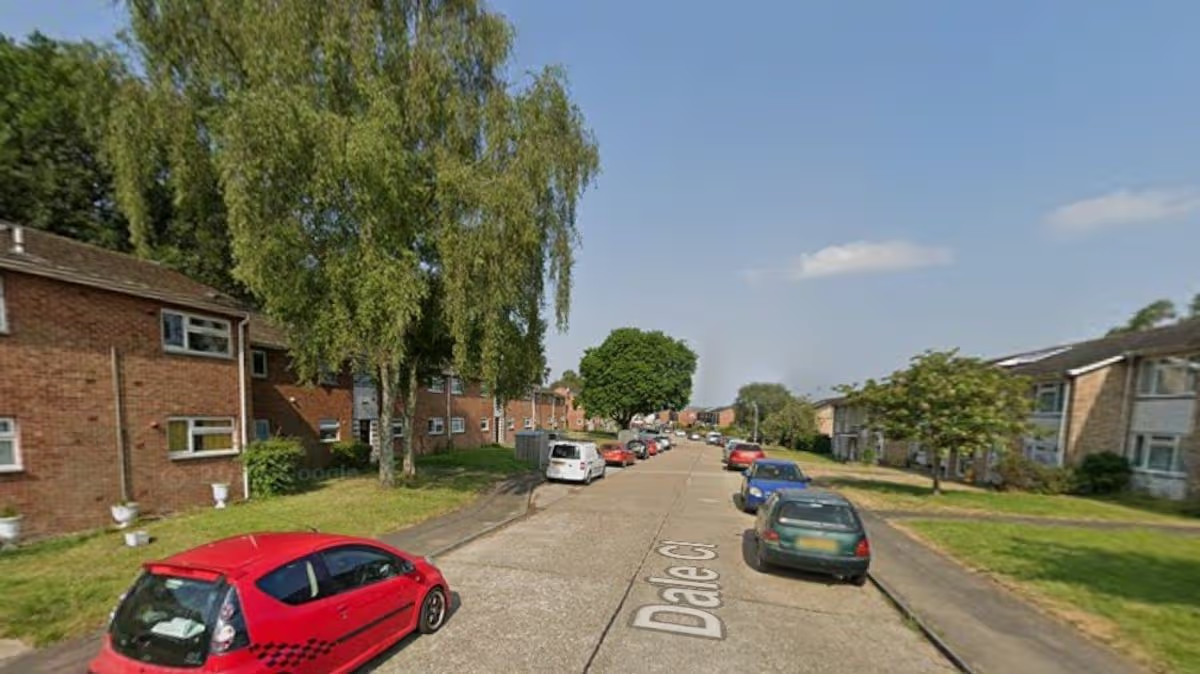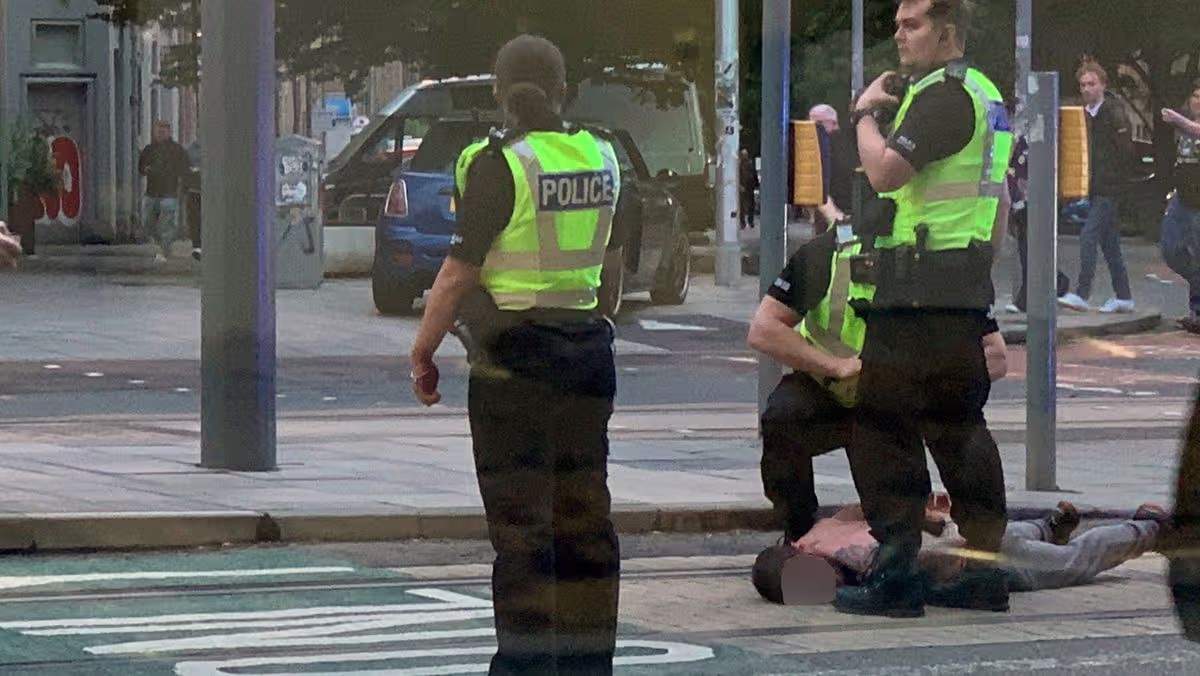




In the heart of Edinburgh, a vibrant city renowned for its history and community, a profound tragedy unfolded in the autumn of 2025, leaving a family shattered and raising urgent questions about justice and public safety. The life of 22-year-old John McNab was brutally ended in an unprovoked and relentless attack on Great Junction Street in Leith on the evening of September 2nd. His killer, a 17-year-old boy who cannot be named due to his age, has now admitted to the murder, a crime made all the more devastating by the revelation that he was on bail at the time for a previous, violent knife attack on another teenager. This case is not merely a statistic; it is a story of a young man robbed of his future, of a family’s immeasurable grief, and of a series of systemic failures that allowed a cycle of violence to culminate in fatal consequences.
The backdrop to this horror was a night that began ordinarily for John McNab, who was socializing with friends. A meeting was arranged for the teenager to purchase cannabis from one of John’s companions, but the interaction quickly deteriorated. The youth arrived wearing a balaclava, and after a disagreement where his cash was ripped up and he was slapped—an altercation in which John played no part—a simmering threat was established. John and his friends, fearing for their safety, retreated to a nearby flat, locking the door behind them. In a message to his girlfriend, John conveyed the terror of the moment, writing they had “just got chased with a samurai sword” and identifying the teenager as their aggressor. Unbeknownst to them, the danger lingered just outside their temporary sanctuary, setting the stage for the unspeakable violence to follow.
What transpired next was a calculated and brutal pursuit. The teenager, undeterred, remained in the vicinity, even smashing a window of the flat while taunting its occupants. He retrieved a large hunting knife from a rucksack, hid in nearby bushes, and lay in wait with chilling patience. When John McNab eventually stepped outside, the masked youth gave chase. Harrowing details presented in the High Court in Edinburgh revealed that John, in his final moments, pleaded with his attacker, crying out, “Please, please don’t. I haven’t done anything.” His pleas were ignored. The assailant struck repeatedly, a sustained and frenzied attack that left John with fatal wounds. A nearby resident described hearing the distress, the sound of a fall, and then seeing a figure in black lunging down at a man on the ground.
In the aftermath, the scene was one of utter despair. John McNab, exhibiting incredible will, briefly managed to stand before collapsing. His friends rushed from the flat to find him on the road, where he uttered the heartbreaking words, “help me, help me, I’m dying.” Despite the swift arrival of paramedics and over forty minutes of advanced life support, the injuries were too severe. A post-mortem examination later confirmed that a deep stab wound to his abdomen had severed major blood vessels, causing catastrophic bleeding. The weapon, a 20cm hunting knife with John’s blood on the blade and the killer’s DNA on the handle, was recovered by police, providing irrefutable evidence of the crime. The teenager’s own callous account, sent in a message boasting of the attack, stood in stark, horrifying contrast to the humanity and innocence of his victim.
This murder is inextricably linked to a failure of the judicial system to protect the public, a point that compounds the family’s anguish. Merely five months earlier, in March 2025, the same youth had pursued and seriously injured a 16-year-old boy with a knife at Portobello Beach. Charged for that offence, he was released on bail by a sheriff at Edinburgh Sheriff Court in late April. His release back into the community, despite the serious nature of the prior violence, created a perilous window during which John McNab was killed. This sequence of events forces a grim reckoning with bail decisions and the assessment of danger, highlighting a catastrophic gap between a prior act of violence and the preventative measures needed to stop another.
As the legal process moves toward sentencing next month, where the teenager will receive an automatic life term, the focus extends beyond the courtroom. The victim’s family and friends, many of whom wore memorial T-shirts during proceedings, now face a life sentence of their own—one of loss and unanswered questions. Lord Harrower has deferred the final sentencing for reports and will consider a motion to lift reporting restrictions on the offender’s identity, a decision that touches on debates of transparency versus rehabilitation. Ultimately, the story of John McNab is a piercing reminder of the human cost of knife violence and systemic oversight, a call to remember the person behind the headline, and a demand for justice that ensures such a preventable tragedy is never repeated.