




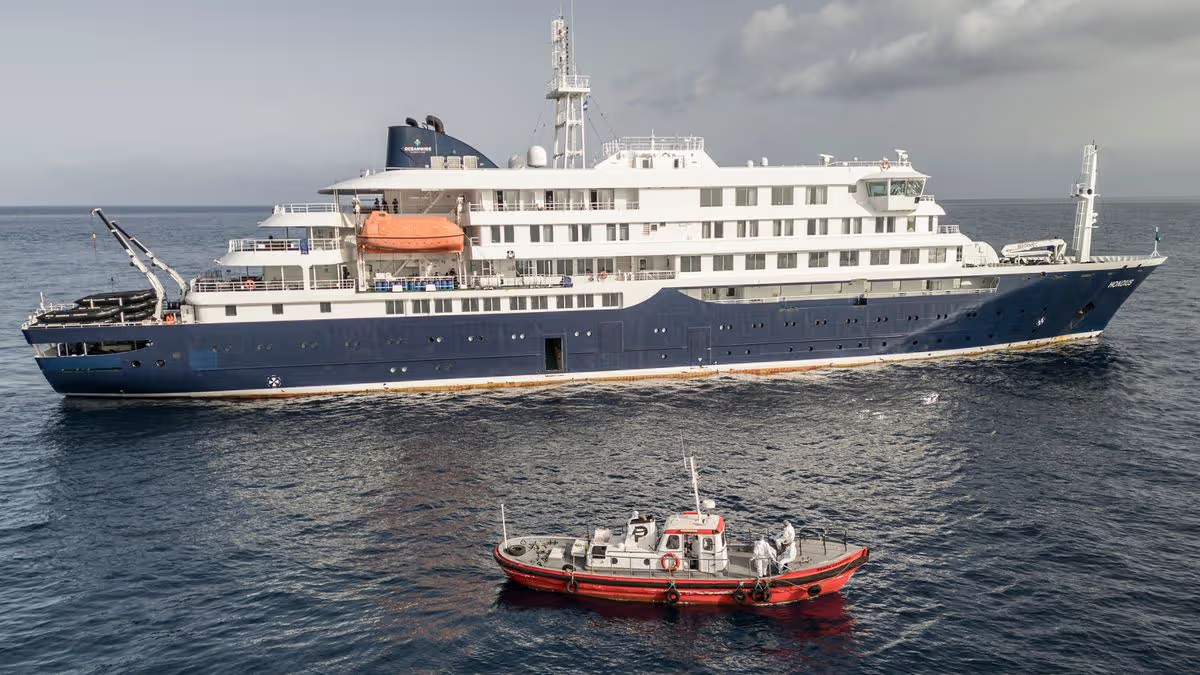
The recent outbreak of hantavirus aboard the cruise ship MV Hondius, resulting in illnesses, evacuations, and tragic fatalities, represents a significant and sobering event in the world of infectious diseases. While the immediate crisis centers on the stranded vessel and its passengers—including 19 Britons—the situation has captured the attention of global health experts as a potential test case. The incident challenges previous understandings of the virus, particularly its capacity for human-to-human transmission, and underscores the complex vulnerabilities that emerge when individuals live in close quarters for extended periods, as these tourists had for roughly a month during a voyage from Argentina across the Atlantic.
Professor Paul Hunter, a renowned microbiologist and infectious disease expert from the University of East Anglia, emphasizes the critical importance of this outbreak for scientific understanding. He notes that certain outbreaks fundamentally shift how we perceive a pathogen, and this event could be pivotal in clarifying the transmission dynamics of hantavirus. Authorities are investigating with utmost thoroughness to answer the pressing question of how the infection spread among those on the ship. Initially, expert consensus heavily cautioned against the likelihood of person-to-person spread, as evidence for such transmission was historically weak and disputed. The very possibility forces a re-examination of long-held assumptions about this family of viruses.
The specifics of the outbreak are alarming. The World Health Organization has linked eight suspected cases and three deaths to the ship. Among the ill are two British citizens, including a passenger in critical but stable condition in South Africa and a crew member believed to be the ship’s doctor. This detail is particularly telling, as Professor Hunter explains. The fact that a healthcare worker is infected strongly supports the hypothesis of human-to-human transmission, as these professionals are among the few who have prolonged, close-contact exposure to patients, similar to family members. This pattern, while indicating spread is possible, does not necessarily equate to easy or rampant contagion; the risk remains primarily for those in intimate or extended contact with an infected person, not for casual encounters.
Further scientific weight is added by the confirmation from South African authorities that the identified virus is the Andes strain, known to be endemic in parts of South America. Its natural host is a specific rodent, the Long-tailed pygmy rice rat, which is not typically a shipborne pest. This finding strongly suggests the initial source of the outbreak was environmental exposure during the ship’s departure from or journey near Argentina. The central mystery, then, is how the virus subsequently moved between people onboard. Professor Hunter stresses that while viruses can evolve, it is too early to assume this strain has become markedly more transmissible. However, the evolving situation means “everything is possible,” and this avenue cannot be discounted.
The human drama of the outbreak has been compounded by logistical and diplomatic tensions. The MV Hondius was stranded off Cape Verde for days amid disputes over where it could safely dock to disembark passengers and evacuate the sick. Following the latest evacuations, including the British doctor who is now reported to be in a more stable condition, Spanish authorities have permitted the ship to proceed to the Canary Islands. This resolution came after concerns were raised by local officials, highlighting the delicate balance between humanitarian assistance, public health protection, and international coordination during such crises.
In conclusion, Professor Hunter provides crucial context for assessing the broader threat. Hantavirus can have an incubation period of up to several weeks, meaning new cases could still emerge. However, the risk of widespread onward transmission in a setting like the UK is considered low, though not impossible. The primary lessons from the MV Hondius outbreak are twofold. First, it serves as a stark reminder of the unpredictable nature of pathogens and the need for vigilant, flexible science that can update its models based on real-world events. Second, it illustrates the unique amplification risks presented by enclosed environments like cruise ships, where individuals from around the world live in shared spaces for weeks. While not a precursor to a pandemic, this incident is a vital case study that will undoubtedly refine global protocols for outbreak management and deepen our understanding of a rarely seen but deadly virus.