



The Unfolding Crisis on MV Hondius: A Dream Cruise Shattered by a Silent Threat
The MV Hondius, an expedition cruise ship carrying passengers on a dream voyage from Argentina to Cape Verde, became the unlikely stage for a global health alert in May 2026. The journey, which began as an adventure to witness rare wildlife and remote islands like Tristan da Cunha, descended into a nightmare of quarantine, medical evacuations, and tragedy with the outbreak of a rare and deadly pathogen: Hantavirus. Central to the unfolding crisis was the heartbreaking story of a Dutch couple, avid birdwatchers whose pre-cruise excursion in Ushuaia, Argentina, is believed to have introduced the virus onto the vessel. Their dream trip ended in their deaths, becoming the probable source of an outbreak that claimed a third life and left others, including a British doctor, fighting for survival.
The Hypothesized Origin: A Birdwatching Trip Turns Tragic
Argentine officials investigating the outbreak presented a leading hypothesis: the 70-year-old Dutch man and his 69-year-old wife contracted the virus during a birdwatching tour in Ushuaia before boarding. Specifically, they visited a landfill site, an environment where exposure to rodents—the primary carriers of Hantavirus—is possible. This detail is crucial, as Ushuaia and its surrounding region had never previously recorded a case of the virus, which is more common in rural inland areas. The couple were the first to report symptoms just four days into the cruise, and both tragically died, the man on board on April 11th and his wife after being medically evacuated to South Africa. Their early illness placed them at the center of the epidemiological investigation.
From Isolated Tragedy to Recognized Outbreak: A Slow Realization Onboard
The initial death was announced to passengers by the captain on April 12th. In a video later shared by filmmaker Ruhi Cenet, the captain expressed his sadness but reassured guests that the case was believed to be due to “natural causes” and was not considered infectious. At that time, with no other symptomatic individuals, the ship’s management treated it as an isolated incident. Meals and group activities continued. However, the subsequent death of the man’s wife, and then a third passenger, revealed a grimmer truth. It became clear that Hantavirus, a rodent-borne virus with no specific treatment, was present on the ship. Passengers and a crew member, including the ship’s own doctor, began showing severe symptoms ranging from fever and gastrointestinal distress to pneumonia and respiratory failure. Critics, including Cenet, argued that a more precautionary approach—like immediate quarantine and testing—should have been taken after the first death.
Medical Evacuations and International Response: A Coordinated Effort
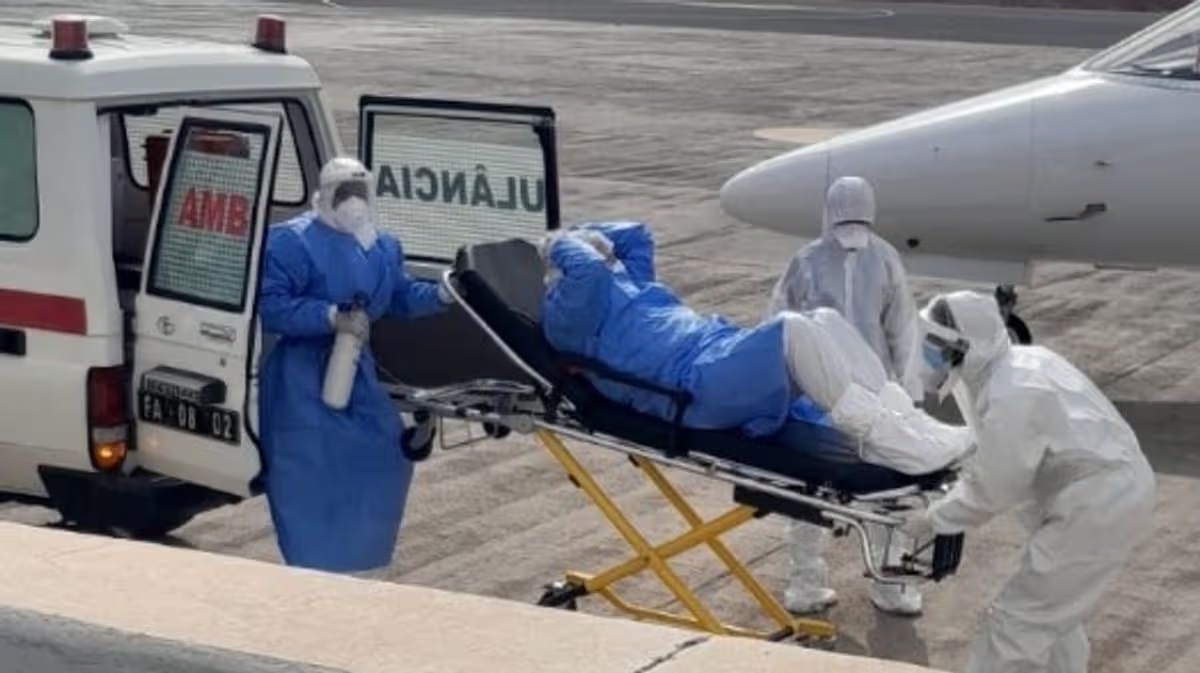
The situation escalated into an international health coordination challenge. Three people, including a 56-year-old British doctor in a “serious but stable” condition and a 41-year-old Dutch crew member, were medically evacuated to specialized facilities. A German passenger, asymptomatic but connected to the deceased, was also evacuated. The process took days, involving a specially sent aircraft from the Netherlands. Meanwhile, authorities worldwide sprang into action. South Africa traced contacts from a flight carrying the evacuated Dutch woman, confirming the presence of the rare “Andes” strain of Hantavirus, which can, in rare instances, transmit between people through close contact. The World Health Organization (WHO) and the European Centre for Disease Prevention and Control (ECDC) became involved, assessing the overall public health risk as low but coordinating the ship’s next steps.
The Path to Resolution: Tenerife and Repatriation
With the ship initially barred from disembarking in Cape Verde, a plan was formulated with Spanish authorities, following requests from the WHO and ECDC. The MV Hondius was directed to Tenerife in the Canary Islands. There, a system would be established to assess all passengers. Spanish passengers would be quarantined in a military hospital in Madrid, while non-Spanish passengers would be repatriated to their home countries. This decision, however, was not without local concern; the Canary Islands regional president voiced worries about public risk, underscoring the tension between global health protocol and local apprehension. Onboard, remaining passengers isolated in their cabins, kept spirits up with reading and movies, while awaiting the final leg of their interrupted journey.
Reflections and Reassurances: Management, Ministers, and Moving Forward
The cruise operator, Oceanwide Expeditions, defended its initial actions, stating that proper maritime procedures were followed at the time of the first death when no evidence of contagion existed. They emphasized that two infectious disease specialists from the Netherlands had joined the ship to manage the situation. British Foreign Secretary Yvette Cooper confirmed that the Foreign Office was working urgently with UKHSA and international counterparts to support British nationals and ensure their safe return with proper public health protections. While the WHO’s top epidemic expert, Maria Van Kerkhove, reassured the public that this was “not the next Covid,” the ordeal on the MV Hondius stands as a stark reminder of the unpredictable nature of infectious diseases and the complex, international collaboration required to manage them—even in the most remote corners of the globe.