

Of Interest to Travelers Booking Group Holidays: Martin Lewis Issues Key Insurance Warning
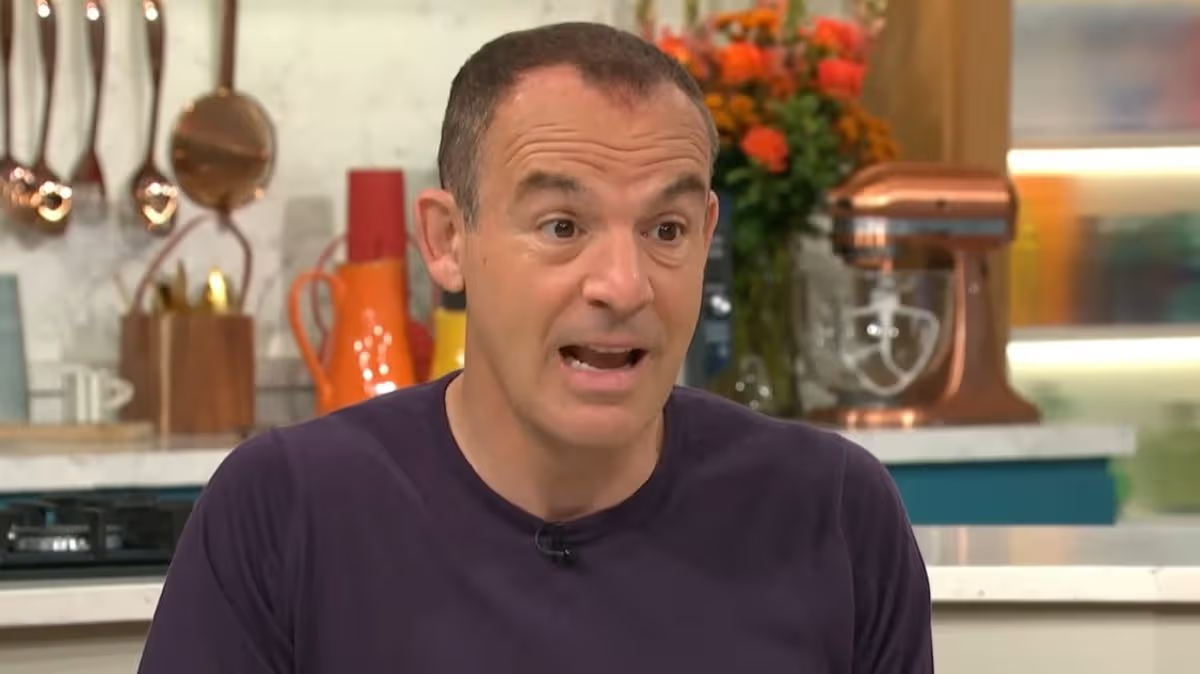
Financial expert Martin Lewis has turned his attention to a common pitfall for holidaymakers, issuing a crucial alert for anyone planning a getaway with friends or family. During a recent episode of ITV’s The Martin Lewis Money Show, the founder of MoneySavingExpert.com highlighted a specific and often overlooked aspect of travel insurance that could save groups from significant financial distress. Lewis emphasized that the standard practice of each individual purchasing their own, separate travel insurance policy is insufficient for group trips. His core message, which he also shared via his TikTok platform, is a direct caution: “Think carefully before buying solo travel insurance if you’re travelling with a group.” The warning underscores that securing the right type of coverage is just as important as getting it promptly.
The critical flaw in relying on individual policies lies in the coverage gap for group cancellations. Lewis explains that if you are traveling as a party and one person falls ill, has a family emergency, or becomes unable to travel for a covered reason, their solo policy will typically only reimburse their own pre-paid costs. It does not extend to the losses incurred by the rest of the group who may now have to cancel or rearrange the entire holiday. For instance, if a key member of a friend group or a parent in a family unit cannot go, forcing everyone else to abandon the trip, individual policies leave all other travelers financially exposed. To mitigate this risk, Lewis strongly advocates for a shared or comprehensive group insurance policy from the outset, which treats the traveling party as a single unit for cancellation purposes.
Alongside the type of policy, Lewis reiterates his fundamental, non-negotiable rule for all travelers: buy insurance “ASAB”—As Soon As You Book. He stresses that a significant portion of travel insurance’s value is in protecting against unforeseen events that occur before departure, such as a serious diagnosis, a job loss, or a family bereavement. On his website, he shares heartbreaking anecdotes, noting that every year he hears from people diagnosed with conditions like cancer who must cancel their holidays but have no recourse for refunds from airlines or hotels—and no insurance because they delayed purchasing it. His plea is emphatic: the moment a trip is booked, the insurance should be secured, locking in that pre-departure cancellation protection.
The practical importance of this advice was illustrated during Lewis’s show by a viewer named David, who shared a positive experience stemming from following these very principles. David had booked flights to Australia for a family group of seven and, crucially, took out a suitable insurance policy immediately. When one member of the group became pregnant and could no longer travel on the planned dates, necessitating a £5,000 rescheduling fee, the insurance provider covered the cost. This real-world example perfectly demonstrates the dual benefit of prompt and appropriate coverage. David’s foresight in securing a policy that considered the group as an entity protected the collective investment and spared the family a substantial financial penalty.
Lewis elaborates that the dynamics of the group should guide the insurance decision. For a family unit, some standard family policies may automatically provide the necessary collective cover. However, for a large group of friends, individual policies are the norm and, as established, are fraught with risk. In such scenarios, he advises explicitly seeking a dedicated group insurance policy. This ensures that if one person’s unforeseen circumstance derails the trip for everyone, the cancellation cover applies to all members equally. The takeaway is to consciously “think of who you’re booking for” and ensure the insurance product matches the reality of the travel party’s interdependence.
In conclusion, Martin Lewis’s warning serves as an essential checklist for group travelers. First, recognize the limitation of solo insurance for shared trips. Second, proactively seek a group policy that binds your party’s fates together under the protection umbrella. Third and most importantly, never delay—make purchasing that appropriate coverage the very next step after confirming any booking. By combining the correct type of insurance with immediate action, holidaymakers can transform their policy from a simple formality into a robust financial safeguard, ensuring that an unexpected personal crisis for one does not become a financial holiday nightmare for all.