


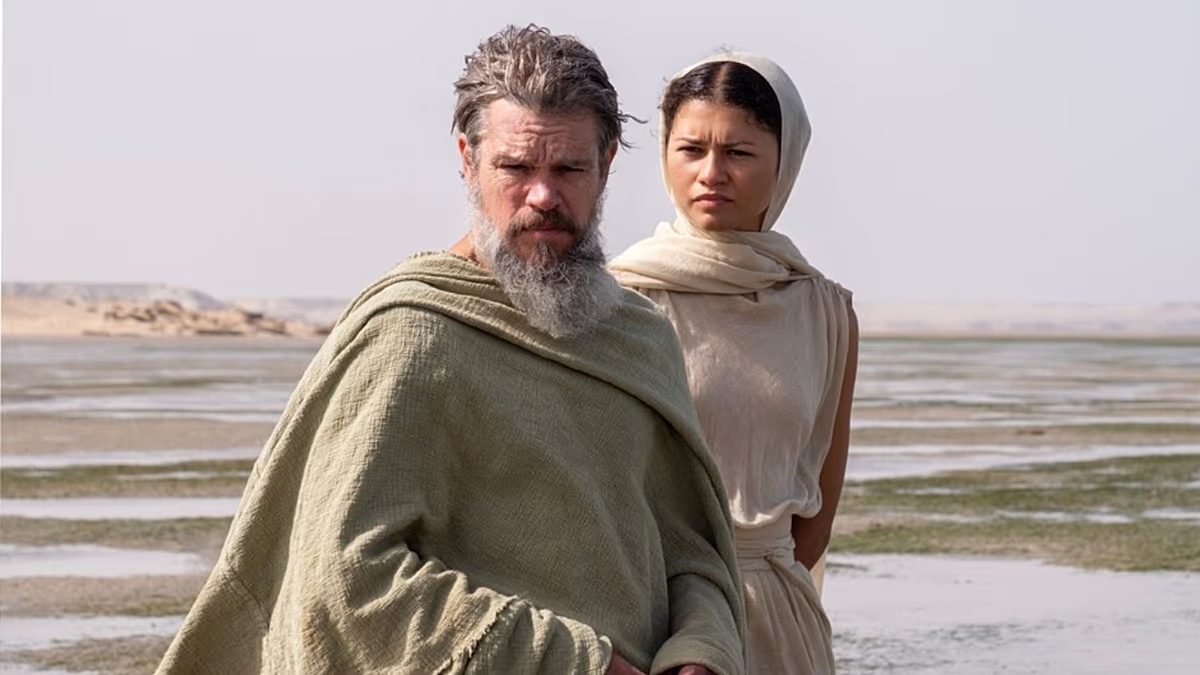
The release of the new trailer for Christopher Nolan’s The Odyssey has ignited fervent discussion online, but much of the buzz has shifted from epic spectacle to a surprisingly specific point of contention: the film’s modern American accents and dialogue. While the preview showcases the expected Nolan hallmarks—striking visuals, a grand scale, and a star-studded cast including Matt Damon, Robert Pattinson, and Tom Holland—a significant portion of the audience reaction has fixated on the jarring sensation of hearing ancient Greek heroes speak in contemporary tones. The clash between the mythical setting and the familiar cadence of modern speech has proven distracting for many, pulling viewers out of the immersive, ancient world they anticipated.
The criticism centers on several key moments in the trailer that feel tonally incongruous. Matt Damon’s Odysseus rallying his men with a blunt “Let’s go!” and Robert Pattinson’s Antinous taunting Telemachus with the line, “You’re pining for a daddy you didn’t even know, like some sniveling bastard,” have become particular flashpoints. The use of colloquialisms like “daddy” in the context of Homeric epic has struck many as an awkward, if not downright bewildering, creative choice. On social media platforms like Reddit, viewers have expressed disbelief, questioning why a project of this magnitude would opt for a linguistic style that feels so anachronistic and, to some, disrespectful to the source material.
This linguistic dissonance is compounded by the fact that actors like Pattinson and Holland are British and capable of wielding more classical or neutral accents. The deliberate selection of American dialects has led to a split in the audience’s interpretation. Some critics are viewing it as a misstep by Nolan, a director renowned for his meticulous craft, arguing that it undermines the gravitas of the story. Others, however, are speculating that the choice is intentional—a bold, modernizing tactic designed to bridge the gap between the ancient epic and today’s audience, making the characters’ emotions and conflicts feel more immediate and relatable, even if at the risk of seeming initially jarring.
Despite the accent controversy, the film’s monumental status remains undiminished. The Odyssey marks Nolan’s first directorial project since the Oscar-winning Oppenheimer and is notably the first feature film ever shot entirely with IMAX cameras, promising a visually unparalleled cinematic experience. The director himself has framed the epic as a cornerstone of modern storytelling, drawing a direct line from Homer’s work to contemporary blockbuster culture. In a recent interview, he suggested that the Homeric epics were the “Marvel of its day,” providing the foundational myths and heroic archetypes that continue to fuel our narratives today, from comic books to major film franchises.
Nolan’s comments hint at his overarching vision: to present The Odyssey not as a distant, museum-piece relic, but as a living, breathing story whose core themes of journey, struggle, and home are perpetually relevant. By employing modern language and accents, he may be attempting to strip away the layers of historical formality to expose the raw, human drama underneath. Whether this approach is perceived as a groundbreaking reinvention or a distracting gimmick will likely be a central talking point when the film releases. It is a creative gamble that seeks to connect the ancient past with the present in the most direct way possible—through the voices of its characters.
Ultimately, the polarized reaction to the trailer underscores the immense anticipation and passion surrounding the project. From debates over dialogue and Elon Musk’s eccentric commentary to excitement over its technical achievements, The Odyssey is already a cultural event. Whether the final film will win over skeptics and justify its modern linguistic choices remains to be seen when it sets sail for cinemas worldwide on July 17th. Until then, the debate rages on, proving that even a millennia-old story can spark very modern conversations about how we tell our most enduring tales.