


Of course. Here is a humanized and expanded summary of the content, structured into six paragraphs.
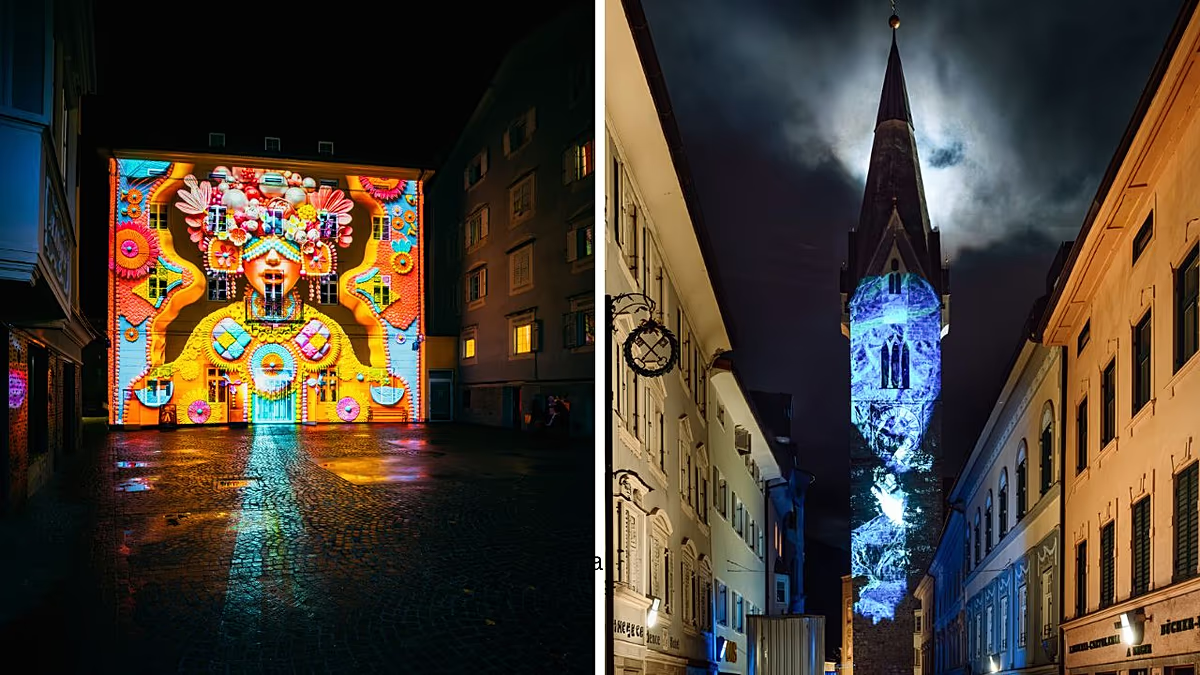
The ancient Alpine town of Brixen, nestled in the crisp air of northern Italy, has once again undergone its annual metamorphosis. As dusk settles over its cobbled streets and the towering spire of the cathedral, the familiar scene is gently displaced by something magical. The Water Light Festival has returned, casting not just illumination, but a profound narrative onto the town’s waterways, architecture, and soul. For a period each spring, Brixen transcends its historical identity to become a global canvas, a meeting point for light artists from across the world who use the town’s very fabric as their medium. It is a transformation that feels both ephemeral and deeply resonant, a temporary dreamscape woven into the permanent stone.
This year, the festival’s guiding vision carries a weighty and timely significance: “Imagine Peace.” In a world where the shadows of conflict seem ever-present, the artists have turned their luminous tools toward themes of war, memory, and, ultimately, hope. The theme is not a mere slogan but a directive, challenging creators to use light—a force so often associated with celebration and joy—to contemplate darkness, to remember loss, and to carve out spaces for reflection on what reconciliation might look like. The festival becomes more than an art exhibition; it is a communal meditation, using the universal language of visual beauty to explore the most complex of human conditions.
The artworks themselves are conversations between the old and the new, between the solid and the ephemeral. Projections might dance across the millennium-old walls of the cathedral, depicting stories of fragility and resilience, while the town’s serene rivers and fountains become interactive installations, with light responding to the water’s flow or a viewer’s presence. These pieces are deliberately placed to create a dialogue with Brixen’s own history—a town that has witnessed centuries of both peace and turmoil. The “light” is not just visual; it is metaphorical, aiming to illuminate forgotten histories, to honor memory, and to make the abstract concept of peace feel tangible and immediate to those walking the illuminated paths.
For the attendees, the experience is immersive and personal. Visitors are not passive observers but participants in a living, glowing environment. They move through a curated journey, where each installation prompts a different emotion: perhaps sorrow at a piece memorializing loss, awe at a technical marvel depicting unity, or quiet hope at a simple projection of growing blossoms over a scarred wall. The cold night air of the Alps, the sound of water, and the hushed conversations of fellow viewers all become part of the art. It is a deeply humanizing experience, reminding us that art’s highest function is to connect us to each other and to our shared realities.
The festival’s impact extends beyond its immediate beauty. It positions Brixen as a thoughtful leader in the global cultural dialogue, using its platform not just for spectacle but for meaningful discourse. It demonstrates how public art can be responsible and responsive, addressing global themes in a local context. Furthermore, it fosters a unique community each year—a temporary gathering of artists, technicians, locals, and international visitors united by a shared sensory experience and a common contemplation of the festival’s theme. This community, bound by light and idea, is perhaps one of the most powerful artworks the festival creates.
As the installations eventually fade and the town’s ordinary nocturnal lighting returns, the festival leaves behind more than memories of stunning images. It leaves an imprint of its theme on the collective consciousness of those who witnessed it. The “Imagine Peace” theme, realized through such beauty and technical artistry, challenges us to carry that imagination forward into our daily lives. The Water Light Festival proves that light can be a tool for more than visibility; it can be a medium for healing, a catalyst for conversation, and a beacon—literal and figurative—guiding us toward reflection and, hopefully, toward a more peaceful future.