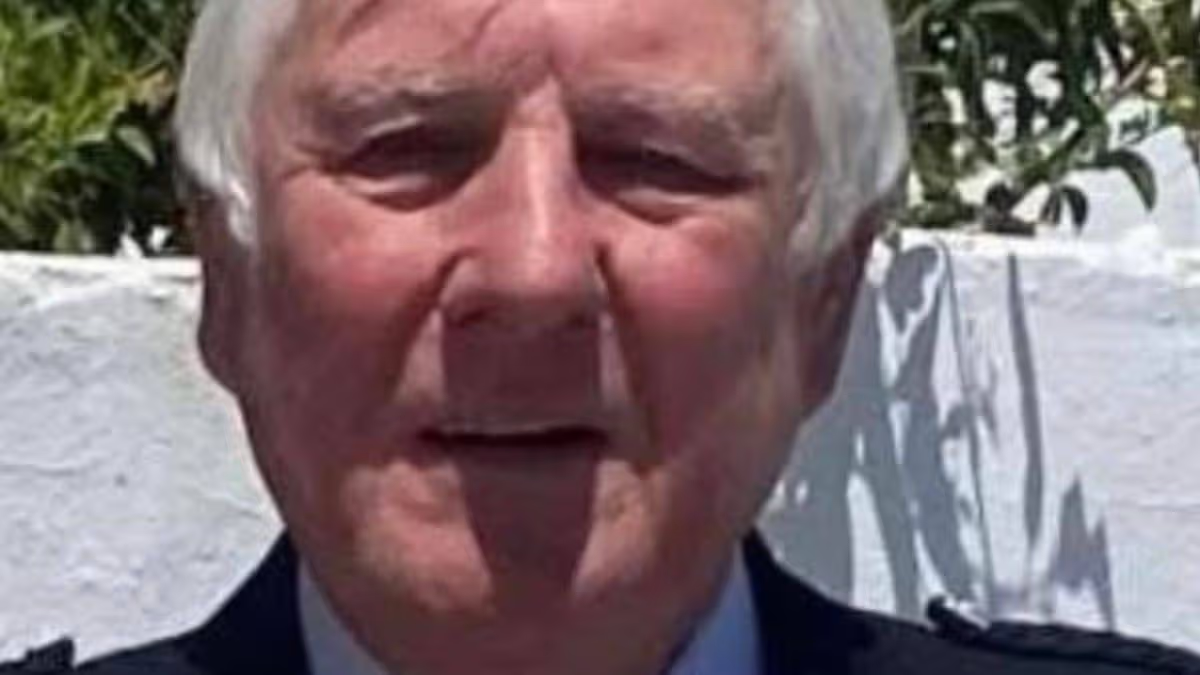




In a deeply troubling incident that has shocked the community, a 66-year-old man stands accused of orchestrating a violent attempted attack on a police station in Northern Ireland. The charges, which include attempted murder and a host of terrorism-related offences, stem from an alleged car bomb plot targeting the Dunmurry Police Station. This event, emerging from the complex historical backdrop of Northern Ireland, underscores the persistent, though thankfully diminished, undercurrents of sectarian and political violence that the region has worked for decades to overcome. The arrest, made under the Terrorism Act, signals the seriousness with which authorities are treating the case, reflecting ongoing vigilance against threats to the hard-won peace.
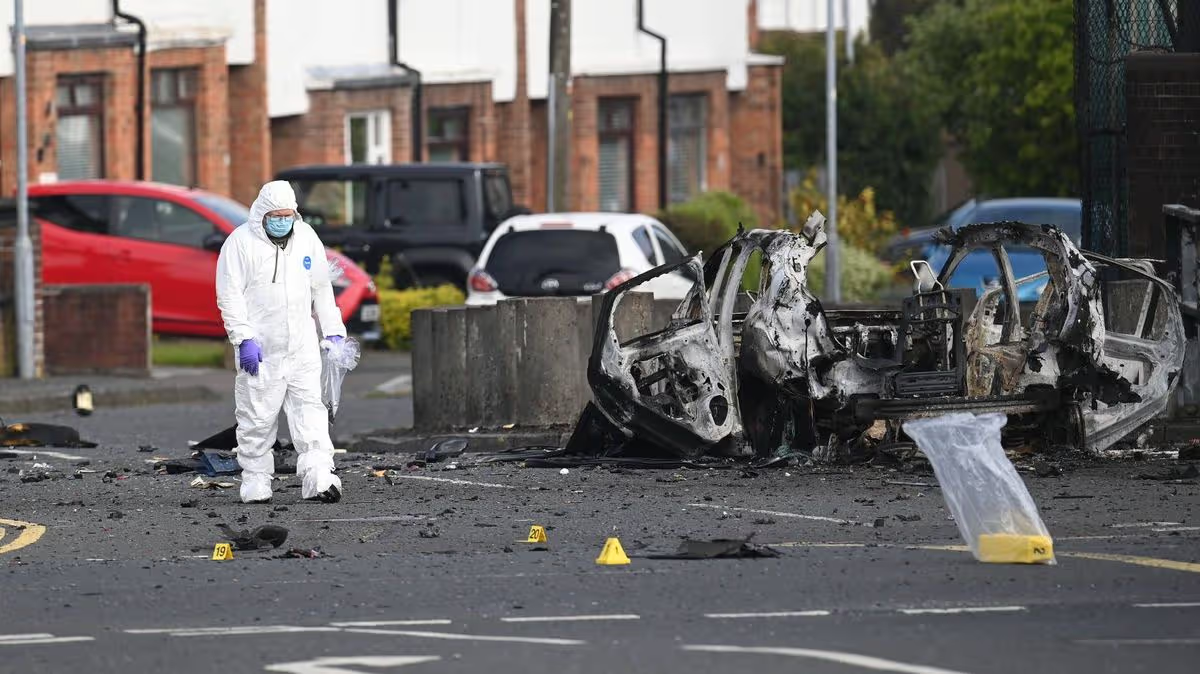
The scene in Dunmurry, captured in images following the incident, paints a picture of a community abruptly confronted with the spectre of past conflicts. The alleged method—using a hijacked vehicle as a delivery mechanism for an explosive device—is a grim echo of tactics historically employed during the Troubles. According to police reports, the plot involved the alleged hijacking of a male delivery driver in the Twinbrook area of west Belfast. The driver was reportedly forced to transport what is believed to have been a bomb to the gates of the police station, a scenario that places an innocent civilian at the heart of a terrifying act of intended political violence.
The specific charges against the unnamed 66-year-old suspect are grave and extensive. Beyond the central charge of attempted murder, he faces accusations of possessing explosives with intent to endanger life, causing an explosion likely to endanger life or property, possession of articles for use in terrorism, and hijacking. This comprehensive list illustrates the planned and multi-faceted nature of the alleged operation. The suspect’s detention in the Dunmurry area and his scheduled appearance before Lisburn Magistrates’ Court mark the beginning of a formal legal process. As per standard procedure in such serious cases, the Public Prosecution Service will review all evidence and charges, ensuring the judicial process is meticulous and robust.
The human dimension of this event is profoundly unsettling. The alleged coercion of a delivery driver—an ordinary person going about his work—transforms a geopolitical act into a personal trauma. This individual was reportedly made an unwilling pawn, ordered at threat to his own life to deliver a potentially devastating weapon. This aspect of the story highlights how terrorism inevitably victimizes everyday citizens, shattering personal safety and exploiting ordinary routines for violent ends. The psychological impact on the driver, his family, and the wider community in Twinbrook and Dunmurry is immense, a reminder that the true cost of such acts is measured in human fear and suffering.
For the people of Northern Ireland, such incidents cannot be viewed in isolation. They resonate against the long and painful history of the Troubles, a period of conflict that many had hoped was firmly in the past. The attack on a police station, a symbol of state authority, is a particularly potent provocation. It tests the resilience of the peace process and challenges the daily reality of normalized community relations. The swift police response and the serious charges brought forward demonstrate the institutions’ commitment to stability, but the event itself inevitably stirs anxiety and painful memories for a population that has yearned for a permanent end to violence.
As the case moves to the courts, it enters a crucial phase of accountability and truth-seeking. The judicial process will now work to establish the facts, determine the suspect’s involvement, and deliver justice. For the public, it is a moment that calls for calm and faith in the rule of law, while also prompting reflection on the enduring work of reconciliation. The alleged attack serves as a stark warning that vigilance is perpetual, but the collective response—from law enforcement and the community—reaffirms a broader societal rejection of a return to the darkest chapters of history. The ultimate summary is not just of a criminal act, but of a community’s continued determination to choose a peaceful future.