


Of course, here is a humanized and expanded summary of the content, structured into six paragraphs.
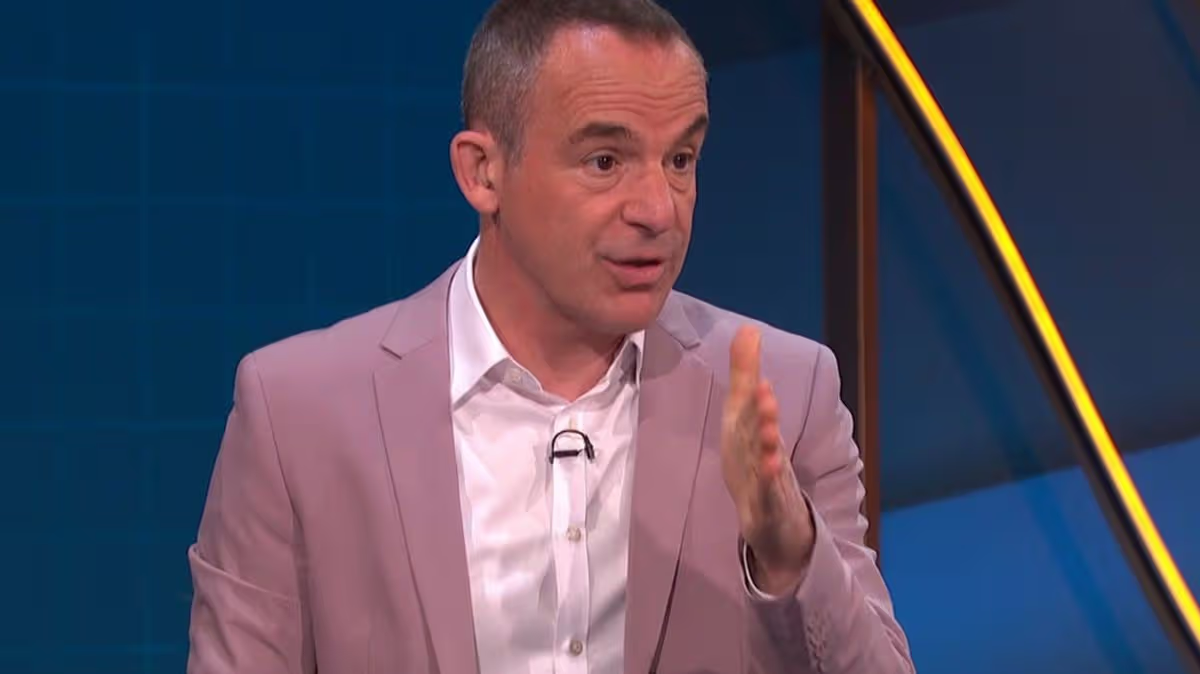
As the summer sun begins to feel like a tangible promise, the collective daydream of holidays takes hold. Amidst this seasonal excitement, Martin Lewis, the founder of MoneySavingExpert.com, has issued a crucial and timely reminder for anyone planning a getaway. During a special edition of his ITV programme, The Martin Lewis Money Show Live, he emphasised what he considers the single “most important” action to take the moment your holiday is confirmed. His advice distills into a simple, memorable mantra: take out travel insurance “as soon as you book,” or, as he abbreviates it, ‘ASAB’. This isn’t a suggestion to be filed away for later, but a foundational step as critical as selecting your destination itself. Lewis’s point is that the journey of a holiday begins not at the airport, but at the point of booking, and your financial protection should start on that exact same day.
The logic behind this ‘golden rule’ is both straightforward and profoundly important. When you purchase a single-trip policy immediately upon booking, your coverage begins from that instant, even if your departure date is months or over a year away. As Lewis explains, roughly half the value of a travel insurance policy lies in its protection for eventualities that could prevent you from travelling at all. “If anything happens from that point onwards, you’re covered, no problem,” he stated. This pre-departure cover can be a financial lifesaver, shielding you from losses if you fall seriously ill, have a family emergency, or face any other unforeseen crisis that forces you to cancel before you even set foot on a plane. It transforms a potentially ruinous situation into a manageable one, securing the significant investment you’ve made in your plans.
The real-world value of this advice was powerfully illustrated during the show by a viewer’s story, shared by presenter Jeanette Kwakye. The viewer had booked complex and expensive flights to Australia for a group of seven family members, scheduled for the following year. Heeding Martin’s advice, he took out an insurance policy straight away. When one member of the party became pregnant and could no longer travel on the original dates, the family faced a rescheduling fee of £5,000. Thanks to the foresight of securing insurance immediately, this substantial cost was covered entirely by the policy. This anecdote perfectly underscores Lewis’s argument: the small, upfront cost of insurance is not for the holiday itself, but for the entire planning period—a period fraught with its own risks that can derail even the most meticulously arranged trips.
Lewis further clarified a critical distinction in consumer protection that every traveller must understand, especially in an era of common flight disruptions. He addressed a direct question from an audience member about whether a cancelled flight would lead to a refund for separately booked hotel costs. His answer was a stark “No.” He warned that if you book your flights and accommodation independently—a ‘DIY’ holiday—you are not protected under the same robust regulations as a formal package holiday. If your flight is cancelled due to issues like a lack of jet fuel, airline strikes, or operator failure, you may only be entitled to a refund or rebooking for the flight itself. Your hotel, paid for separately, would likely be a total loss unless you could claim directly through your travel insurance.
This stark reality highlights the dual layers of protection smart travellers need. A traditional package holiday, where flight and accommodation are sold as a single entity by a licensed tour operator, provides automatic financial protection. If the flight is cancelled, the entire package is refunded. For those who prefer or find better deals by booking elements separately, securing a comprehensive travel insurance policy as soon as you book becomes your essential safety net. It effectively bridges the regulatory gap, potentially covering lost hotel deposits, car hire fees, and other non-refundable expenses if a flight cancellation scuppers your entire plan. In this context, insurance isn’t just for medical emergencies abroad; it’s the fundamental glue holding a independently-booked trip together against external shocks.
Ultimately, Martin Lewis’s message is one of proactive empowerment in a world of uncertainty. His ‘ASAB’ rule is a simple behavioural switch with profound implications. It moves insurance from being an afterthought, often purchased in a rush days before departure, to a cornerstone of sensible financial planning. Whether safeguarding against personal misfortune before you travel or providing a backstop for the fragile ecosystem of independent travel bookings, immediate insurance is the key to turning holiday dreams into secure, protected reality. As the travel season approaches, this reminder serves as the most valuable travel tip of all: invest in peace of mind from the very start, so you can truly relax and enjoy the journey ahead.