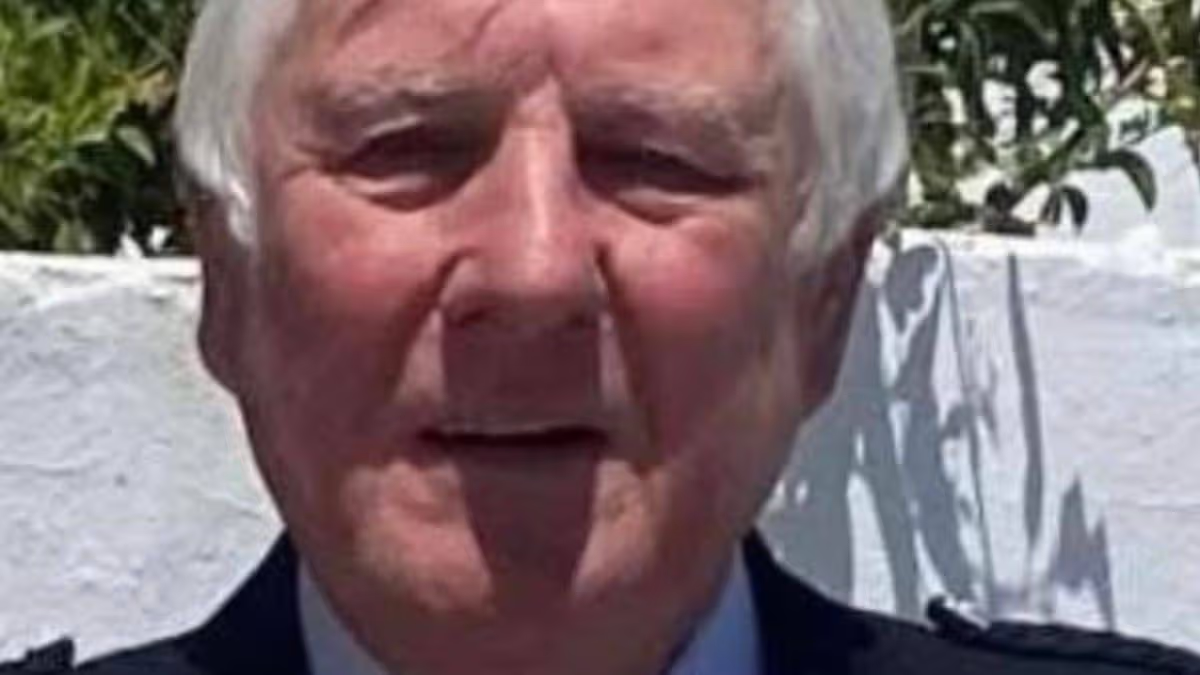




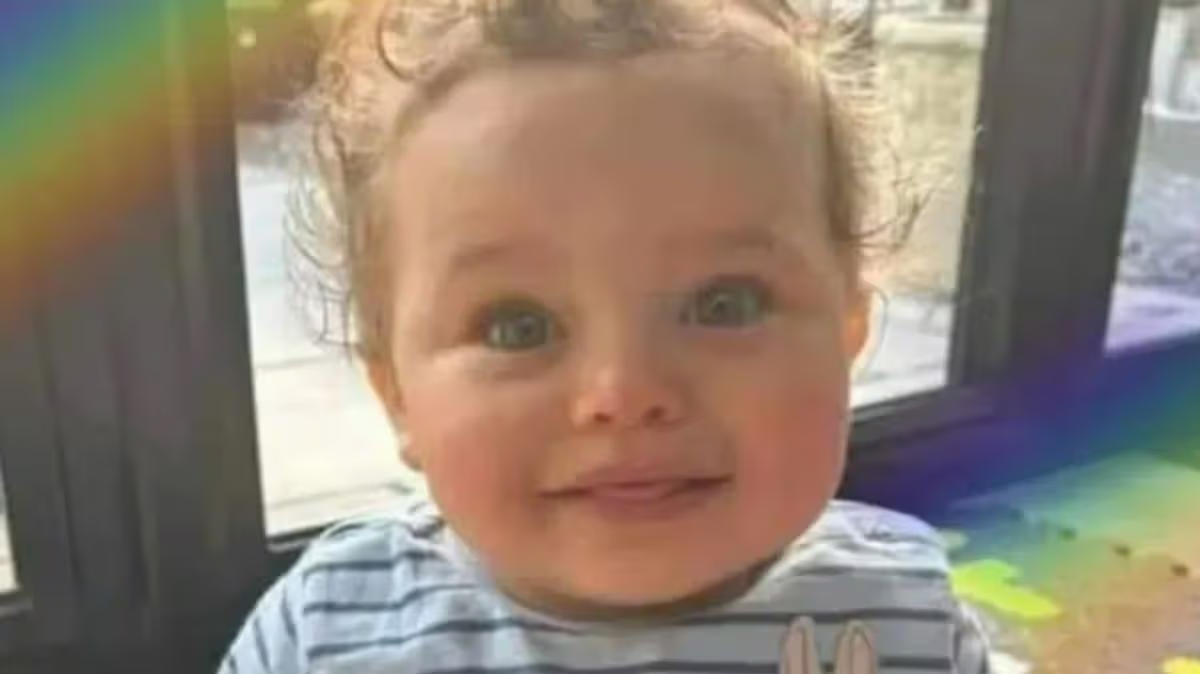
In a deeply unsettling case unfolding at Preston Crown Court, the jury is hearing harrowing details surrounding the death of thirteen-month-old Preston Davey in July 2023. At the center of the tragedy are two men, Jamie Varley, 37, and his partner, John McGowan-Fazackerley, 32, who were in the process of adopting the infant. Prosecutors allege that in just the four short months Preston was in their care, he sustained a staggering 40 separate injuries. Varley stands accused of the child’s murder and a horrific catalogue of sexual abuse, while McGowan-Fazackerley is charged with allowing the baby’s death. Both men, from Grimsargh, Preston, deny all charges against them, setting the stage for a trial that seeks to unravel the final, terrifying moments of a little boy’s life.
A disturbing piece of evidence presented to the court casts a chilling light on Varley’s state of mind. A text message sent from his phone to McGowan-Fazackerley on July 10, 2023—a day of profound crisis—read: “Your son’s in hospital. I strangled him. Jokes, just give me a call when done.” This message, sent as Preston lay gravely injured, is a jarring contradiction, blending a confession of violence with a flippant, dismissive tone. For the jury, it represents a critical moment to decipher intent and character, juxtaposing a caregiver’s alleged brutal act against a casual, almost cruel, attempt to downplay it as humor. This communication alone paints a portrait of a home environment far removed from the safety and nurturing a child like Preston desperately needed.
The court proceedings have further revealed that strain and resentment may have festered in the household almost from the start. Testimony indicates Varley expressed intense frustration over the challenges of new parenthood, particularly a lack of sleep. In a text to his sister, a baby sleep trainer, just days after Preston’s arrival, he wrote, “He’s dead meat today. Didn’t sleep last night after 11.30. Up every, one and a half hours.” The violent metaphor in a message about an infant is profoundly alarming. Other communications to friends described Preston as “crying all the time” and the situation as a “nightmare,” revealing a caregiver overwhelmed not with compassion, but with exasperation. This narrative suggests a tragic failure to cope with the normal, albeit demanding, realities of caring for a toddler.
Perhaps most grotesque is the pattern of what prosecutors describe as “macabre joking” that permeated Varley’s communications. In one exchange, after sending his mother a cheerful video of Preston playing, she replied with a typical grandparent’s praise: “Clever boy xxx.” Varley’s response was, “This was before he was murdered and put to bed.” In another message to a friend, he stated, “First sleep over. I wanted to put him in the field with the cows,” before oddly switching to call the baby a “ray of sunshine.” These repeated instances where violence against Preston is invoked as a punchline create a deeply troubling pattern. They suggest a disturbing dissociation, a normalization of violent fantasy toward a vulnerable child in his care, making the concrete allegations of physical and sexual abuse feel tragically consistent.
The legal charges facing the two men are extensive and grave. Varley denies a total of 26 charges, including murder, manslaughter, multiple counts of sexual assault and assault by penetration against a child, child cruelty, and creating and distributing indecent images of a child. McGowan-Fazackerley, for his part, denies allowing the death of a child, three counts of cruelty, and one count of sexual assault of a child. The sheer volume and severity of the accusations depict a period of sustained alleged torment inflicted upon Preston. Each charge represents a separate breach of trust and an act of cruelty, collectively outlining a story of profound suffering endured by a child who should have been protected and cherished.
As the trial continues, the community and the court are left to grapple with a profound sense of loss and a search for answers. Preston Davey’s short life ended not from illness or accident, but in a hospital following what the prosecution argues was a period of systematic abuse. The text messages and testimony presented thus far offer a window into a household where patience was thin, resentment was voiced, and violence was spoken of in jest. The jury’s immense task is to sift through this digital and testimonial evidence to determine the truth behind the toddler’s fatal injuries. The proceedings are more than a legal exercise; they are a solemn reckoning for a life lost, a painful examination of how the sacred duty of care can be so catastrophically broken, and a pursuit of justice for a baby named Preston.