



For more than a century, the hills around Wellington, New Zealand’s vibrant capital city, have been silent of a unique and sacred sound: the nocturnal call of the kiwi. This flightless, burrowing bird, a national symbol so powerful it lends its name to the country’s people, vanished from the region’s wild spaces over a hundred years ago, a quiet victim of habitat loss and introduced predators. Its absence created a void in the local ecosystem and, perhaps more profoundly, in the cultural and natural identity of the city itself. The kiwi was a living legend rendered just that—a legend—for generations of Wellingtonians who knew it only from coins, sports team logos, and conservation warnings. Yet, this story is not one of an ending, but of an extraordinary and determined new beginning, spearheaded not just by official agencies, but by the very community from which the bird had disappeared.
Now, in an ambitious and deeply moving act of ecological homecoming, the residents of Wellington are waging a grassroots campaign to rewrite that history. The Capital Kiwi Project represents a monumental citizen-led effort to return the endangered birds to their ancestral lands. It’s a story of modern conservation driven by local passion, where community volunteers, landowners, and conservationists work in unison to prepare the landscape for this delicate homecoming. The project is more than a species reintroduction; it’s an act of reconciliation, an attempt to heal a wound in the land by restoring one of its most cherished original inhabitants. This improbable mission blends sophisticated science with old-fashioned community spirit, all fueled by a shared vision: to hear the kiwi’s distinctive cry once again echoing through Wellington’s nocturnal hills, making the capital one of the few cities in the world where a national icon thrives within sight of urban lights.
The profound care and solemnity of this mission were on full display one recent Tuesday night on a mist-shrouded hill overlooking the dark waters of the Raukawa / Cook Strait. Led by project founder Paul Ward, a team of volunteers moved in quiet reverence across rugged farmland, their path illuminated only by the soft, red glow of their torches—a light gentle enough not to disturb the sensitive birds they carried. In their hands were seven crates, each holding a precious, feathered cargo. The scene was one of focused tranquility, a stark contrast to the threats that had originally doomed the local kiwi population. In that hushed, almost ceremonial procession under the stars, one could feel the weight of responsibility and the palpable hope of the moment. This was the critical, hands-on work of turning a collective dream into a living reality, one careful step at a time.
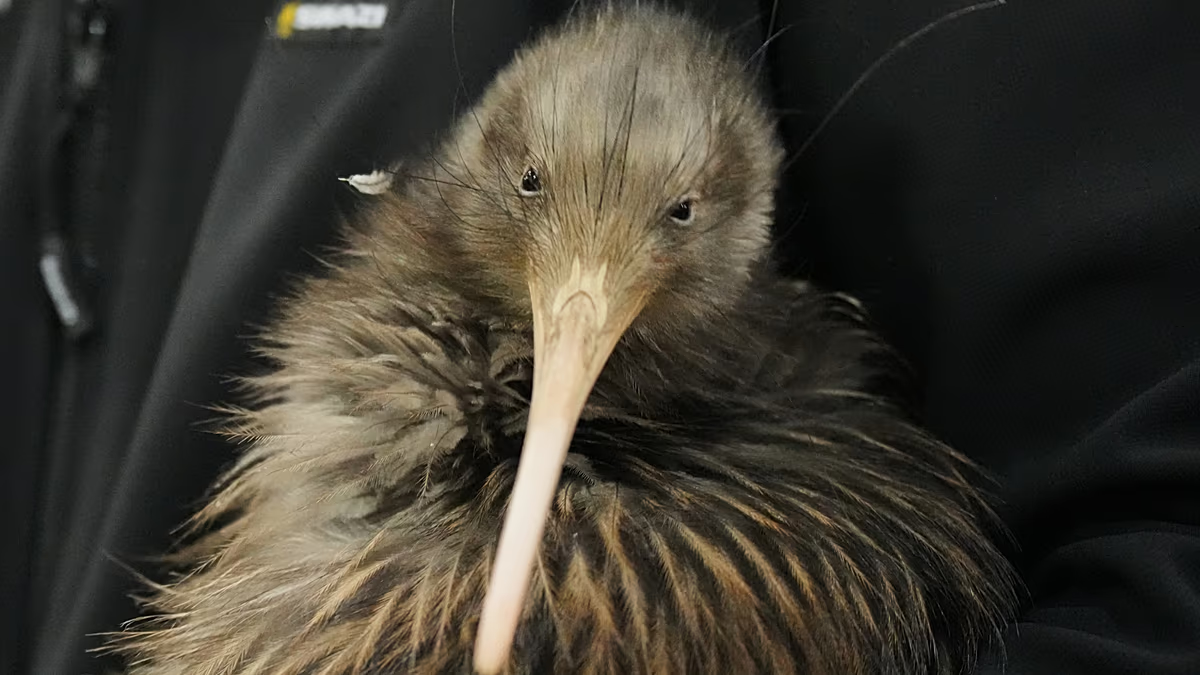
Upon reaching the designated release site, the team set the crates down in pairs. With a collective breath held, they slid the doors open and gently tilted the boxes, offering the birds their first glimpse of their new home. Inside each crate nestled a kiwi, including a landmark individual: the 250th bird to be relocated to Wellington since the project began. This milestone represents a quarter of a thousand second chances, a testament to years of relentless effort in predator control, community education, and habitat restoration. Each bird, with its fluffy brown feathers, long whisker-like bill, and strong legs, is a small, breathing victory. Their release is not the end of a journey, but the start of a new, watchful chapter where these individuals will explore, forage for invertebrates, and, hopefully, one day breed, slowly weaving themselves back into the fabric of the local wilderness.
The urgency behind this beautiful endeavor cannot be overstated, for the kiwi’s plight is a national crisis. Current estimates suggest only about 70,000 kiwi remain across all of New Zealand, a staggering collapse from a pre-human population believed to have been as high as 12 million. Even more alarming is the relentless annual decline of roughly 2%, driven primarily by non-native predators like stoats, dogs, and cats that attack adults and decimate vulnerable eggs and chicks. Without sustained, intensive human intervention, this iconic species faces a slow march toward extinction. The Wellington project is thus a crucial frontline in a wider war for survival, a localized battle that contributes to the national outcome. Every kiwi successfully established in the capital’s hills is not just a win for Wellington, but a vital boost for the entire species’ genetic diversity and long-term prospects.
The return of the kiwi to Wellington is, therefore, a powerful narrative of hope, responsibility, and communal healing. It demonstrates that the devastating environmental losses of the past are not necessarily permanent and that concerted, compassionate action can begin to mend them. The volunteers walking those hills at night, the residents supporting the project, and the kiwi themselves are all participants in a grand experiment in coexistence. It’s a promise to future generations that they will not inherit a silent landscape, but a living one, where the rustle in the undergrowth at dusk might just be a kiwi, and where the nation’s heart beats strongly in the wild spaces at the edge of its capital city. This is more than conservation; it is the restoration of a national soul, one precious bird at a time.