


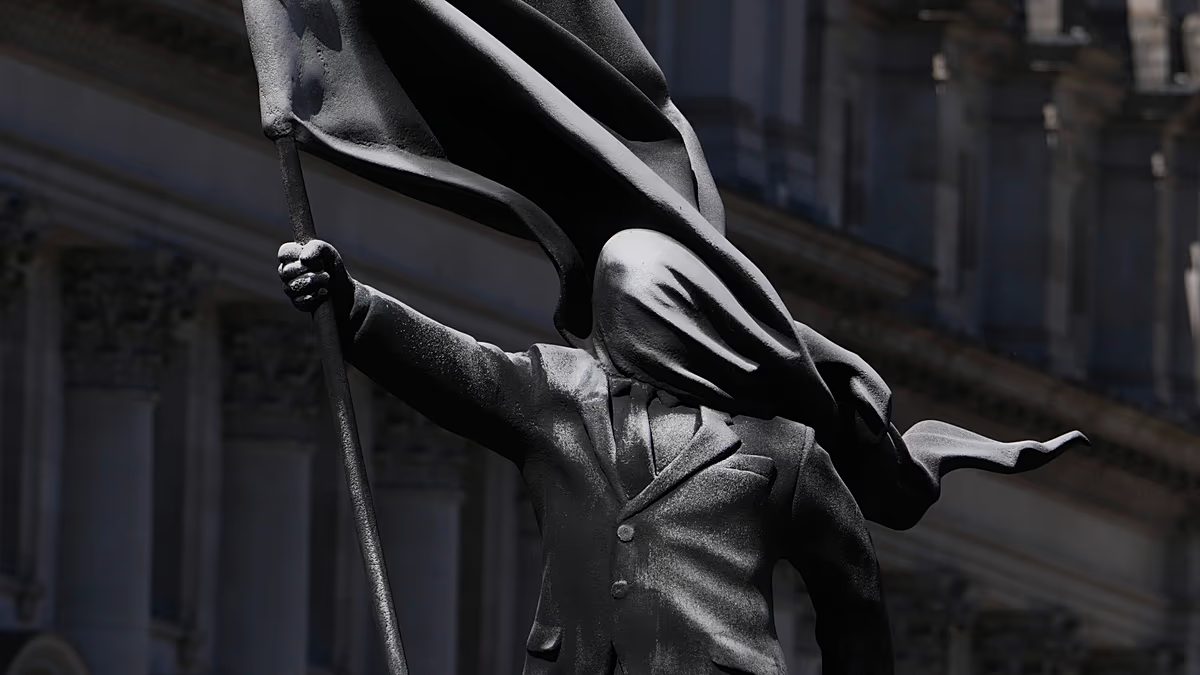
The elusive artist known as Banksy has struck again in London, transforming an ordinary city corner into an instant cultural landmark. Crowds gathered in Waterloo Place near Pall Mall after the artist confirmed his authorship of a new, mysterious sculpture. What began as an intriguing, unattended statue—a suited man stepping forward, his face entirely shrouded by the large flag he carries—quickly became a magnet for curiosity. Tourists, street art enthusiasts, and bemused Londoners stopped in their tracks, pulling out phones to capture the enigmatic figure. The quiet elegance of the St James’s area was punctuated by this silent, poignant statement, proving that even in a city saturated with history and art, a Banksy intervention still commands immediate and widespread attention.
The sculpture’s power lies in its stark, simple symbolism. A figure in formal business attire moves with purpose, yet his identity is completely erased by the very emblem he bears. This creates a resonant paradox: the flag, typically a symbol of collective identity and pride, here acts as a mask, obliterating individuality. It speaks to the anonymity of bureaucracy, the sacrifice of self to nation or cause, or perhaps the hidden faces behind public gestures of patriotism. Banksy has long traded in such layered contradictions, using accessible imagery to pose complex questions about power, conformity, and sacrifice. This piece continues that tradition, inviting every passerby to project their own meaning onto the veiled figure, making the public space a forum for personal and collective interpretation.
As speculation swirled online about the sculpture’s origins, the confirmation from Banksy’s official channels electrified the scene. The digital age has transformed the experience of street art; discoveries are now globally shared in real-time, with authenticity debated across social media platforms until the artist’s rare verification ends the mystery. This direct, albeit remote, interaction between the artist and a global audience is a modern phenomenon that Banksy masterfully navigates. The subsequent placement of police barriers around the work added another layer to the narrative, a familiar ritual where official authority contains and regulates an act of anti-establishment art. These barriers, intended to manage crowds, ironically underscored the work’s disruptive power, framing it as something both valuable and potentially unruly.
This installation is not an isolated event but part of Banksy’s enduring dialogue with London and the world. His works, from shredded paintings to dystopian murals, are cultural events that generate pilgrimage-like gatherings. They temporarily redefine urban spaces, turning graffitied walls or unassuming plazas into destinations for reflection and community. In a city constantly evolving, these interventions serve as sudden, profound punctuation marks—moments of shared pause and wonder. They highlight the artist’s unique role as a phantom director of public attention, orchestrating moments of beauty and critique that belong to everyone and no one, existing in the delicate space between vandalism and revered art.
The human response to the piece is as much a part of the artwork as the sculpture itself. The gathered crowds, the held-up phones, the murmurs of discussion—all these reactions form a living, breathing component of Banksy’s statement. In an era often criticized for digital isolation, his work physically draws people together, creating spontaneous congregations of strangers united by curiosity. It democratizes art appreciation, removing it from the hushed halls of galleries and placing it directly on the public’s path. The suited figure with a flag for a face is silent, but the space around it hums with the energy of collective engagement, debate, and the simple human desire to witness something extraordinary in the ordinary fabric of daily life.
Ultimately, Banksy’s latest work is a gift of ambiguity in a world that often demands clear answers. It does not preach a single message but offers a visual question that lingers in the mind. As the crowds eventually disperse and the barriers may one day come down, the image of that anonymous flag-bearer will endure in photographs and memories. It encapsulates the artist’s continued relevance: his ability to encapsulate profound tensions of modern life—between individual and collective, freedom and control, revelation and concealment—with a single, unforgettable silhouette. In doing so, he reminds us that art’s highest function is not to decorate, but to provoke thought and feeling, turning a London street corner into a stage for the timeless human drama of identity and belonging.