



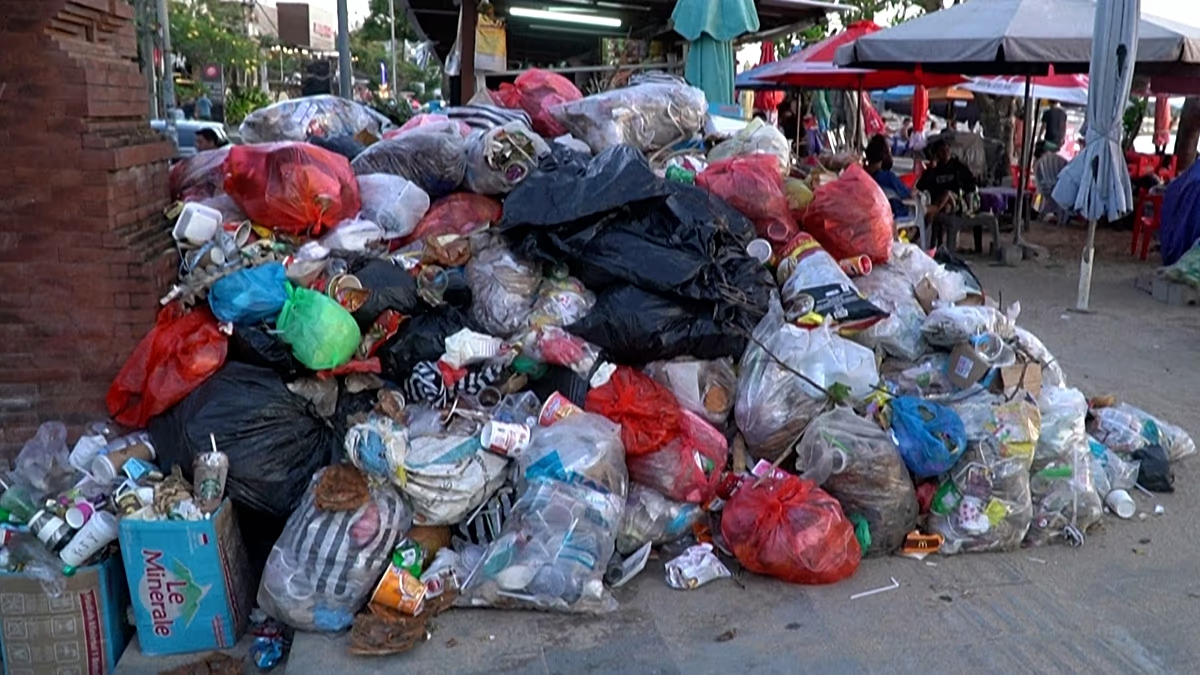
In early April, a sudden and sweeping change swept across Bali as its largest landfill was abruptly closed to organic waste. This move was not a spontaneous decision, but the enforcement of a decade-old Indonesian law banning open dumping sites—a law that had largely been ignored until now. The immediate effect was administrative chaos. Local authorities, caught off-guard by the swift enforcement, found themselves without prepared alternatives. The result was an instant crisis in waste management, exposing the fragile infrastructure on an island that prides itself on natural beauty. For residents and officials alike, the closure was a stark wake-up call, highlighting the vast gap between policy and practical readiness in handling the island’s growing waste stream.
The human impact of this policy shift became visible almost overnight. Across neighborhoods and business districts, bags of garbage began accumulating on street corners and in alleyways. With no clear municipal system to collect organic waste, frustration mounted. Some residents, desperate to clear the decaying piles from their doorsteps, resorted to burning the refuse. This practice filled residential areas with thick, acrid smoke, posing immediate respiratory risks and long-term environmental concerns. Meanwhile, small business owners, from warung food stalls to market vendors, faced an added financial burden. Many began paying out-of-pocket for private waste collectors, a service that cuts deeply into the thin profit margins that define their livelihoods. The situation has turned daily waste disposal from a routine task into a source of stress, expense, and public health anxiety.
This crisis did not emerge in a vacuum. Indonesia officially prohibited open landfills in 2013, yet for years, enforcement was sporadic and lax. Bali, with a resident population of about 4.4 million, plays host to a tourism economy that drew nearly seven million visitors last year alone. This influx dramatically multiplies the volume of waste generated, far exceeding the island’s inherent capacity to manage it. The dependency on a few overwhelmed landfills was a ticking time bomb. The recent enforcement action, while legally justified, has laid bare the consequences of years of deferred action and inadequate investment in waste processing infrastructure. It underscores a painful reality: Bali’s postcard-perfect image has long been underpinned by an unsustainable and out-of-sight waste disposal system.
Looking ahead, Indonesian authorities point to planned waste-to-energy plants as a long-term solution. Among these is a major facility projected to process up to 1,200 tons of waste per day. Such projects represent a forward-thinking shift toward converting a problem into a resource, aligning with global trends in sustainable waste management. However, these plants are complex, large-scale infrastructure projects that require years of planning, funding, and construction. They offer little solace to communities dealing with overflowing bins and smoke today. The timeline gap between the immediate crisis and the promised technological fix reveals a critical challenge in environmental governance: how to manage the transition period effectively without imposing undue hardship on the population.
The standoff at Bali’s landfill is more than a local logistical failure; it is a microcosm of a global struggle faced by many developing economies and tourist hotspots. It highlights the tension between rapid consumption-driven growth and sustainable environmental stewardship. The visible piles of waste and the smell of burning trash threaten not only public health but also the very tourism industry that drives the local economy. Visitors do not come to an island paradise to witness an environmental breakdown. Thus, the crisis carries an economic imperative alongside the ecological one, pushing for solutions that are both swift and sustainable.
In conclusion, Bali’s waste management crisis, triggered by the sudden enforcement of an old landfill ban, is a multifaceted problem with deep roots. It has disrupted daily life, burdened small businesses, and created public health hazards through increased burning of garbage. While the government’s commitment to waste-to-energy plants is a positive long-term vision, the current situation underscores an urgent need for transitional strategies. Effective solutions will require coordinated efforts—including public education on waste reduction, investment in immediate processing alternatives, and inclusive planning that considers both residents and the tourism sector. Only through such holistic action can Bali hope to clear its streets, protect its environment, and preserve its reputation as a cherished island destination.