


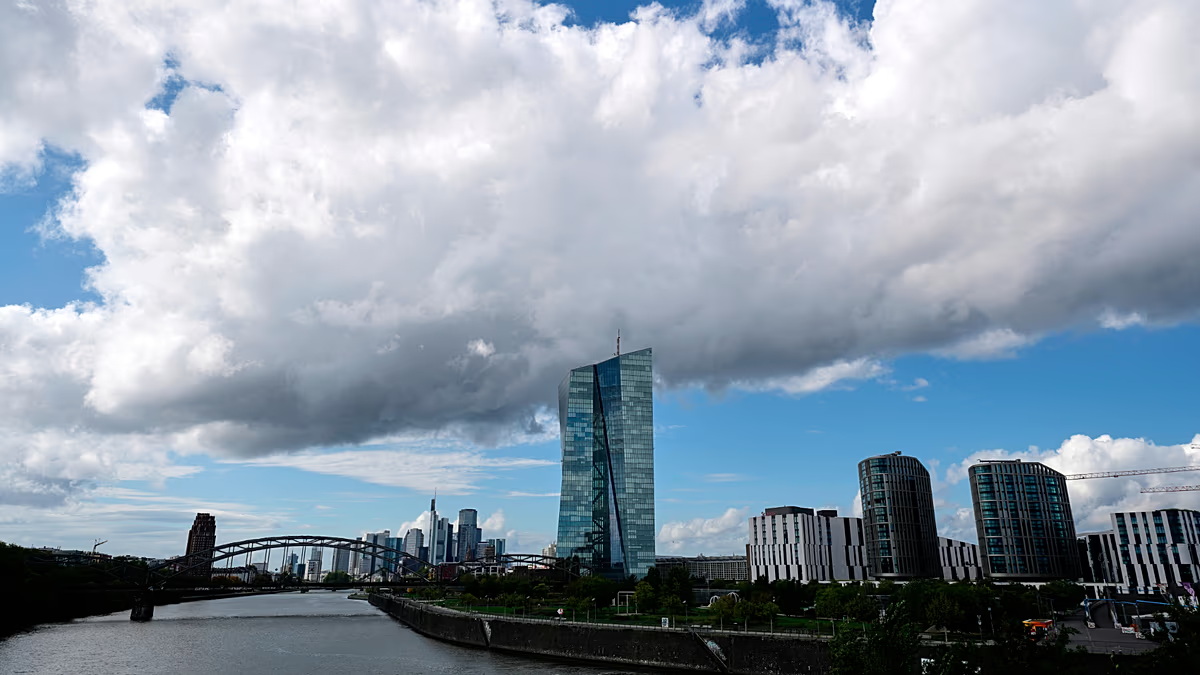
A Storm on the Horizon: Stagflation Returns to the Eurozone
The economic landscape across Europe darkened significantly in April 2026, as fresh data revealed a concerning combination of rising prices and stagnating growth. The European Union’s statistics agency, Eurostat, reported that annual inflation across the 21 nations using the euro currency climbed to 3.0%, a notable jump from 2.6% recorded in March. This breach of the European Central Bank’s (ECB) 2% target was primarily driven by a dramatic surge in energy costs, which skyrocketed by 10.9% year-on-year. While prices for services saw a slight moderation, and increases for food, alcohol, tobacco, and other goods remained more contained, the energy spike was the dominant force pushing the overall index upward. This inflationary pulse is not an isolated fluctuation but is directly tied to a profound geopolitical shock: the ongoing conflict involving Iran.
The root of this energy price crisis lies in a decisive military action that has crippled a vital artery of global trade. In blocking the Strait of Hormuz, Iran has effectively shut down the route through which approximately 20% of the world’s oil flows from Persian Gulf producers to international markets. The immediate consequence has been oil prices hitting new wartime records, with benchmark Brent crude briefly soaring above $126 a barrel—a staggering increase from the pre-conflict price of around $73 in late February 2026. This artificial constriction of supply has sent shockwaves through energy-dependent economies, with Europe feeling the brunt of the impact. The inflationary pressure is therefore not stemming from robust consumer demand, but from an external supply shock, making it a particularly difficult type of inflation to manage through traditional monetary policy.
Compounding this inflationary blow was a simultaneous report of disappointing economic growth, delivering a twin setback to the eurozone. Eurostat data showed that the bloc’s economic output, or Gross Domestic Product (GDP), barely expanded in the first quarter of 2026, increasing by a mere 0.1% compared to the previous quarter. This marked a slowdown from the 0.2% growth seen in the final quarter of 2025. When viewed year-on-year, the growth rates of 0.8% for the euro area and 1.0% for the wider EU further illustrated a decelerating trend. The combination of this sluggish, near-stagnant growth with inflation clearly exceeding target levels resurrects a grim economic spectre: stagflation. This condition, where prices rise amidst a stagnant economy, presents a policy nightmare, as the tools to fight one problem typically worsen the other.
This stagflationary threat now confronts the European Central Bank with a formidable dilemma. The classic response to high inflation is for a central bank to raise its benchmark interest rate. Higher rates cool demand by making borrowing more expensive for businesses and households, which can help bring prices down. However, in a climate of already weak growth, such a move risks tipping the economy into a recession. Conversely, if the bank prioritizes supporting growth by keeping rates low or even cutting them, it could fuel further inflation. Given that the current inflation is largely imported via energy markets and may prove temporary if the geopolitical situation resolves, policymakers are often inclined to “look through” such spikes, as interest rate changes themselves take time to affect the real economy. The ECB’s decision to leave its key rate unchanged at 2% during its April meeting reflects this cautious, watchful stance.
This posture of vigilant inactivity is not unique to the ECB; it is a synchronized stance adopted by major central banks globally in this turbulent period. In the same week, the Bank of Japan and the United States Federal Reserve also held their interest rates steady. The Bank of England was similarly expected to maintain its position. This global consensus underscores a shared diagnosis: the world is facing an inflation problem born from a supply-side crisis, not from overheated economies. Therefore, the priority is to avoid compounding the growth slowdown with aggressive monetary tightening, while closely monitoring whether inflationary pressures become entrenched in domestic wage and price-setting behaviour. They are, in essence, holding their positions, waiting to see if the storm passes or if it necessitates a more drastic change in course.
The data from April 2026 thus paints a portrait of a European economy under severe external pressure. Citizens are facing rapidly increasing costs, particularly for essential energy, while the broader economic engine is losing momentum. The path forward hinges on unpredictable geopolitical developments in the Middle East and the nuanced judgements of central bankers. The ECB and its counterparts are walking a tightrope, balancing the need to safeguard economic activity with their mandate to ensure price stability. For millions of people across the eurozone, this period of stagflation translates directly into a squeezed household budget and an uncertain economic future, as the continent navigates the treacherous waters of war-induced economic disruption.