

Paragraph 1
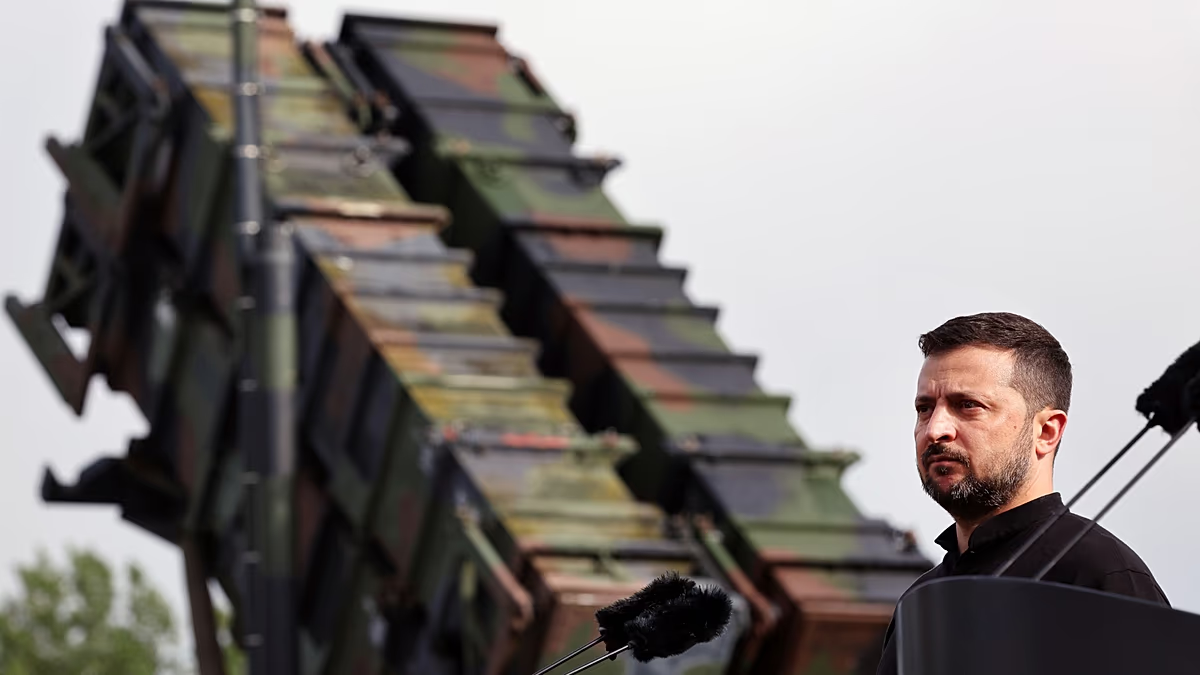
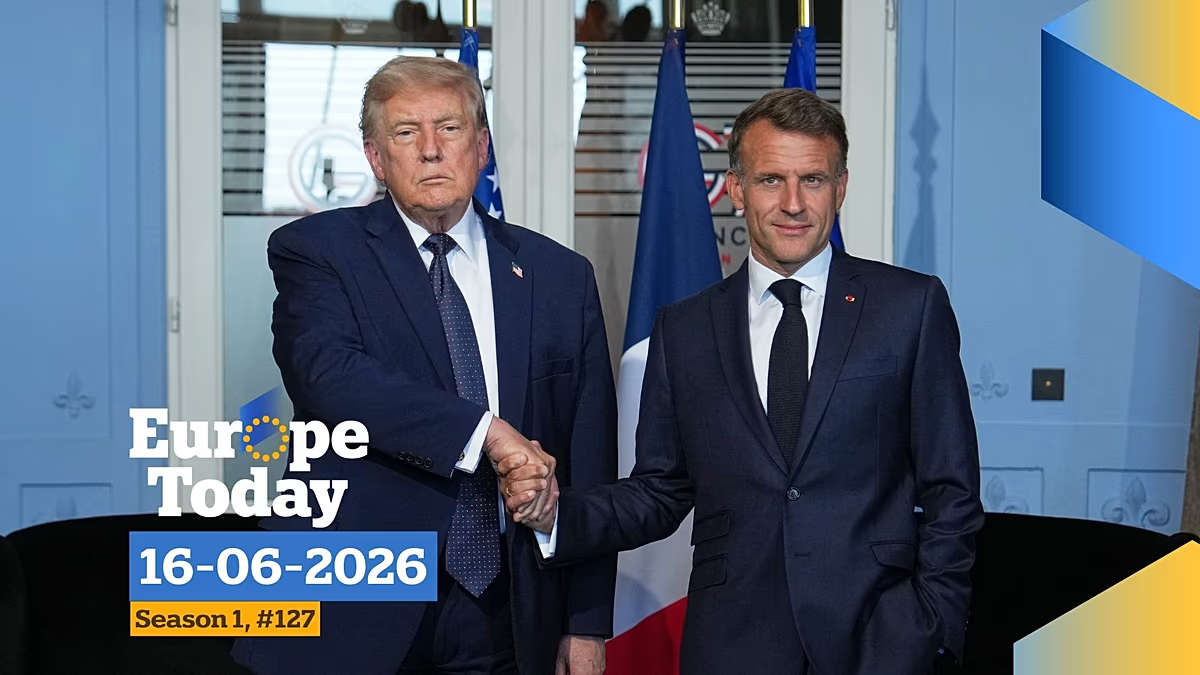
In the complex diplomatic maneuvering surrounding Russia’s war in Ukraine, a stark contrast in priorities has emerged. Following a phone call between Russian President Vladimir Putin and U.S. President Donald Trump, the Kremlin proposed a temporary ceasefire. However, Ukrainian President Volodymyr Zelenskyy has forcefully rejected this as an insufficient gesture, suspecting its true purpose is merely to ensure a few hours of quiet for Moscow’s annual Victory Day military parade on May 9th. Instead, Kyiv is demanding a serious commitment to a long-term, guaranteed ceasefire as the only acceptable foundation for genuine peace talks. Zelenskyy has directed his negotiators to seek urgent clarification from Washington, highlighting a profound disconnect: where Moscow seems to offer a brief pause for its own symbolic display, Ukraine insists on a durable solution for the security of its people.
Paragraph 2
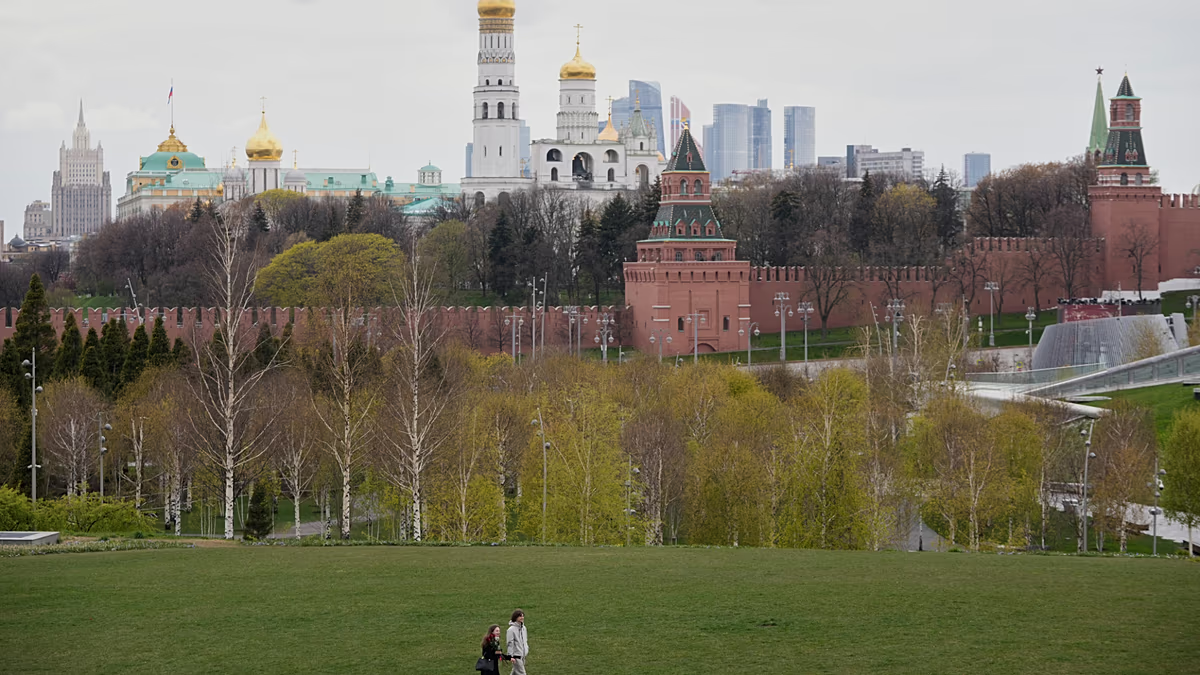
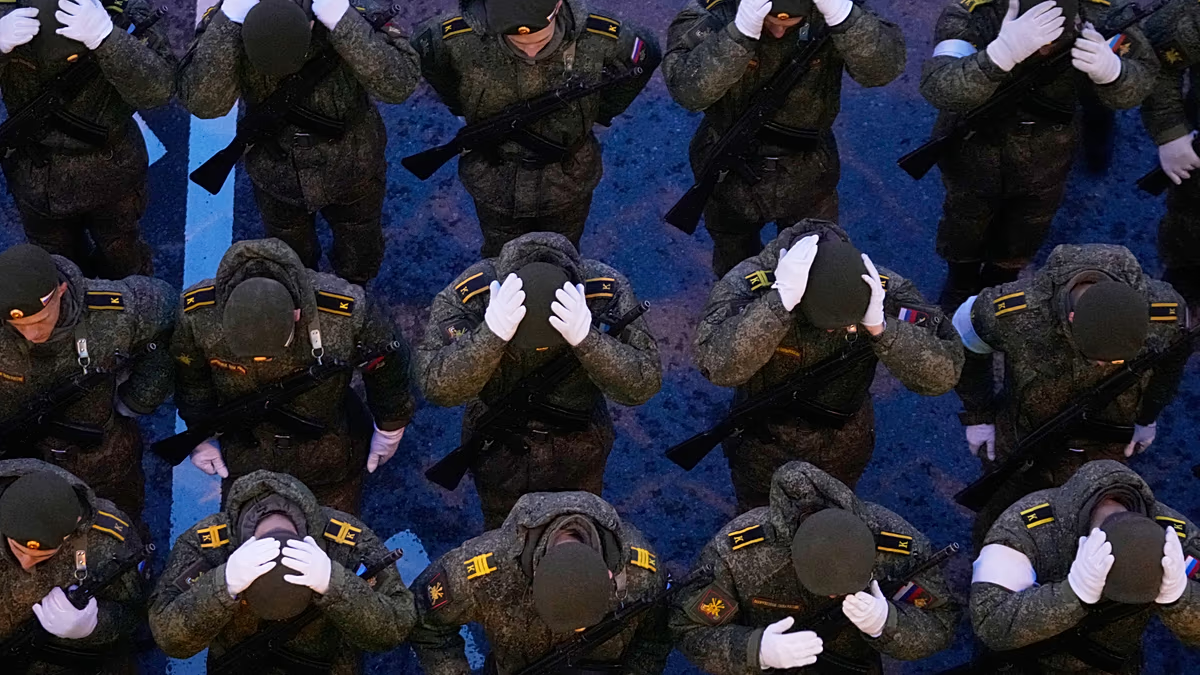
The Kremlin, for its part, insists the truce proposal is a sincere gesture tied to the shared historical significance of Victory Day, which commemorates the Allied defeat of Nazi Germany in World War II. Putin’s spokesperson, Dmitry Peskov, stated that President Trump “actively backed the initiative,” noting the holiday’s shared legacy. Notably, Moscow communicated the offer solely to the United States, continuing its refusal to engage directly with Kyiv. This year’s parade itself will be unusually subdued; Russian authorities have announced it will not feature military vehicles or cadets, citing the “current operational situation” and a claimed “terrorist threat” from Ukraine. To many observers, this scaled-back spectacle is less about security and more a telling indicator of severe strain within the Russian military, reflecting critical shortages in personnel and equipment that prevent even a traditional show of force on the Kremlin’s most hallowed patriotic day.
Paragraph 3
The symbolism of Victory Day is central to understanding the ideological fuel of this conflict. Under Putin, May 9th has transformed from a somber remembrance into Russia’s most sacred secular holiday, a mandatory public display of military might and national unity. Since launching the full-scale invasion in 2022, the Kremlin has relentlessly weaponized the history and imagery of World War II to justify its war of aggression. The Russian state propaganda machine draws direct, if fabricated, parallels between the Soviet fight against Nazism and its current war in Ukraine, repurposing Soviet-era slogans like “We can repeat it.” The orange-and-black St. George’s Ribbon, once a widespread symbol of WWII remembrance, has been co-opted into a ubiquitous emblem of support for the invasion. This deliberate historical blurring is a core tactic, designed to frame a brutal war of choice as a necessary, even glorious, continuation of a past existential struggle.
Paragraph 4
This state-driven frenzy of militarized nostalgia has been critically labeled “pobedobesie” in Russia—a portmanteau meaning “victorymania” or a grotesque obsession with triumphalism. Putin himself has nurtured this narrative, often downplaying the Allies’ role in WWII to claim the Soviet people fought alone. On the eve of the invasion, he cynically declared its goals to be the “denazification” and “demilitarization” of Ukraine, baseless accusations that invoke the ghost of fascism to tar a sovereign European democracy. This rhetoric is not mere decoration; it is a foundational myth used to mobilize domestic support, suppress dissent, and portray the invasion as a historic mission. The proposed parade-day ceasefire fits neatly into this pattern, treating a profound modern tragedy as a backdrop for perpetuating a curated, militant version of the past.
Paragraph 5
Ukraine’s response to this historical manipulation has been a conscious and decisive turn toward Europe. In a powerful symbolic break from the Soviet and Russian narrative, President Zelenskyy signed a law in 2023 moving Ukraine’s official Day of Remembrance and Victory over Nazism to May 8th, aligning it with most of Europe. This shift honors the millions of Ukrainian lives lost in World War II—estimates range from 6 to 8 million soldiers and civilians—while consciously rejecting the militaristic pomp and political instrumentality of Russia’s May 9th celebrations. For Ukraine, the day is now one of solemn reflection, separate from the spectacle of parades. This act is more than a calendar change; it is a statement of identity, a reaffirmation of Ukraine’s place within the European family of nations that remembers the war’s horror without glorifying its machinery.
Paragraph 6
The standoff over the proposed truce therefore encapsulates the fundamental clash at the heart of this war. Russia appears to view diplomacy as a tool for managing its ceremonial calendar and legitimizing its historical propaganda, offering a fleeting pause that changes nothing on the ground. Ukraine, enduring daily violence and fighting for its existential survival, sees such a proposal as almost insulting, a distraction from the urgent need for a credible path to lasting security. The absence of tanks in Red Square speaks to Russia’s material vulnerabilities, but the demand for a parade-day ceasefire reveals its preoccupation with symbolic control. Ukraine’s counter-demand for a long-term ceasefire, meanwhile, underscores its relentless focus on a tangible, peaceful future—a future built not on the myths of a weaponized past, but on the guaranteed safety of its citizens and the restoration of its territorial integrity. In this dialogue of the deaf, the definitions of “victory” and “peace” could not be further apart.