



A Quiet Revolution: How Young Europeans Are Redefining Political Engagement
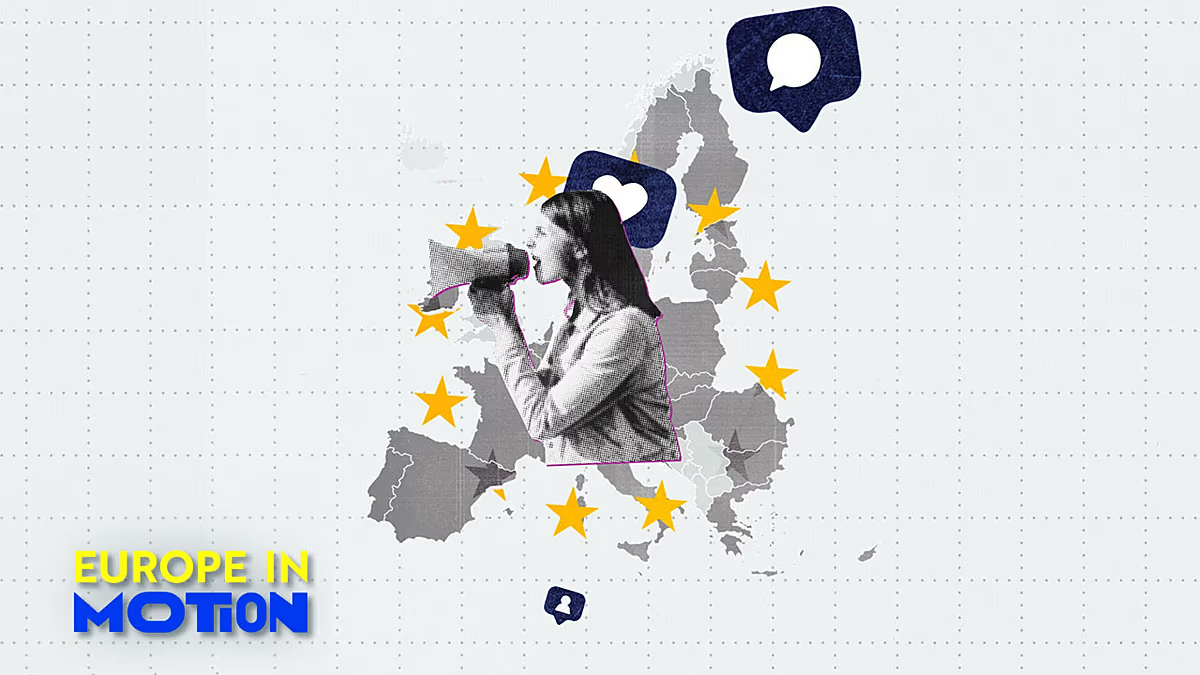
A profound shift is occurring in the political landscape of Europe, one led not from parliamentary podiums but from smartphones and laptops. Contrary to the enduring stereotype of the apathetic youth, young Europeans are demonstrating a distinct and vibrant form of political activism, often surpassing the engagement levels of older generations. According to the latest Eurostat data from 2025, nearly a quarter of Europeans aged 16 to 29 actively engage with civic or political issues online. This includes expressing opinions, participating in consultations, and even voting through digital means. In comparison, just over one-fifth of the overall population reports similar activity. This divergence is not a sign of indifference but signals a fundamental reimagining of what political participation means. Young people are not retreating from democracy; they are building a new version of it from the ground up, using the tools that define their daily lives.
The driving force behind this digital migration is a desire for genuine agency and flexibility. Traditional political structures often feel closed and prescriptive to younger citizens. As noted by the European Partnership for Democracy (EPD), many youth feel they are only invited into “pre-determined spaces that rarely allow for equal influence,” such as formal youth councils or forums. The internet, by contrast, offers a platform where they can set the agenda, find like-minded communities, and voice their concerns on their own terms. Carlotta Magoga of the EPD captures this spirit perfectly, stating, “Rather than retreating from politics, young people are reimagining how democracy can function.” For them, posting a thread about climate policy, organizing a digital campaign for social justice, or signing an online petition is not a lesser form of engagement—it is a more authentic and accessible one, breaking down the velvet ropes that have long surrounded political discourse.
This digital activism is not uniform across the continent, revealing fascinating national nuances. In 2025, Slovenia stood out as a remarkable frontrunner, with nearly half (49.4%) of its young population politically active online, a rate significantly higher than its national average. Latvia and the Netherlands followed, with about one-third of their youth engaged. In 23 of the EU’s 27 member states, young people were more likely to participate online than the general population. However, the map also shows pockets of lower engagement, with Belgium, Czechia, Sweden, and Greece recording the smallest shares of politically active youth. Intriguingly, the pattern is not universal; in Finland and Cyprus, the overall population outpaced the youth, while in nations like Luxembourg and Ireland, engagement levels were equal across age groups. This mosaic suggests that while the digital trend is widespread, local political cultures, trust in institutions, and the quality of digital infrastructure also play critical roles in shaping how this passion is channeled.
Yet, as the democratic conversation increasingly moves into the digital arena, experts sound a note of urgent caution. The very platforms that empower young voices—social media networks, forums, and messaging apps—are also privately owned spaces designed for engagement, not necessarily for healthy deliberation. There is a growing risk that these companies, through their algorithms and content moderation policies, are taking subtle control of the political conversation. The architecture of these platforms often prioritizes content that triggers strong emotions, which can lead to fragmented public discourse, where nuanced debate is drowned out by polarizing soundbites. This environment can fuel cynicism, deepen distrust in traditional information sources, and promote a form of rage-driven engagement that values outrage over understanding. The danger is that the promise of a more inclusive democracy could curdle into a more fractured and antagonistic one.
Therefore, the challenge facing Europe is not how to coax young people back into old systems, but how to bridge this vibrant online energy with tangible offline change. The energy is clearly present, as seen in movements addressing climate change, digital rights, and social equality. The task for institutions is to meet young citizens where they are—to legitimize and meaningfully incorporate these new forms of participation into democratic processes. This could mean creating official channels for digital petitioning that guarantee legislative responses, using online platforms for genuine public consultation on policy, or ensuring digital literacy education that empowers citizens to navigate the online world critically. It requires recognizing a tweet as a legitimate form of constituent communication and a viral campaign as a modern-day protest.
Ultimately, the story told by the data is one of hopeful transformation. Young Europeans are actively rejecting a passive role in their democracies. They are leveraging technology to build a more fluid, direct, and personal kind of civic life. While the risks of the digital sphere are real and demand vigilant governance and robust media literacy, the overarching narrative is positive. A generation is passionately contesting the boundaries of political space, insisting that their voices be heard not just in scheduled forums, but in the ongoing, global conversation that the internet hosts every minute of every day. Their activism may look different, but its goal is timeless: to shape the society they will inherit and inhabit. The future of European democracy depends on listening to them and thoughtfully integrating this digital revolution into the heart of civic life.