


Paragraph 1: The Calm Before the Storm
On an ordinary street in Golders Green, an area of north London long known as a peaceful center of Jewish community life, the rhythm of a typical day was shattered by an act of shocking violence. What began as a bustling afternoon was suddenly transformed into a scene of fear and chaos. On April 29, 2026, the community’s sense of security was brutally pierced when two Jewish men were stabbed in a sudden and unprovoked assault. The details, as they began to emerge, painted a picture of a targeted attack that sent immediate waves of alarm not just through the neighborhood, but across a city all too familiar with the threat of violence in public spaces.
Paragraph 2: A Swift and Dangerous Response
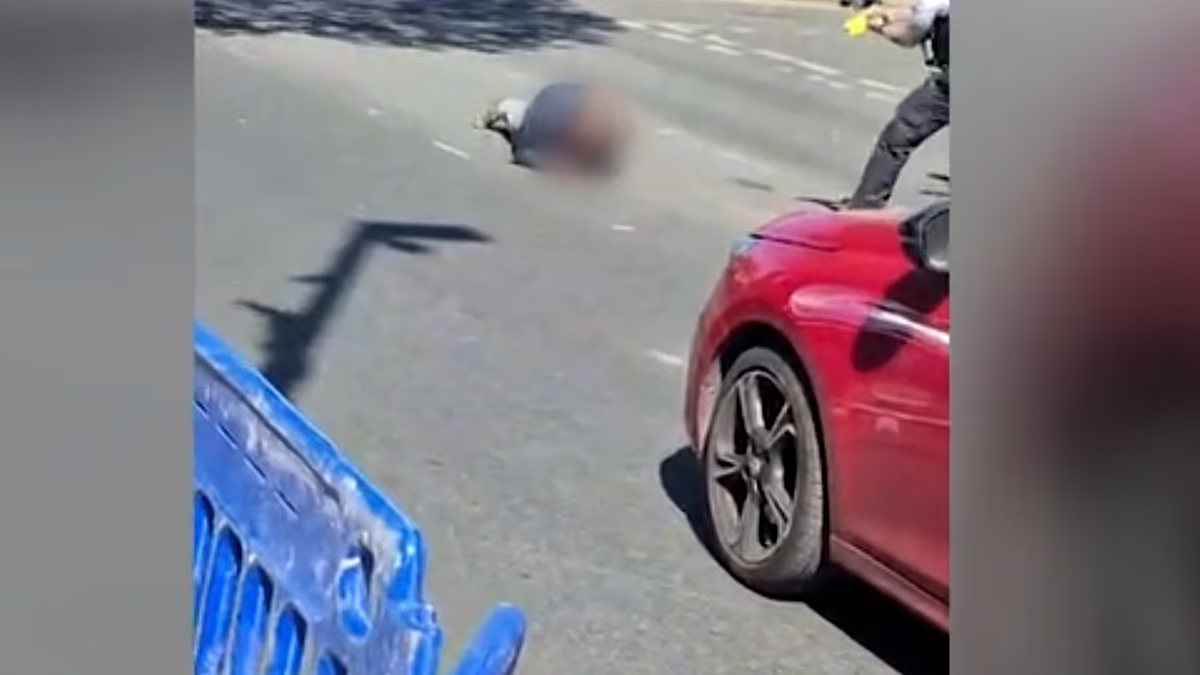
In the terrifying moments following the initial stabbings, the situation escalated further. As shocked witnesses looked on, the assailant, reportedly armed with a knife, then turned his aggression towards the very individuals rushing to restore order: the police officers responding to the emergency. According to official statements, the 45-year-old man did not flee but instead attempted to stab the arriving officers, forcing them into a split-second, life-or-death decision. Images that quickly spread across social media captured the intense confrontation, showing officers deploying a Taser to subdue and ultimately arrest the man, preventing further potential bloodshed in the crowded area.
Paragraph 3: Official Declaration and Community Trauma
The Metropolitan Police moved quickly to categorize the gravity of the event. In a formal declaration that carries significant legal and social weight, authorities stated they were treating the stabbings as a “terrorist incident.” This designation underscores the belief that the attack was ideologically motivated, intended to sow fear within a specific community and the public at large. For the residents of Golders Green, this label confirmed their deepest anxieties, transforming a local crime into an attack on their identity and safety. The trauma of such an event extends far beyond the physical injuries, embedding a lingering psychological wound in a tight-knit community now forced to confront its own vulnerability.
Paragraph 4: The Human Toll Beyond the Headlines
While the news cycle focuses on police designations, arrests, and tactical responses, the true heart of this story lies in the human impact. Two men, going about their daily lives, were subjected to a brutal physical attack, their lives forever altered in an instant. Their families, friends, and neighbors were plunged into a nightmare of worry and grief. The broader Jewish community in London and beyond watched with a heavy heart, a painful reminder of the persistent shadow of antisemitic violence. Each such attack reverberates through generations, awakening historical fears and challenging the very ideal of peaceful coexistence in a diverse society.
Paragraph 5: The Complicated Reality of Police Intervention
The viral images of the police using a Taser, while demonstrating a swift end to the immediate threat, also open a window into the immensely difficult realities of law enforcement. Officers are tasked with the nearly impossible: to instantaneously assess a lethal threat, protect the public, and subdue a dangerous individual with minimal force. The use of the Taser in this scenario appears to have been a critical tool in disarming the suspect without resorting to more lethal options, likely saving lives—potentially even the assailant’s own. This moment, frozen in time on social media, represents the fraught, high-pressure decisions police must make to secure public safety while navigating intense public scrutiny.
Paragraph 6: Resilience in the Face of Fear
In the aftermath, as the suspect remains in custody and investigations continue, the path forward for Golders Green is one of mourning, solidarity, and resilience. Terrorist incidents are designed to fracture communities and breed mistrust, but so often they have the opposite effect, galvanizing communal bonds and a collective resolve not to be intimidated. The response will involve not only continued police vigilance but also a profound need for community support, interfaith dialogue, and a reaffirmation of shared values. The story of that day in late April 2026 is tragically one of violence and fear, but the next chapter must be written by the community’s enduring strength, its refusal to be defined by hatred, and its commitment to healing together.