



Here is a summary and humanized version of the provided content, expanded to meet your requested length and structure.
The once-peaceful skies above Tuapse, a scenic port town nestled along Russia’s Black Sea coast, are now repeatedly scarred by plumes of thick, black smoke. These grim pillars are the result of a determined campaign by Ukrainian forces, who have launched successive drone strikes targeting a critical oil refinery and terminal in the area. Each explosion at the industrial complex sends fresh, dark clouds into the air, a visible testament to the ongoing strategic battle now impacting the very environment. For the residents below, the distant flashes and subsequent fires have become a terrifying new norm, signaling not just geopolitical conflict but a direct assault on their immediate surroundings and health.
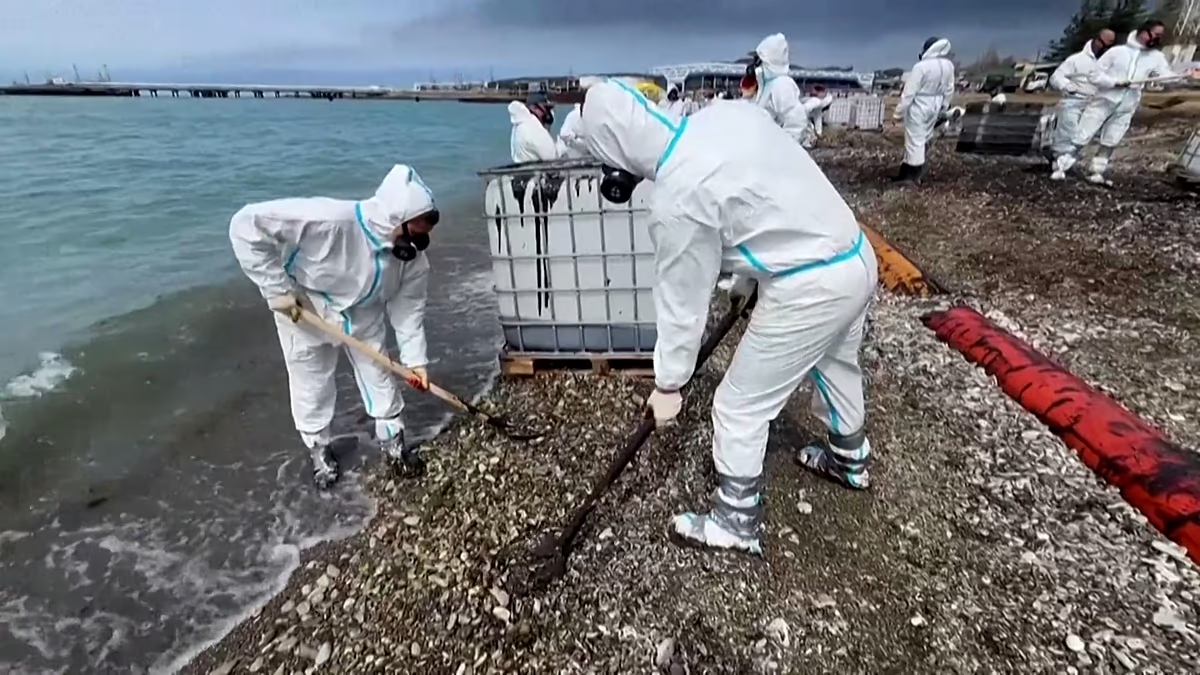
The aftermath in Tuapse is moving beyond dramatic imagery into a tangible public health and ecological crisis. Authorities, grappling with the fallout, have issued urgent warnings about dangerously polluted air, advising citizens to remain indoors. The sight of residents venturing outside wearing protective face masks paints a stark picture of a community living under a toxic shroud. Reports are emerging of more insidious consequences: oil spills seeping into the local landscape and accounts of “black rain”—a grimy, oily precipitation that stains streets, buildings, and waterways, bringing the residue of the attacks directly into people’s homes and lives.
This strike on Tuapse is not an isolated event, but a deliberate and escalating strand of Ukraine’s broader military strategy. In recent weeks, Kyiv has significantly intensified attacks on Russia’s sprawling network of oil infrastructure. The targets are carefully chosen for their economic and logistical value: refineries that process crude into fuel, ports that facilitate its export, and storage depots that hold strategic reserves. The objective is clear—to cripple a sector that is the financial lifeblood of the Russian state and a crucial supplier of fuel for its military machinery, thereby applying pressure far from the front lines.
The Tuapse facility, in particular, has borne the brunt of this focused campaign, suffering multiple successful attacks within a single month. Every new drone that evades defenses translates into another catastrophic fire, further operational disruption, and mounting costs—both financial and reputational—for the Russian energy industry. With each strike, the complex’s ability to function diminishes, causing ripple effects through supply chains. However, the most profound cost is the growing toll on the surrounding region, transforming the area from an industrial hub into a zone of repeated environmental trauma.
Beyond the immediate tactical gains, these operations underscore a haunting dimension of modern warfare: the deliberate targeting of industrial ecosystems and the consequent environmental devastation. The attacks trigger a cascade of damage; fires release a cocktail of hazardous particulates and chemicals into the atmosphere, while compromised infrastructure leaks hydrocarbons into the soil and the adjacent Black Sea. This “scorched-earth” tactic, applied to industrial terrain, poses long-term threats to biodiversity, water quality, and agricultural land, creating scars on the environment that may persist for generations long after the fighting has ceased.
Ultimately, the events in Tuapse crystallize a harsh reality of this conflict. While strategists may chart these attacks as successful pins on a map, for the local population, the war manifests as acrid air, contaminated rain, and a profound uncertainty about the safety of their environment. The black smoke over the refinery is a symbol of a struggle measured not only in territorial gains but in economic resilience and human endurance. It represents Ukraine’s strategic reach to challenge Russia’s industrial core, while simultaneously highlighting the inescapable collateral damage inflicted upon communities and ecosystems caught in the crossfire, reminding the world that the true cost of war is always paid in more than just currency.