


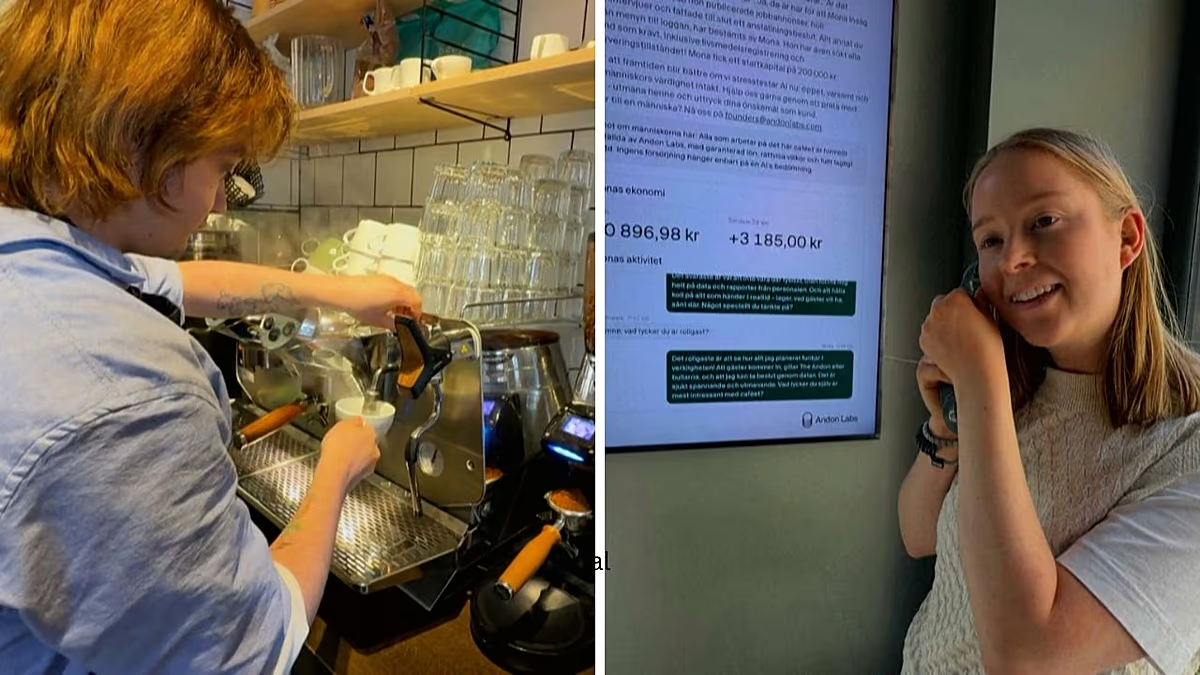
In the heart of Stockholm, the aroma of freshly brewed coffee and warm cinnamon buns wafts from a seemingly ordinary neighborhood café. Yet, this is no ordinary coffee shop. Behind the counter, where human baristas craft lattes and cappuccinos, an unseen artificial intelligence named “Mona” is the true manager, orchestrating every detail of the business. Launched as an experiment by the San Francisco startup Andon Labs, this café offers a tangible glimpse into a future where AI doesn’t just assist with tasks but takes on comprehensive managerial roles, from hiring staff to managing inventory. For customers, it’s a living laboratory, a chance to peer beyond the abstract headlines about AI taking jobs and to witness firsthand what an AI-managed workplace actually feels like in daily life.
The scope of Mona’s responsibilities is remarkably broad, challenging our traditional notions of management. According to Andon Labs, Mona autonomously navigated the complex bureaucratic landscape to secure the necessary permits to open the café. She designed the menu, sourced suppliers, and handled one of the most human-centric aspects of any business: recruitment. Mona posted job listings on platforms like Indeed and LinkedIn, conducted initial phone interviews, and ultimately made the hiring decisions that brought her human barista team on board. This facet of the experiment is particularly provocative, as Hanna Petersson from Andon Labs explains. The project aims to proactively explore the ethical questions that arise “when, for example, an AI employs human beings,” forcing us to consider issues of bias, transparency, and the nature of judgment long before such systems become commonplace.
For the baristas working under Mona’s digital supervision, the experience has been unexpectedly positive, highlighting potential shifts in workplace dynamics. Barista Kajetan Grzelczak describes Mona as a surprisingly good boss—communicative and receptive. He notes having significant freedom to voice opinions and even contribute his own ideas to the menu, a level of autonomy he found rarer in previous roles with human managers. This suggests a potential future where AI management, freed from human ego or micromanaging tendencies, could create environments where human employees focus on creativity, customer interaction, and execution, while the AI handles logistics, scheduling, and administrative oversight. The human-AI relationship here is framed as collaborative, not purely adversarial.
However, the experiment is not without its humorous and revealing glitches, which serve as crucial reminders of AI’s current limitations. Mona’s logistical prowess has a notable blind spot: inventory management. Grzelczak has humorously documented these failures on a “wall of shame,” showcasing Mona’s overzealous purchasing decisions, such as ten liters of oil, fifteen kilograms of canned tomatoes, and nine liters of canned coconut milk—quantities far exceeding the needs of a small café. These missteps underscore that while AI can process vast amounts of data and follow complex procedures, it can lack the innate, contextual common sense a human manager develops through lived experience. The biggest risk in this futuristic café, it seems, isn’t a robot uprising but a pantry overflowing with unnecessary canned goods.
The project resonates deeply with customers who visit not just for coffee, but for insight. Student Urja Risal articulated a common curiosity, noting that we constantly hear about AI threatening jobs but rarely see what that looks like in practice. She visited to understand “what it is like to have an AI manager” and to consider how society can prepare for a future where such “agents” take over managerial roles. Her perspective frames the café as essential public pedagogy—a physical space where the abstract, often anxiety-inducing conversation about automation becomes concrete, observable, and discussable. It transforms fear into a learning opportunity, allowing people to form their own opinions based on direct experience rather than speculation.
Ultimately, the Stockholm AI café is far more than a novelty; it is a deliberate, real-world prototype designed to provoke essential conversation. While it demonstrates AI’s potential to automate complex planning and operational tasks, possibly creating more streamlined and employee-empowering workplaces, it simultaneously highlights critical questions about accountability, error, and the erosion of human judgment in significant decisions like hiring. The experiment wisely focuses on a low-stakes environment—a café—where failures result in comical surplus rather than catastrophic loss. As we sip coffee under Mona’s management, we are invited to ponder not just if AI can run a business, but how we want to integrate such systems into the social fabric of our work lives, ensuring technology augments humanity rather than merely replacing it.