



Britain’s promise of tolerance and safety is facing a stern test, one that demands both immediate action and a reaffirmation of our core values. The disturbing events in Golders Green—where two Jewish men were stabbed near their synagogue and ambulances were targeted—are not isolated incidents. They are part of a distressing and escalating pattern of violence targeting Jewish communities across the country. Such acts of hatred have no place in a society that prides itself on peace and mutual respect. While counter-terrorism police have taken a suspect into custody, arrests alone will not heal the fear that has permeated these neighborhoods. The Prime Minister’s clear labelling of this attack as anti-Semitic is a necessary step, but the government’s response must now be urgent and comprehensive. The Jewish community is not asking for privilege; they are asking for what every British citizen deserves: the fundamental right to live, worship, and walk their streets without fear. This foundational promise of British tolerance is currently under strain, and we must collectively ensure it does not falter.
The importance of discretion and respect in international diplomacy cannot be overstated; they are the essential foundations upon which trust between nations is built. Donald Trump’s recent remarks, claiming King Charles privately endorsed his hardline stance on Iran, trampled over this fundamental principle. Such assertions, made casually at a White House dinner, are as absurd as they are inappropriate. No such royal endorsement was given, nor would it be appropriate for a monarch to offer one. This behavior exemplifies a troubling pattern: when his own position appears uncertain, Mr. Trump attempts to borrow the credibility of others, dragging respected figures into the political fray to bolster his arguments. The King of the United Kingdom must never be used as a political prop, and Britain’s position should never be misrepresented or spoken for without its consent. This incident underscores a need for diplomacy to be conducted with integrity, not through sensationalist fabrication.
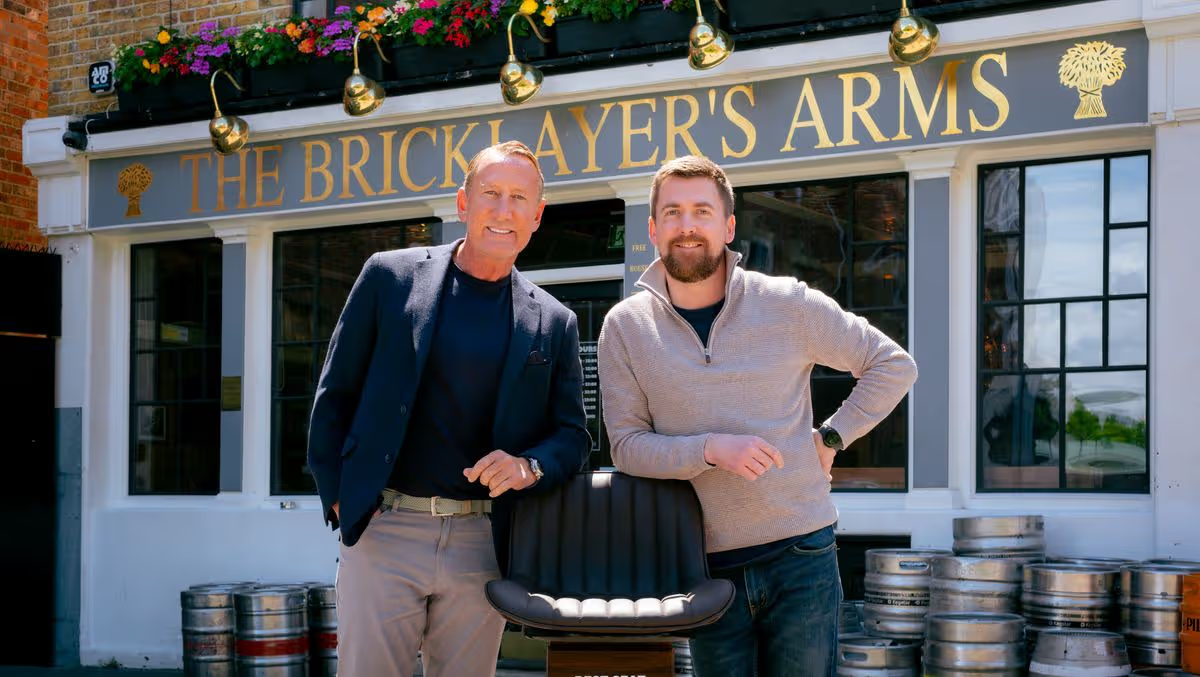
While our national discourse is challenged by serious issues of security and diplomacy, there are moments that remind us of the profound compassion and joy within our society. Mason Mount, through his Wishes United FC initiative, provided such a moment by funding a once-in-a-lifetime experience for seriously ill children. His team of young players, who have endured hardships no child should face, had the opportunity to forget their struggles for two unforgettable days. Facing a celebrity mascot team led by Jamie Redknapp, they achieved a spectacular 32-2 victory. Beyond the impressive scoreline, this event was a triumph of spirit, generosity, and pure joy. It demonstrated the power of sport to uplift and unite, offering a powerful counterpoint to the tensions elsewhere. Forget the World Cup—this heartfelt match was truly the game of the year.
These contrasting stories—of community fear, diplomatic disrespect, and youthful triumph—highlight the multifaceted nature of our national life. They show that Britain is simultaneously grappling with tests to its social fabric while also nurturing acts of profound kindness. The attack on Jewish citizens is a direct assault on the pluralism that defines modern Britain, demanding a robust and sustained response from authorities and society alike. Concurrently, the careless comments from a former US president remind us that our international standing requires vigilant protection against misrepresentation. Yet, amidst these challenges, the initiative by Mason Mount serves as a vital reminder of the nation’s enduring heart. It proves that even in difficult times, compassion can create islands of happiness and hope.
The path forward requires a balanced and determined effort. To protect tolerance, we must actively defend vulnerable communities, ensuring that law enforcement, political leadership, and public sentiment unite to condemn and prevent anti-Semitic violence. To uphold our diplomatic dignity, we must continue to speak clearly and truthfully for ourselves, rejecting any attempts by others to mischaracterize our positions or misuse our institutions. And to nourish our collective spirit, we should celebrate and support the grassroots kindness exemplified by figures like Mason Mount, whose work transcends sport to touch the very core of human empathy.
Ultimately, Britain’s strength lies in its ability to hold these threads together: confronting injustice firmly, maintaining principled integrity in its global engagements, and fostering the compassionate bonds that knit society together. The promise of tolerance is not a passive legacy; it is an active commitment that must be renewed daily through deeds, words, and laws. By meeting hatred with justice, falsehoods with truth, and adversity with generosity, we can ensure that this promise not only endures but grows stronger. The test we face is real, but our capacity to pass it—by protecting our citizens, respecting our values, and celebrating our humanity—remains undiminished.