

Of course, here is a humanized and expanded summary of the provided content.
Paragraph 1: The Modern Reality of Flight
Let’s be honest: the golden age of air travel, with its sense of effortless glamour, feels like a distant memory. For many of us today, the very thought of flying evokes a sigh more than a spark of excitement. We brace ourselves for the ordeal long before takeoff—the labyrinthine security queues, the tense vigil at the gate for delayed departures, and the ever-climbing cost of tickets that make even a short hop feel like a significant financial investment. What should be the thrilling preamble to an adventure or a reunion has become a gauntlet of stressors, squeezing the joy out of the journey before it even begins. This widespread sentiment underscores a pressing need for change in an industry that connects our world but often frays our nerves in the process.
Paragraph 2: A Vision for a Better Journey
Despite current headwinds like fluctuating fuel prices and complex international regulations, airlines and designers are not standing still. They are looking beyond today’s challenges, investing in long-term innovations aimed at fundamentally reshaping the passenger experience. The goal is to reclaim the sense of wonder and comfort that has been lost, transforming the aircraft cabin from a mere transit tube into a considered part of the destination itself. From reimagined seating that prioritizes personal space to technology that blurs the line between physical and digital environments, a new wave of concepts promises to make the time spent in the air not just tolerable, but genuinely enjoyable and restorative.
Paragraph 3: The Immersive Digital Sanctuary
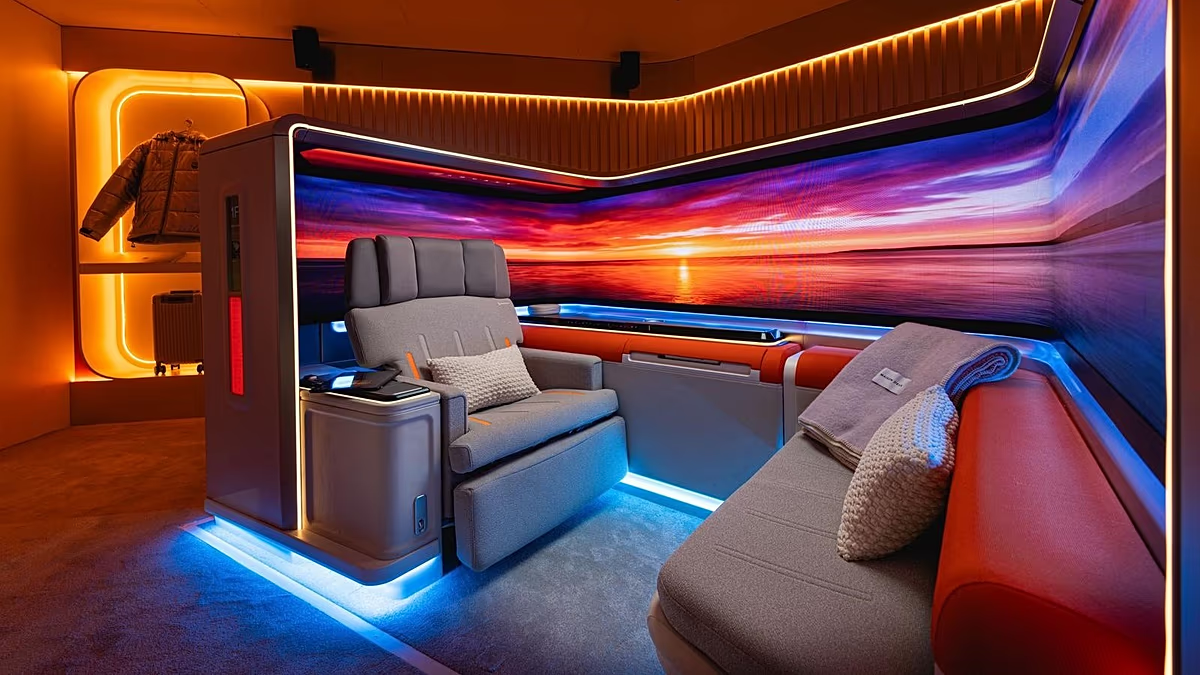
One of the most striking glimpses into this future is the “Origin” seat concept, a collaborative creation from RAVE Aerospace and Safran Seats. This vision for premium cabins moves far beyond the standard fold-down screen. It centers on a breathtaking, wraparound U-shaped micro-LED display that envelops the passenger, turning their private suite into a portal to another world. Imagine tailoring your entire environment with the touch of a button—shifting from a serene, misty forest at dawn to a vibrant digital art gallery, all while adjusting the lighting and ambient sound to match your mood. This isn’t just about watching movies; it’s about curated wellness and escape. Coupled with headset-free audio, personalized climate control, and adaptive cushioning that adjusts to your body, the “Origin” concept seeks to make long-haul travel a deeply personalized and immersive experience, where arrival feels less fatigued and more inspired.
Paragraph 4: Ingenious Design for Economy Comfort
While premium cabins often get the flashiest upgrades, the most profound innovations seek to elevate the experience for everyone onboard. Enter the ingenious double-level seat concept from Spanish startup Chaise Longue. Instead of cramming more rows into the cabin, this design creatively utilizes vertical space, stacking seats in a staggered, loft-like configuration. The result is a dramatic increase in personal room for economy passengers. Those on the upper level enjoy a sense of secluded privacy, while those below benefit from expanded, unobstructed legroom—a precious commodity. Creator Alejandro Núñez Vicente explains that the design has evolved toward a premium economy model, with user testing showing strong passenger enthusiasm. It’s a clever architectural solution that borrows from the philosophy of business class—prioritizing space and privacy—and makes it accessible to a far broader market, proving that comfort in economy doesn’t have to be an oxymoron.
Paragraph 5: Balancing Innovation with Practical Reality
Of course, the path from dazzling expo prototype to a seat on your next flight is a complex one. Airlines operate on razor-thin margins, and every innovation must be weighed against weight considerations, maintenance costs, retrofit challenges, and stringent safety certifications. A concept like the double-level seat, for instance, would require a complete rethinking of cabin crew workflows and emergency evacuation procedures. Similarly, the sophisticated technology in the “Origin” suite would need to be incredibly reliable at 40,000 feet. The ultimate test for any of these ideas is whether they can transition from being captivating showpieces to becoming scalable, durable, and economically viable solutions that enhance airline operations as much as passenger satisfaction.
Paragraph 6: The Human-Centric Future of Flight
Ultimately, these emerging concepts signal a pivotal shift in philosophy. The industry is beginning to move past the era of pure density maximization towards a more human-centric approach to design. It recognizes that a passenger is not just cargo, but an individual with needs for privacy, comfort, entertainment, and well-being. Whether through digital immersion that soothes the mind or architectural ingenuity that frees the body, the common thread is respect for the person on the journey. While we may never fully return to the bygone “golden age,” this new wave of innovation offers a hopeful blueprint for a smarter, kinder, and more appealing age of air travel—one where the journey itself regains its rightful place as a positive part of the adventure.