


Part 1: A Life Spotted from the Sky
In the shell-scarred terrain near the eastern Ukrainian city of Lyman, a drama of life and death unfolded, captured not by frontline reporters but by the unblinking eye of a military surveillance drone. The date was late April 2026, but the setting was achingly familiar—another shattered town, another life hanging by a thread. The drone pilots of Ukraine’s Third Army Corps, methodically scanning the ruins for enemy movement, spotted something that changed their mission entirely. There, amidst the rubble and latent danger of unexploded ordnance, was a 77-year-old woman, utterly alone and immobilized. She was not a soldier but a grandmother, likely one of the many civilians who had been unable or unwilling to flee the relentless advance and brutal occupation of their homes. Isolated in a lethal landscape where every step could be her last, her rescue by conventional means was nearly impossible. The area was too exposed, too dangerous for a traditional team to approach on foot. This modern war, however, presented a modern solution to an ancient imperative: saving a life.
Part 2: The Unlikely Rescuer – A Ground Drone with a Mission
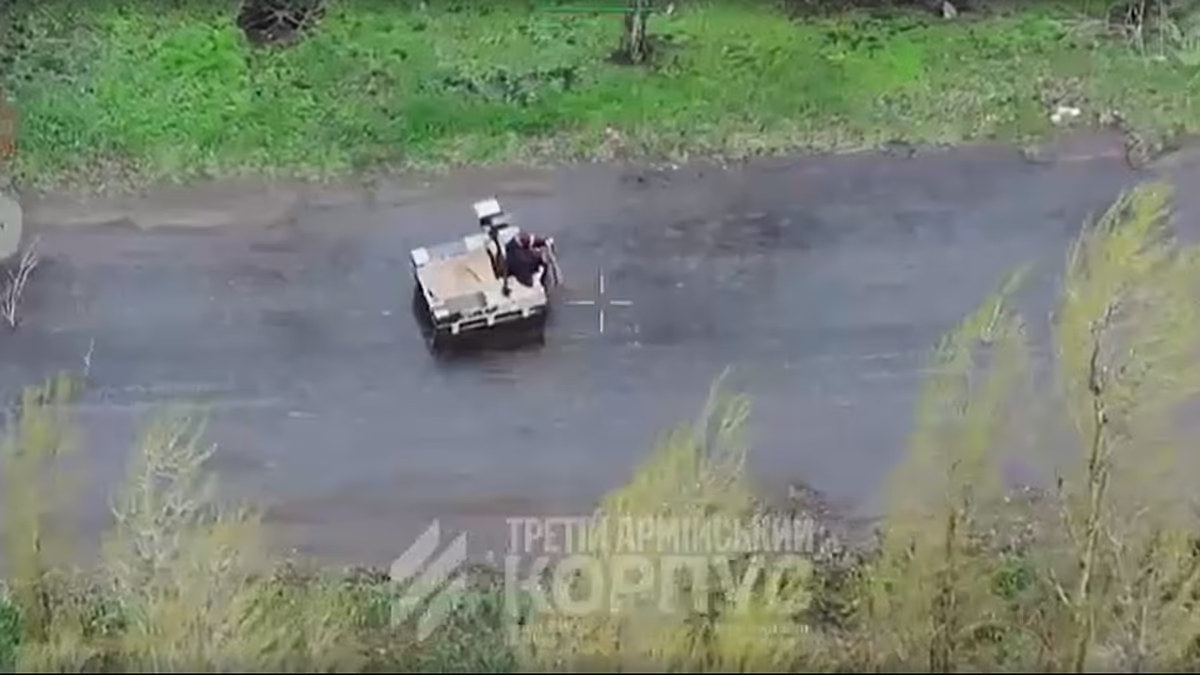
The response was a testament to human ingenuity in the face of despair. The soldiers did not send in a squad; they deployed an autonomous ground vehicle—a bulky, tracked robot typically associated with delivering supplies or clearing explosives. But in this moment, it was transformed into a single-purpose rescue craft. Its cargo was simple, profoundly human, and carefully chosen: a warm blanket to shield her from the cold and shock, and a handwritten note. The message, scrawled in a clear, urgent script, cut through the technological complexity of the operation with touching directness: “Grandma, sit down!” This was not a command from a machine, but a plea from the unseen soldiers controlling it from a distant safe location. They were guiding this robot to become their hands, their voice, and her only lifeline. The image of this utilitarian device, rolling over broken concrete with its fragile cargo of blanket and note, encapsulates a central paradox of 21st-century warfare: cold machinery wielded with deep compassion.
Part 3: The Agonizing Wait – A Four-Hour Journey of Hope
What followed was a marathon of patience and nerve. The publicly released video from the Third Army Corps condensed a tense, four-hour operation into a few minutes, but one can imagine the agonizing realism of those 240 minutes. For the drone pilots, it was a test of steady hands and focused concentration, navigating the slow-moving vehicle over unpredictable terrain, every jolt and hesitation monitored on their screens. For the elderly woman, it must have been a terrifying and bewildering ordeal—the approach of an unfamiliar machine, the struggle to comprehend the note, the immense physical and emotional effort required to follow its instruction and clamber onto this mechanical stranger. The operation’s staggering duration highlights the immense caution required; this was a delicate extraction, not a swift snatch-and-grab. Every minute spent exposed was a minute of vulnerability for both the woman and the valuable robotic asset, a calculated risk taken for the value of one civilian life.
Part 4: The Bigger Picture – Technology Redefining Humanity in War
This remarkable rescue in Lyman is far more than an isolated feel-good story. It represents a significant and evolving chapter in the nature of modern conflict, where Ukrainian forces have become pioneers in adapting technology for humanitarian purposes. Drones, synonymous with remote strikes, are equally vital as eyes for search and rescue. Ground robots, often developed for logistical or tactical roles, are being reprogrammed as medevac units and lifesavers in uncontested spaces. This incident demonstrates a deliberate doctrinal shift: leveraging technological superiority not just for kinetic effect, but to preserve and protect human life wherever possible. It is a powerful counter-narrative to the dehumanizing fog of war, showing that even in the digital age of warfare, the core imperative to safeguard the vulnerable can drive innovation. The soldiers behind the screens exemplify a new kind of warrior, one whose victory is measured not only in territory regained but in lives restored.
Part 5: The Unseen Trauma and the Enduring Civilian Toll
Yet, for all its technological wonder, the story is rooted in a deep and tragic human reality. The presence of a 77-year-old woman alone in the contested ruins of Lyman is a silent testament to the war’s cruelest costs. She represents the thousands of elderly, infirm, or simply determined civilians who remain trapped in the wake of the fighting—individuals whose lives are suspended, whose world has shrunk to the confines of a basement or the wreckage of a home. Her successful rescue is a victory, but it underscores a devastating failure: that of peace and security. Each such operation, while heroic, is a symptom of a broader catastrophe. It reminds the world that beyond the lines on strategic maps, there are real people, with lifetimes of memories, now reduced to targets for rescue missions, their fates dependent on battery life, signal strength, and the skill of a drone operator they will never meet.
Part 6: A Symbol for the Future and a Lesson for Humanity
The video from Lyman, released to the world in the spring of 2026, ultimately serves as a powerful symbol. It is a blend of grim reality and resilient hope, of silicon and soul. The ground drone with its handwritten note becomes an iconic image of this era—a tool of war repurposed as an instrument of mercy. It speaks to the Ukrainian spirit of adaptation and tenacity, but its message is universal. It asks a profound question of all societies and militaries: As we inevitably develop more advanced tools for conflict, will we also dedicate equal ingenuity to using them for protection and compassion? The rescue of this grandmother offers a resounding, affirmative answer in one particular case. It proves that even amidst the destruction, the fundamental human impulse to save another can find a way, channeling the very latest technology to perform the oldest and most sacred of duties. Her survival is a quiet triumph, a single, bright point of light against a dark backdrop, reminding us of what must always be worth saving.