



Paragraph 1
UK holidaymakers and travellers across Europe are bracing for a fresh wave of travel disruption this May, as Belgium faces another significant day of nationwide industrial action. On Tuesday, April 29, Brussels Airlines confirmed that it will slash its flight schedule by a staggering 60% on Sunday, May 12. This drastic reduction is a direct response to a major national demonstration planned in Brussels by Belgium’s principal trade unions—the FGTB, CSC, and CGSLB. The unions are protesting federal government reforms, particularly concerning pensions, marking a continuation of a year-long campaign of actions. While the airline itself is not involved in this labour dispute, its operations are severely impacted by the broader industrial climate. For British travellers specifically, this news brings considerable concern, as Brussels Airlines operates regular services from key UK hubs including London Heathrow, Manchester, and Edinburgh.
Paragraph 2
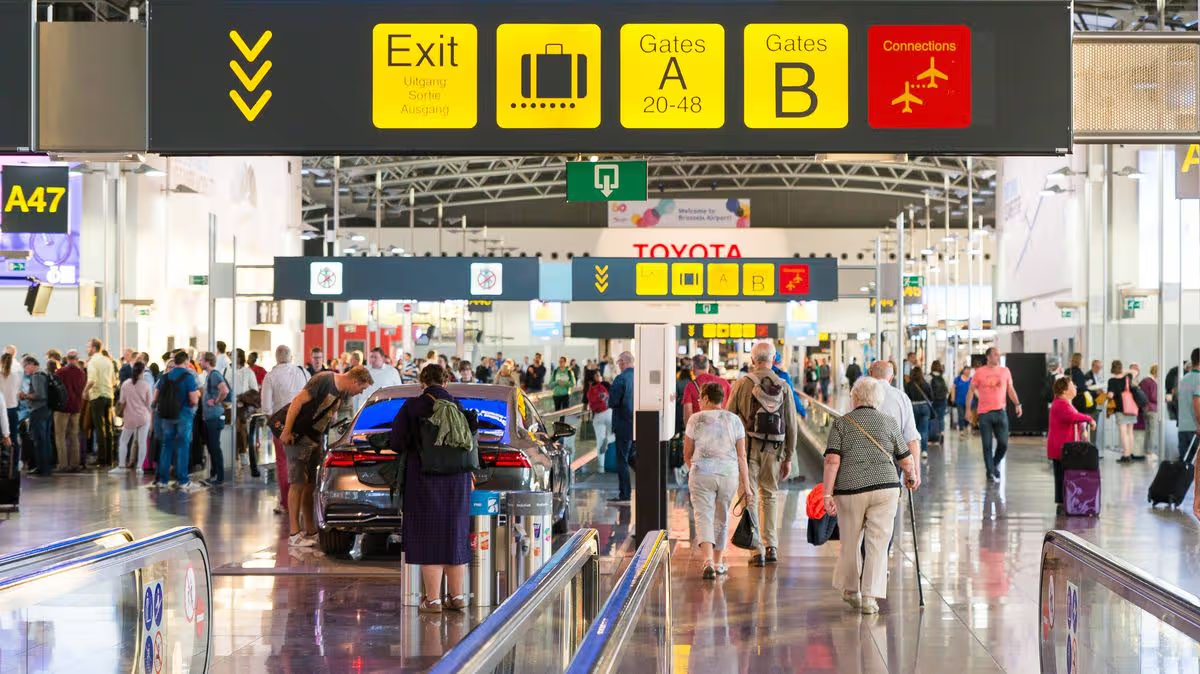
The anticipated chaos stems not only from the street demonstrations but also from coordinated strike action within the aviation sector itself. A joint union front representing aviation workers has filed a national strike notice, which could see pilots and other critical staff downing tools. Zaventem Airport, Brussels’ main international hub, is at the centre of this storm. Following the airport’s own warnings of expected disruption, airlines have been formally requested to cap the number of departing passenger flights on May 12. This measure aims to maintain operational safety and prevent untenable waiting times at security checks, given that many security workers and service providers will be participating in the strike. The airport estimates that “just under half” of scheduled departures will be able to operate, a scenario it describes as less severe than the total shutdown experienced during the previous national demonstration on March 12.
Paragraph 3
Brussels Airlines, as the national carrier, faces the most acute operational challenges. In planning its cancellations, the airline has adopted a strategy to prioritise its network based on passenger impact. The long-haul network will bear the heaviest brunt, as these flights typically carry a high proportion of connecting passengers whose journeys are more complex to re-accommodate. For shorter, regional routes—including those to the UK—the airline is giving precedence to flights with the greatest number of direct, point-to-point passengers. While a specific list of cancelled flights has not yet been disclosed, the airline has issued a stark warning that “further cancellations cannot be ruled out.” It emphasises that, in the current volatile geopolitical context with high fuel prices and other pressures, such widespread disruptions are “irresponsible” and that the consequences ultimately fall on passengers, colleagues, and the company itself.
Paragraph 4
The scale of potential impact is significant. With approximately 1.3 million Brits visiting Belgium annually, hundreds if not thousands of UK travellers could find their plans disrupted on this single day alone. For those affected, Brussels Airlines has outlined the standard options: passengers on cancelled flights can either rebook on an alternative service or request a full refund. The airline advises that it continues to monitor the situation closely. Importantly, Brussels Airport anticipates only minimal disruption to incoming flights, as the primary constraints are on departing passenger numbers due to security and staffing shortages within the terminal. Regardless, all passengers—whether departing from or arriving at Brussels on May 12—are strongly urged to check the latest status of their flight directly with their airline before travelling.
Paragraph 5
This incident underscores the critical importance of understanding your rights as an airline passenger when faced with cancellations. According to the UK government’s official guidance, your airline, travel agent, or tour operator is obligated to provide you with “clear and easy-to-understand information on the conditions of your travel at the point of booking.” Travellers should always review these terms carefully. The rules mandate that the full price, including all mandatory charges like taxes, must be transparent at the time of booking, with any optional extras such as luggage or seat selection clearly priced. For those who have booked a package holiday that includes a flight—such as flight and accommodation—you may benefit from both package holiday and ATOL (Air Travel Organiser’s Licence) protection, which provides financial security if your travel company fails. It is advisable to take your ATOL certificate with you when you travel.
Paragraph 6
The planned disruption on May 12 is a reminder of how broader socio-political events can ripple through the travel industry, turning a routine journey into a logistical challenge. While airports and airlines strive to collaborate with partners to ensure as many flights as possible can operate, the power of coordinated industrial action is profound. The previous national demonstration in March saw between 80,000 and over 100,000 protesters in Brussels and resulted in a complete halt of passenger flights from Zaventem. While the May event is expected to be less severe, the 60% reduction announced by Brussels Airlines paints a picture of a significantly impaired travel day. For passengers, the key lies in proactive communication with airlines, a clear understanding of their consumer rights, and flexible planning to navigate the uncertainties that such widespread industrial actions inevitably create.