



The Echoes of Grief Outside the Courthouse
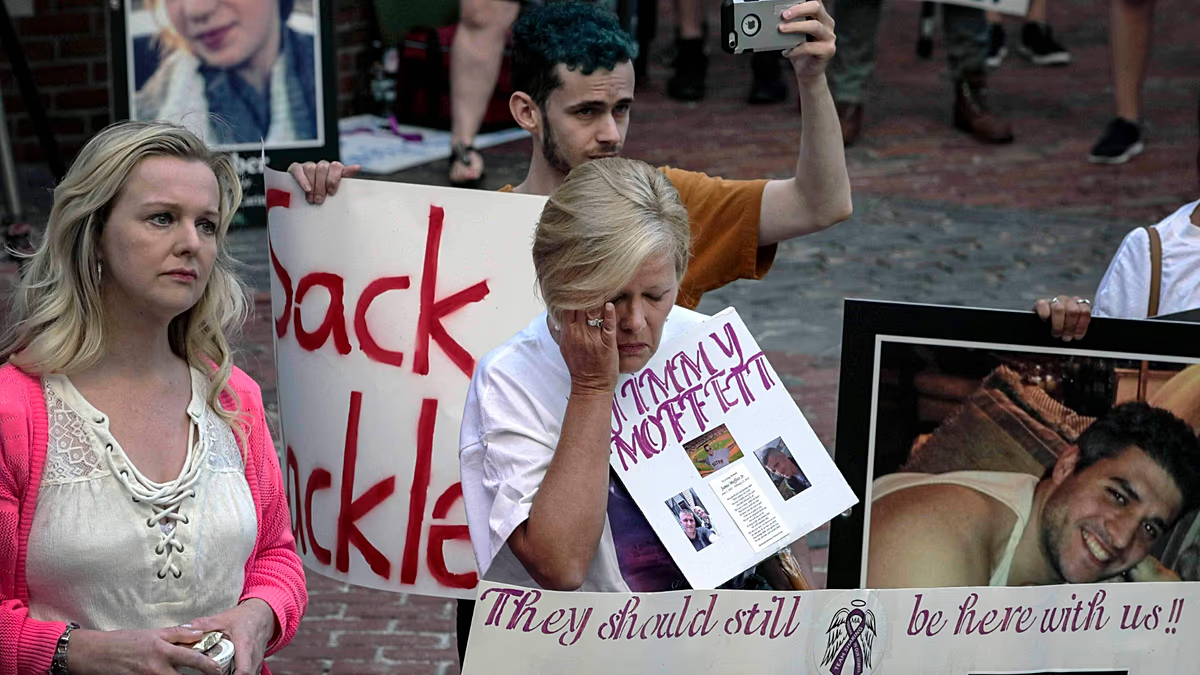
On a day when legal proceedings reached their conclusion, the true weight of the opioid crisis was measured not inside the federal courthouse in Newark, New Jersey, but on the sidewalk outside it. Here, relatives of opioid overdose victims gathered, holding aloft photographs of loved ones lost—faces frozen in time, smiles that would never be seen again. Alongside these personal memorials stood symbolic gravestones, a stark and silent rebuke to the proceedings within. This assembly of grief and anger formed a poignant counterpoint to the sentencing of Purdue Pharma, the maker of OxyContin. For these families, the court’s ruling was not an endpoint but a catalyst for renewed protest, a moment that crystallized their profound dissatisfaction with a justice system they feel has failed to grasp the human catastrophe at hand.
A Debt That Cannot Be Paid
The core of their outcry centered on a fundamental disconnect between legal remedy and human loss. Speakers, their voices trembling with long-carried sorrow, argued forcefully that financial penalties imposed on the corporation were grotesquely insufficient. How could monetary settlements, they asked, ever equate to justice for millions of families shattered by addiction and death? A fine, even a vast one, is a transactional closure for a balance sheet; it does not absolve moral debt, nor does it acknowledge the void left in a home. Their protest underscored a universal truth: there is no currency that can compensate for a stolen future, for the years of worry and intervention, for the final, desperate phone call that signaled an end. The pursuit of justice, for them, must be something more profound than a transfer of funds from a corporate entity to a government ledger.
The Unforgiving Scale of the Epidemic
To understand their anguish, one must first comprehend the breathtaking scale of the tragedy they represent. The protesters highlighted an epidemic that has, to date, claimed over a million lives across the United States—a number so vast it risks becoming an abstract statistic. But on that sidewalk, it was rendered painfully concrete. Each photograph, each named gravestone, was a single point of data in a national graph of despair. This was not a localized misfortune but a generational plague, facilitated by the aggressive marketing and distribution of prescription painkillers like OxyContin, which ignited a wildfire of addiction. The families stood as living witnesses to a public health disaster that unraveled communities, strained social services, and left a legacy of trauma that will ripple through decades. Their presence was a reminder that the crisis is not a historical footnote; it is an ongoing, living event with fresh wounds created every day.
The Hollow Search for Accountability
Beyond the inadequacy of financial punishment, a deeper, more visceral grievance fueled the demonstration: the glaring absence of individual accountability. The legal machinery had focused on the corporation as an entity, culminating in a settlement that shielded individual executives and board members from personal liability. For the families, this was a devastating omission. Justice, in their view, must recognize the human hands that orchestrated the campaign—the decisions made in boardrooms, the marketing strategies that downplayed risks, the relentless pursuit of profit that prioritized sales over safety. To see no individual face consequence felt like a final, insulting betrayal. It transformed the legal outcome into a symbol of a system that protects the architects of catastrophe, allowing them to retreat into private life while the victims’ families remain forever in the public shadow of their loss.
A Call for Meaningful Consequences
Therefore, their gathering was not merely a lament; it was a deliberate call to action, a public demand for a recalibration of justice. They advocated for stronger, more meaningful consequences that could truly serve as both deterrent and recognition. This might include, they suggested, sweeping changes to corporate governance, stringent regulatory oversight of pharmaceutical marketing, criminal prosecutions where evidence permits, and the permanent stripping of professional licenses for key figures. Their goal is a legacy of reform, not just restitution. They seek to ensure that such a man-made epidemic cannot happen again, that the lessons of the opioid crisis are etched into law and practice, creating barriers against future profit-driven indifference to human life.
The Unending Pursuit of Legacy and Change
As the courthouse doors closed and legal personnel departed, the relatives of victims remained, their vigil a powerful testament to an unresolved chapter. Their protest transcends this single case; it is part of a broader, unending pursuit to reclaim the legacy of those they lost. They are determined that their loved ones be remembered not as passive victims of an epidemic, but as the reason for its confrontation. By holding their photos to the light, they insist that each life be seen, each story be known. They stand as the enduring conscience of a national failure, challenging society to match the scale of its legal and political responses to the scale of the human loss. Their presence affirms that until accountability aligns with catastrophe, and until justice feels proportionate to grief, the true sentencing of this crisis will remain, hauntingly, adjourned.