


Summary and Humanization
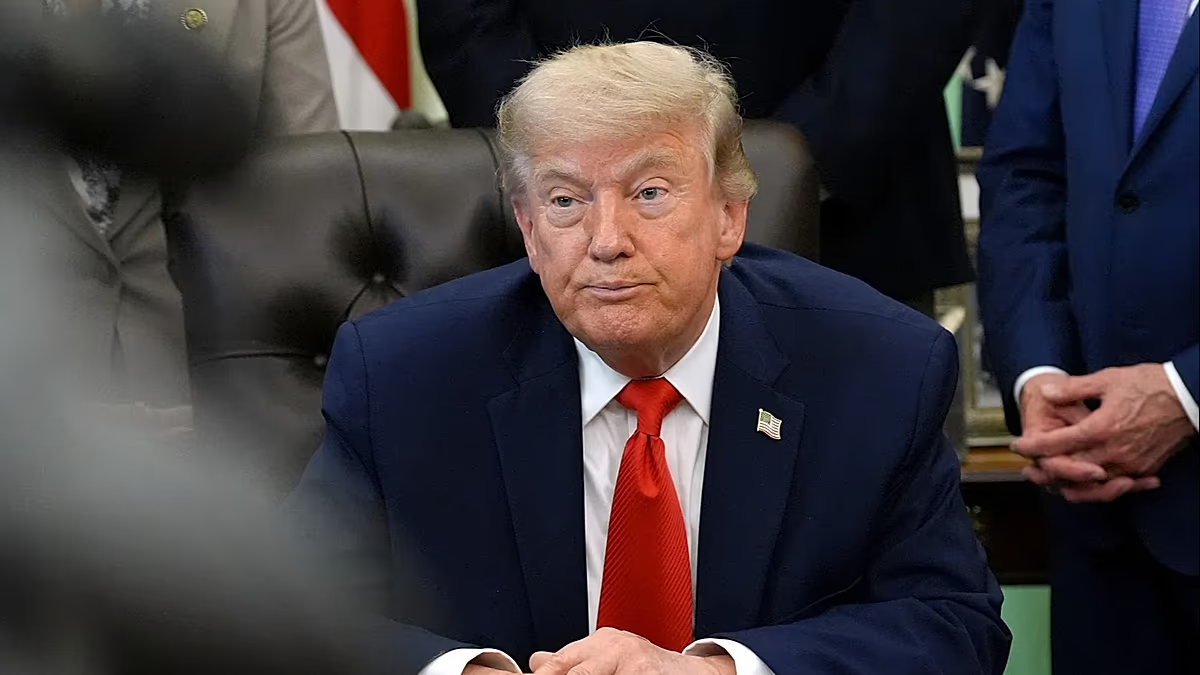
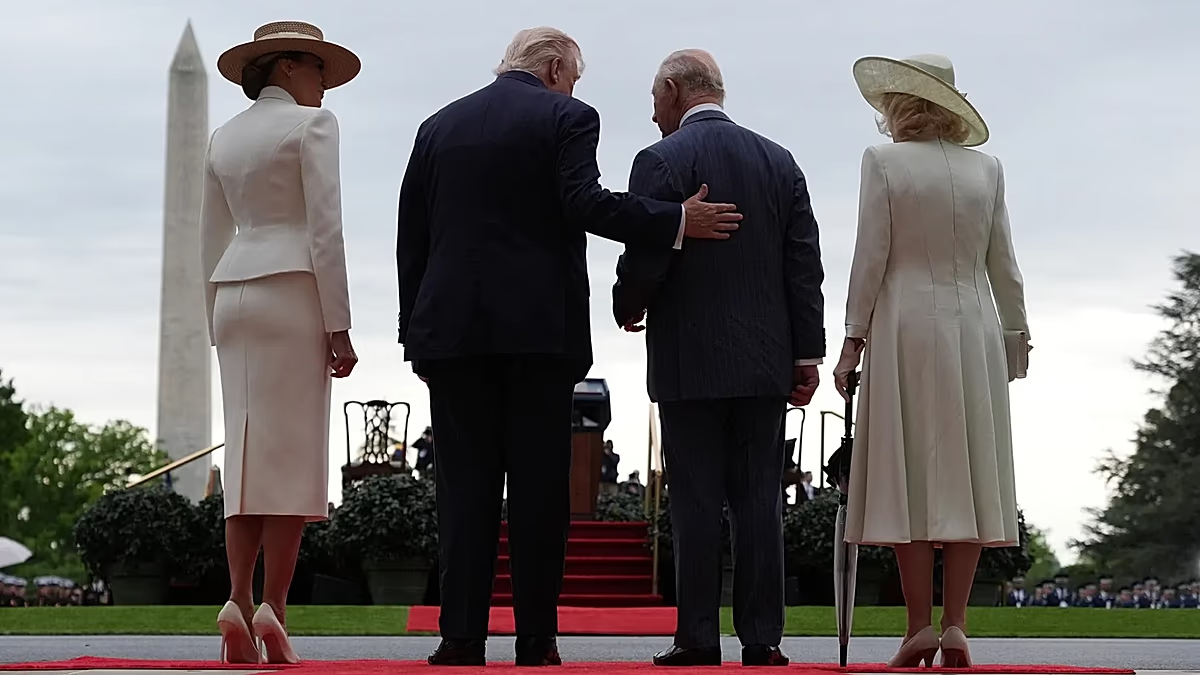
On a crisp Tuesday afternoon in late April 2026, the timeless symbols of American democracy and British monarchy converged on the White House South Lawn. President Donald Trump welcomed King Charles III and Queen Camilla with a ceremonial pomp that underscored a partnership forged over centuries, yet now navigating a profoundly complex era. In his public remarks, Trump emphatically stated that Americans have had “no closer friends than the British,” invoking the cherished ideal of the “special relationship” and expressing a hope for its perpetual endurance. The scene was classic statecraft: handshakes with the cabinet, a solemn rendition of the national anthem, and the dignified pageantry befitting a royal visit. Behind this display of unity, however, lay a web of contemporary geopolitical strains and personal diplomatic friction that threatened to overshadow the ceremonial goodwill.
The visit was strategically timed to coincide with celebrations marking the 250th anniversary of American independence from Britain—a historical irony that both nations have long softened into a narrative of shared values and alliance. A central milestone of the trip was King Charles’s address to the U.S. Congress, a rare honor that placed him in the footsteps of his mother, Queen Elizabeth II, who last performed the duty in 1991. This speech represented the most significant public moment of his four-day American tour, offering a platform to reaffirm the bonds of history, culture, and mutual interest between the two nations. The symbolic reciprocity was noted; earlier in the year, House Speaker Mike Johnson had addressed the UK Parliament, and he assured the King during a Washington garden party that he would be “well received” by American legislators.
Yet, the elegant surface of this diplomatic exchange was undercut by palpable tensions, primarily stemming from the Trump administration’s foreign policy posture and its strained dynamic with UK Prime Minister Keir Starmer. The most immediate and divisive issue was the ongoing war in Iran, for which Trump aggressively sought international backing. Starmer’s resistance to these overtures drew a sharp, personal rebuke from the President, who disparaged the Prime Minister by stating, “this is not Winston Churchill that we’re dealing with”—a comment invoking Britain’s legendary wartime leader to underscore a perceived lack of resolve. This friction pointed to a deeper unease, as Trump’s leadership style often challenged the conventional norms of the trans-Atlantic alliance.
The economic relationship between the two countries was also experiencing significant stress. The Trump administration had imposed tariffs on UK goods and threatened further punitive measures, notably a “big tariff” retaliation if Britain did not abandon a digital services tax targeting American technology companies. These aggressive trade policies, tested against a recent Supreme Court ruling that curbed unilateral executive power in this domain, introduced a layer of economic uncertainty to the political camaraderie. Furthermore, Trump’s broader skepticism of international institutions, including past threats to withdraw from NATO and controversial ambitions regarding territories like Greenland, contributed to an environment where traditional alliances were being questioned and redefined.
Amid these substantive challenges, the royal visit proceeded with its scheduled grace. After their arrival in Washington on Monday, King Charles and Queen Camilla enjoyed a private tea with President Trump and First Lady Melania, an intimate diplomatic moment away from the public eye. The itinerary extended beyond the capital, with planned stops in New York City and Virginia, allowing the monarchs to engage with broader American society and history. These elements of the tour served as reminders of the deep cultural and social fibers that connect the two nations, fibers that often endure despite the shifting winds of political and economic disagreement.
In conclusion, the 2026 visit of King Charles III to the United States encapsulated the enduring duality of the Anglo-American relationship: a foundation of profound historical friendship and shared purpose, now tested by the immediate pressures of divergent policy, personal political styles, and economic conflict. The ceremonial affirmations of “no closer friends” and the historic address to Congress celebrated the resilience of this bond. Simultaneously, the underlying disputes over war, trade, and alliance integrity revealed its contemporary fragility. As the royal couple continued their journey across America, they carried not only the weight of tradition but also the unspoken task of navigating a partnership in a time of transition, where the special relationship’s future would depend on balancing enduring respect with the pragmatic management of profound disagreement.