



A New Chapter: Ukraine Emerges as a Global Defense Partner
In a significant shift for its defense industry, Ukraine has announced it will begin exporting domestically produced weapons to global markets. President Volodymyr Zelenskyy framed this move as the logical next step for a nation whose military technology has been rigorously tested in one of the world’s most intense modern conflicts. The decision underscores Ukraine’s remarkable transformation from a nation reliant on international security aid into an emerging provider of cutting-edge defense solutions. This policy is not merely an economic initiative but a strategic recalibration, designed to cement Ukraine’s sovereignty, foster deeper international alliances, and contribute to global security by sharing its hard-won expertise. By choosing to open its arsenal, Ukraine is signaling its resilience and its intention to play a permanent and active role on the world stage, leveraging the innovations born from necessity into tools for international partnership and stability.
The Framework: Controlled Exports and “Drone Deals”
The export mechanism will operate under a carefully controlled structure branded as “Drone Deals.” These are specialized interstate agreements that can encompass not only the supply of finished hardware like drones, missiles, and ammunition but also joint production, technological exchanges, and the provision of Ukraine’s battlefield expertise. Crucially, access to this arsenal is reserved exclusively for countries that have supported Ukraine since the onset of Russia’s full-scale invasion in 2022. Zelenskyy emphasized that the Foreign Ministry, in coordination with intelligence services, will vet partners to prevent any technology from falling into Russian hands or the hands of its collaborators. Domestically, the government plans to streamline bureaucratic hurdles for its approximately 800 defense manufacturers, introducing automatic permits to facilitate business while maintaining strict export controls. This balance aims to empower Ukraine’s robust defense industrial base without compromising its own security, ensuring the Ukrainian military retains absolute priority for all its defense needs.
Fueling the Home Front: Economic and Strategic Imperatives
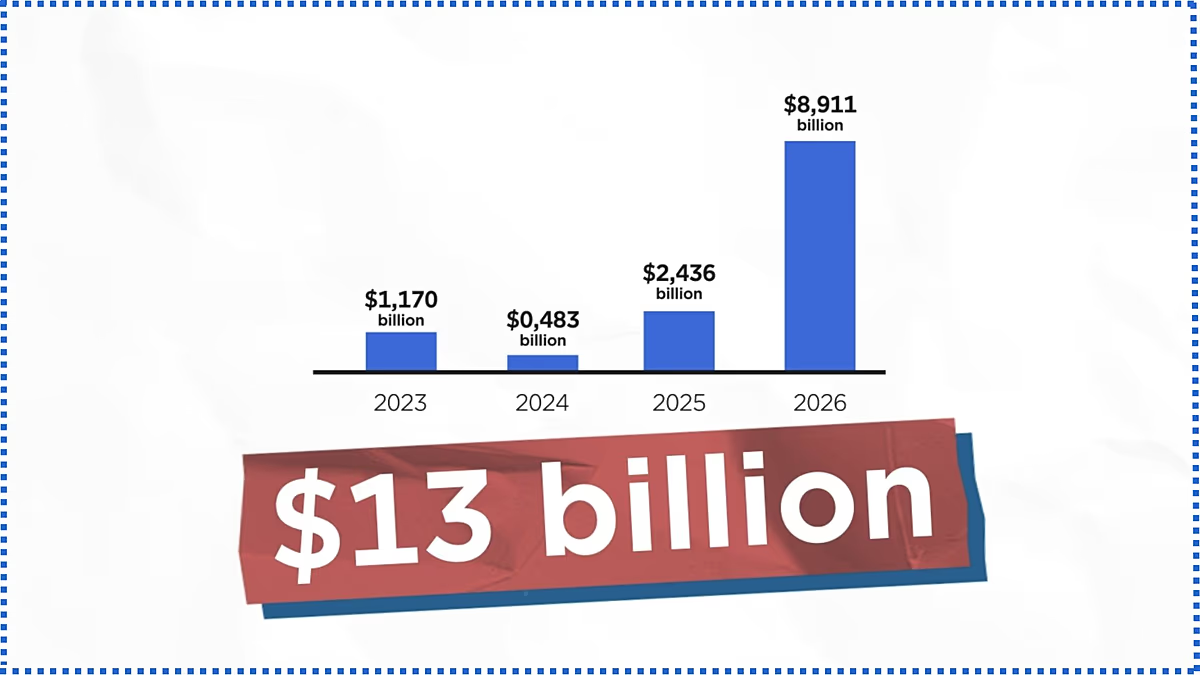
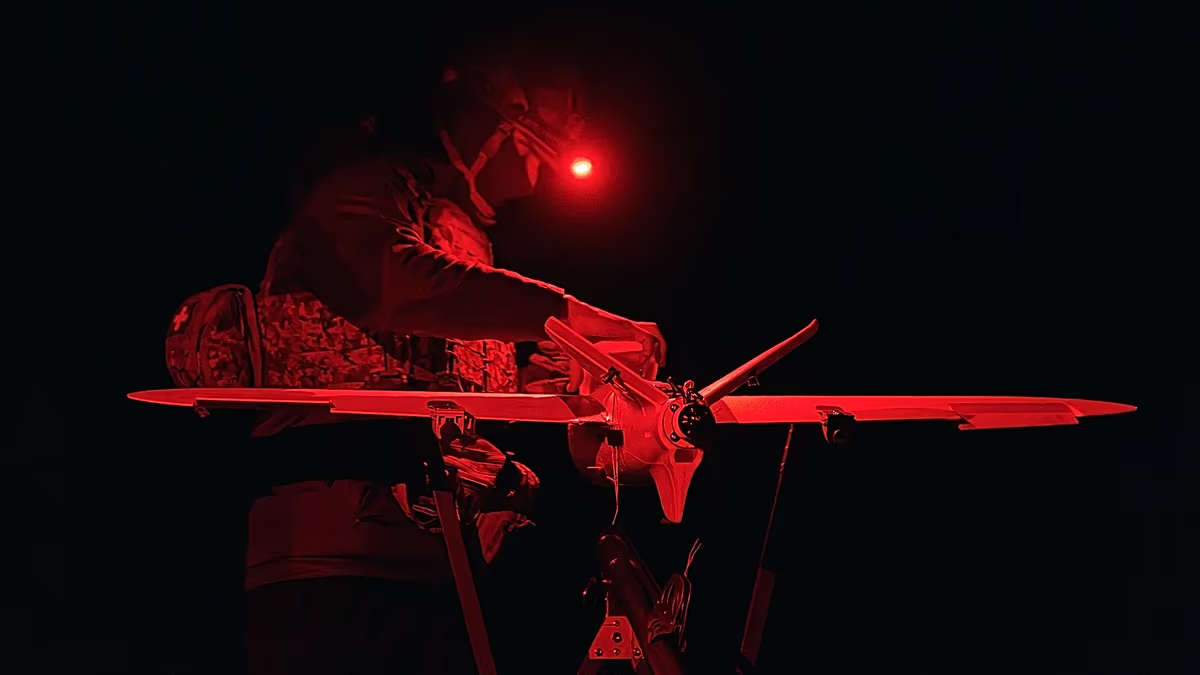
This pivot to exports is driven by powerful domestic realities. Ukraine’s defense industry, supercharged by state investment and wartime demand, now operates with significant surplus capacity—reportedly up to 50% for certain weapons systems. Producers have been advocating for over a year to sell this surplus, particularly the drones for which Ukraine has become famed, now produced at a rate of over four million annually. The revenue generated from international sales is intended to be reinvested directly into Ukraine’s own defense, creating a virtuous cycle that reduces long-term reliance on foreign aid. Thus, the policy is a pragmatic tool for self-sufficiency; it transforms excess production capacity into a funding stream for national survival. It allows Ukrainian companies to thrive on the global market, ensuring the industry’s health and innovation continue long into the future, which is vital for both wartime endurance and post-war economic recovery.
Proven in Battle: The Allure of Ukrainian Technology
The core value proposition of Ukrainian arms lies in their proven combat effectiveness. Systems like the Magura-V5 naval drone have demonstrated devastating capability against the Russian Black Sea Fleet, altering naval warfare dynamics and enabling Ukraine to project power despite not having a traditional navy. This real-world validation makes Ukrainian technology uniquely attractive to nations seeking credible, modern defense solutions. President Zelenskyy pointedly noted that this expertise is of interest to all partners seeking “a real level of protection.” From advanced electronic warfare systems to interception technology, Ukraine offers assets that have been iterated and refined under the extreme pressure of a large-scale conflict. For partner nations, this represents an opportunity to acquire not just hardware, but battle-tested tactical knowledge and software, providing a significant leap in capability without the protracted development cycles typically associated with new defense systems.
First Partners: Targeting the Gulf and Strategic Regions
Initial implementation of the “Drone Deals” framework is already underway, with countries in the Middle East, the Persian Gulf, Europe, and the Caucasus identified as key partners. Recent ten-year defense partnership agreements with several Gulf nations highlight this focus, covering areas like maritime drones and electronic warfare. Zelenskyy has previously suggested that Ukrainian naval drone technology could even help address security challenges in strategic waterways like the Strait of Hormuz. Furthermore, he confirmed that a proposal is on the table with American partners, stressing that any such deal must include clear oversight and favorable terms for Ukraine. This targeted outreach serves a dual purpose: it builds durable security relationships with nations in geopolitically sensitive regions, and it capitalizes on global instability—such as tensions in the Middle East—to position Ukraine as a relevant and reliable security provider, thereby strengthening its own geopolitical influence.
A Strategic Evolution with Global Implications
Ukraine’s entry into the global arms market marks a profound evolution in its international identity. It is a strategic maneuver to transition from a beneficiary of the world’s support into a contributing member of the global security architecture. This move promises to deepen bilateral ties with allies, creating mutually beneficial relationships rooted in shared security interests rather than unilateral aid. For the global defense landscape, it introduces a new, agile source of innovative and combat-proven technology. Ultimately, this policy is a declaration of Ukraine’s enduring strength and future-focused vision. By exporting the tools of its own defense, Ukraine is not only funding its fight for freedom but also asserting its role as a capable, sovereign nation determined to secure its future and contribute to the stability of its partners around the world.