



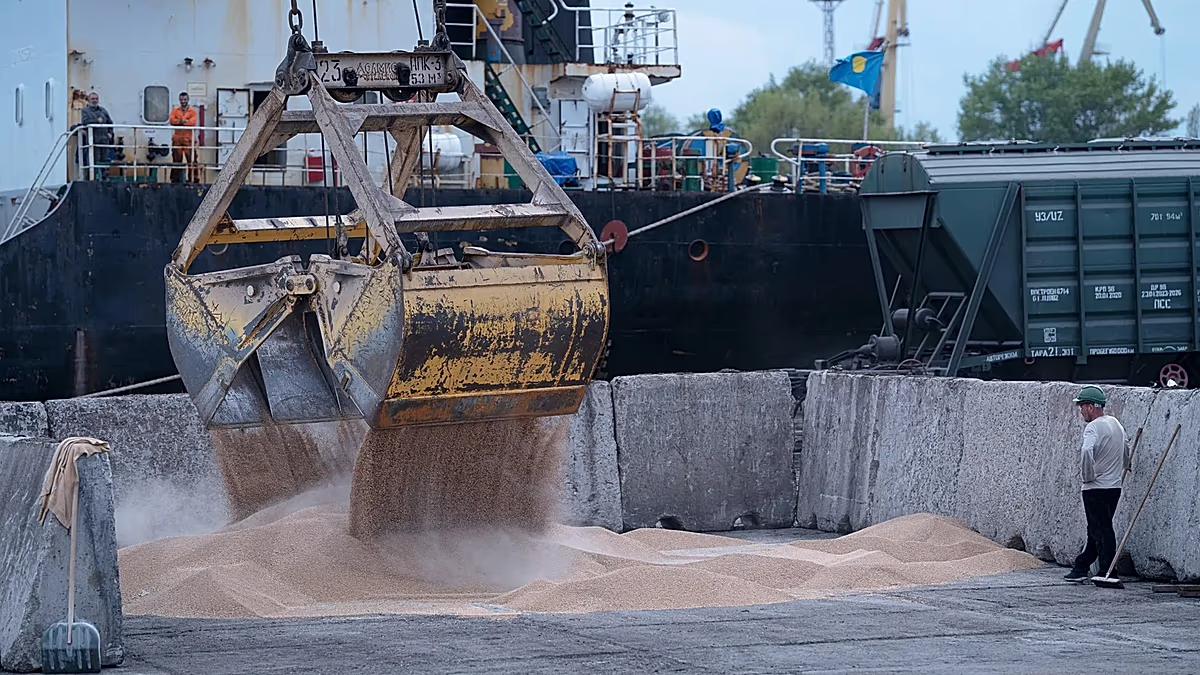
A simmering diplomatic dispute between Ukraine and Israel has reached a new level of tension, centering on the port of Haifa and the contentious issue of stolen Ukrainian grain. At the heart of the crisis is the Panama
flagged vessel Panormitis, which is currently awaiting to dock in Haifa carrying over 25,000 tonnes of wheat and barley. Ukrainian authorities, alongside investigative journalists, assert that this grain was illegally seized from Russian-occupied territories in Ukraine, primarily from the coastal city of Berdyansk, before being transferred via other ships and loaded in a Russian port. Kyiv has issued a stark warning to Israel, summoning its ambassador to deliver a formal protest and demanding that the cargo be rejected, arguing that accepting it amounts to complicity in Russia’s illicit trade of stolen resources, which ultimately finances its war against Ukraine.
This is not an isolated incident but part of a disturbing pattern that is testing the fragile bonds between the two nations. Just weeks earlier, in April, the Russian bulk carrier Abinsk unloaded nearly 44,000 tonnes of stolen Ukrainian wheat in Haifa, despite prior warnings from Kyiv. Israeli investigations have since revealed that at least four such shipments have reached its ports this year alone. For Ukraine, each unloaded vessel feels like a profound betrayal. A Ukrainian diplomatic source expressed deep frustration, stating that Israel had “essentially shrugged off” previous demands and that this inaction “feels like a slap in the face,” given the strategic goodwill Ukraine has extended—such as designating Iran’s Revolutionary Guard Corps as a terrorist organization—in solidarity with Israel.
Israel’s response, articulated by Foreign Minister Gideon Sa’ar, has been one of procedural caution and public reproach. While pledging that the matter will be examined by Israel’s independent legal authorities, he pointedly criticized Ukraine for conducting diplomacy “on Twitter or in the media,” noting that official evidence and formal requests for legal assistance had not yet been provided. This clash—between Ukraine’s urgency, driven by the acute economic and moral injury of the thefts, and Israel’s insistence on strict legal and diplomatic channels—highlights a fundamental disconnect. Ukraine sees a clear moral imperative to halt the plunder of its resources, while Israel emphasizes due process and behind-the-scenes dialogue.
The stakes are exceptionally high for Ukraine, transforming this from a bilateral irritant into a matter of national survival. Often called “Europe’s breadbasket,” Ukraine’s agricultural sector is a cornerstone of its economy, contributing an estimated 20% to its GDP. Since the full-scale invasion began in 2022, Russia has stolen at least 15 million tonnes of Ukrainian grain, systematically robbing the country of a vital revenue stream needed for reconstruction and resistance. Every shipload that reaches a foreign market not only legitimizes this theft but also undermines Ukraine’s economic lifeline. Consequently, Kyiv has signaled that failure to act could lead to “significant diplomatic consequences,” viewing Israel’s compliance as a critical test of its commitment to international law and their bilateral relationship.
The grain dispute exposes the underlying delicacy and complexity of Ukraine-Israel relations since Russia’s invasion. Israel, while condemning the aggression, has carefully avoided providing direct military aid to Kyiv to maintain a working relationship with Moscow—a policy linked to security concerns involving Syria and Iran. However, the geopolitical landscape is shifting. Following Iran’s direct attack on Israel in April, both nations have expressed a willingness to strengthen ties in the face of a common adversarial role played by Tehran. Yet, the grain issue now poses a direct challenge to this nascent alignment. Ukraine questions how a strategic partnership can be built if Israel, even indirectly, enables the economic engine of Ukraine’s destruction.
As the Panormitis waits off the coast of Haifa, it has become a floating symbol of this diplomatic quandary. For Ukraine, it represents the ongoing pillage of its land and the urgent need for the international community to take a unambiguous stand. For Israel, it presents a multifaceted dilemma: navigating legal protocols, managing relations with both Ukraine and Russia, and defining its stance on a fundamental issue of wartime plunder. The resolution of this specific case will resonate far beyond this single cargo. It will either mend a growing rift by affirming a shared commitment to justice, or it will deepen the wound, proving that even amidst talk of common cause, pragmatic interests and procedural delays can undermine the principles Ukraine is fighting to uphold. The world watches to see if this grain will be unloaded, and with it, the trust between two nations facing monumental threats.