

A Spring Weekend of Shocks and Shifting Alliances
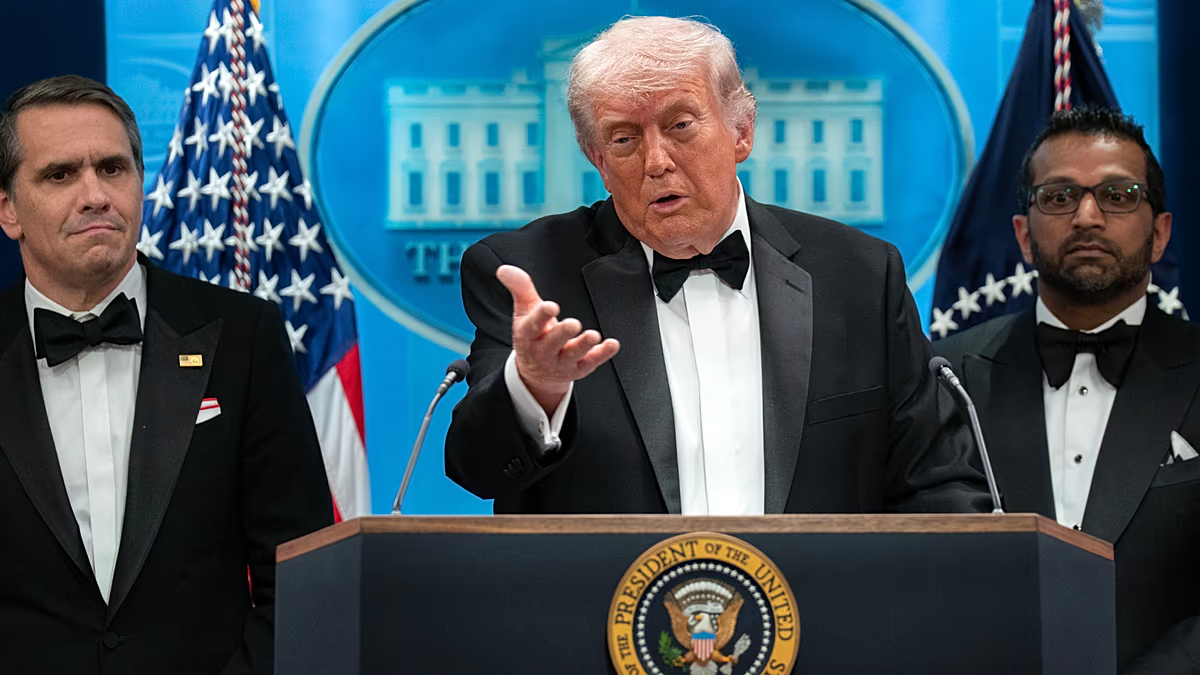
In Brussels, where officials were enjoying the first gentle signs of spring, the news from Washington, D.C., arrived like a sudden, cold front. The tranquil European weekend was shattered by reports of an attempted assassination at the White House Correspondents’ Dinner, an event U.S. President Donald Trump was attending for the first time in years. A 31-year-old man, identified as Cole Tomas Allen, had opened fire outside the venue in what the White House declared a targeted attack. While miraculously no one was killed, the shockwaves were instantaneous and global. For a moment, the persistent transatlantic tensions, often marked by policy disputes and diplomatic friction, were set aside. European Commission President Ursula von der Leyen, French President Emmanuel Macron, and German Chancellor Friedrich Merz united in a chorus of condemnation, emphasizing that political violence is a poison to democracies everywhere. This solidarity emerged even alongside reports of a potential U.S. move to suspend Spain from NATO over its stance on the Middle East, highlighting how a shared democratic horror could momentarily eclipse other divisions.
The attack in Washington inevitably cast a shadow over other simmering global crises, particularly the complex and volatile situation in the Middle East. President Trump himself sought to dissociate the two, insisting the shooting would not deter his administration’s objectives. His comments came amidst a flurry of diplomatic activity, with his cancellation of a planned envoy trip to Pakistan and pointed remarks about Iranian leadership. Simultaneously, Iran’s foreign minister was shuttling between Oman, Pakistan, and Russia, engaging in talks aimed at delineating “red lines” and urging European nations to play a constructive role in ceasefire efforts. This intricate dance of diplomacy and posturing underscored the fragile state of negotiations, where every statement and meeting is a carefully calibrated move in a high-stakes geopolitical game.
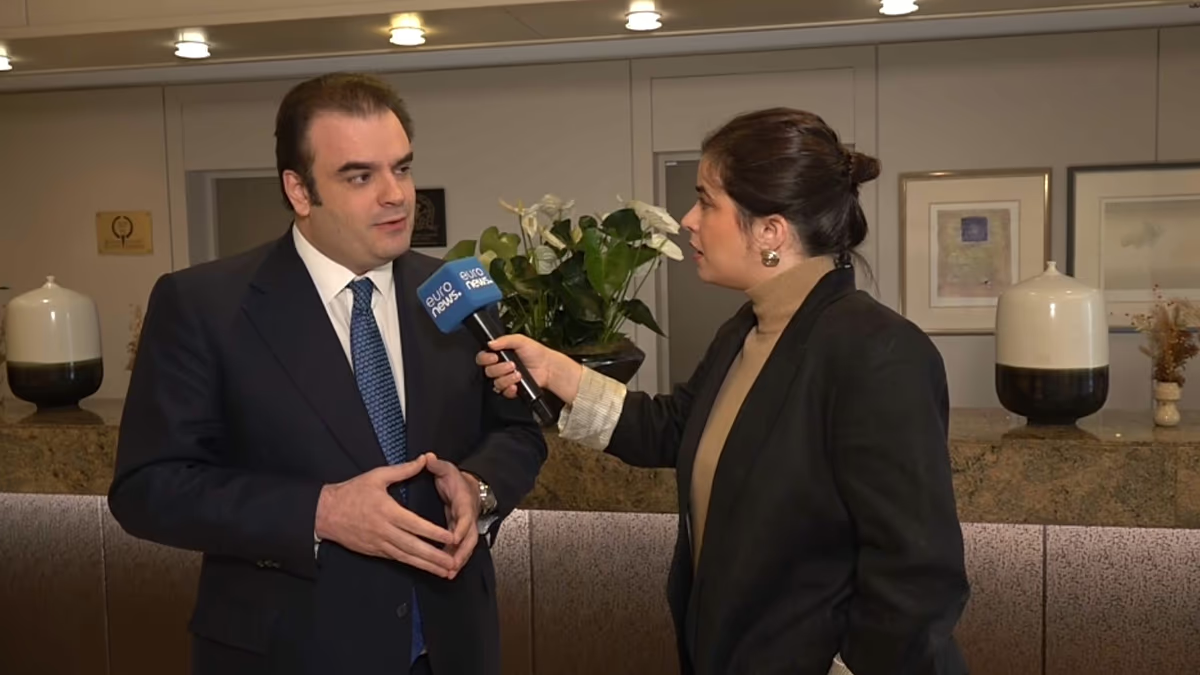
Nowhere is that fragility more palpable than in Lebanon, where a tense ceasefire between Israel and Hezbollah hangs by a thread. The weekend saw the familiar, grim pattern of mutual accusations of violations, with Hezbollah claiming retaliatory strikes and Israeli Prime Minister Benjamin Netanyahu convening his war cabinet to discuss potential escalation. The human cost, as reported by Lebanon’s health ministry, is already staggeringly high. In an interview, Lebanese Minister Dr. Kamal Shehadi offered a sobering assessment: the truce is not solidly holding, yet both sides seem to be exercising a precarious restraint to avoid a full-scale war. He pointed to the Lebanese government’s strategy of leveraging overwhelming public support to pressure Hezbollah into disarming, a monumental task given the group’s entrenched power. His warning was clear: Hezbollah’s arsenal invites continued Israeli retaliation, perpetuating a cycle of violence that the Lebanese people bear the brunt of.
While grappling with these international tremors, Europe faced its own significant political shift—one that promises to redefine internal dynamics. The political earthquake in Hungary, where Péter Magyar’s opposition party unseated Viktor Orbán’s long-ruling Fidesz, has opened a new chapter in Budapest’s relationship with Brussels. After 16 years of often contentious rule, Orbán’s announcement that he would not take his parliamentary seat signaled a dramatic change. Magyar’s immediate pledge to travel to Brussels to unlock frozen EU funds heralds a potential “honeymoon” period, a stark contrast to the constant battles over rule-of-law issues. However, the transition is already marked by turbulence, as Magyar publicly alleged that figures from Orbán’s inner circle were attempting to move assets abroad, calling on authorities to freeze “stolen funds.” This suggests that the domestic reckoning with the Orbán era will be as complex as the diplomatic reset with the EU.
Amidst these political and security crises, solemn commemorations in Ukraine were overshadowed by fresh accusations of danger. On the 40th anniversary of the Chernobyl disaster, President Volodymyr Zelenskyy accused Russia of “nuclear terrorism,” alleging regular drone flights over the contaminated site. He framed Moscow’s full-scale invasion as an act that has once again brought the world to the precipice of a man-made catastrophe, a stark reminder that the war’s perils extend far beyond the battlefield. This warning found a sinister echo in Germany, where authorities suspect Russia of orchestrating a sophisticated phishing campaign targeting politicians and officials via the Signal messaging app. This hybrid warfare tactic, aiming to compromise private communications, illustrates the multifaceted and insidious nature of the threat Moscow poses to European security, blending cyber aggression with conventional military brutality.
As the new week begins, the agenda in Europe reflects this multifaceted landscape of threat, transition, and resilience. The European Parliament convenes in Strasbourg, set to debate consent-based rape legislation—a vital internal social issue proceeding alongside global security crises. The interconnectedness of these events is undeniable: an attack on democracy in America resonates in European capitals; a political change in Hungary alters the EU’s internal balance; and hybrid attacks from Moscow seek to undermine the very institutions deliberating in Strasbourg. From Washington to Beirut, and from Budapest to Kyiv, the weekend’s events wove a tapestry of a world in tense and turbulent flux, where the defenses of democracy, diplomacy, and stability are being tested on numerous fronts simultaneously.