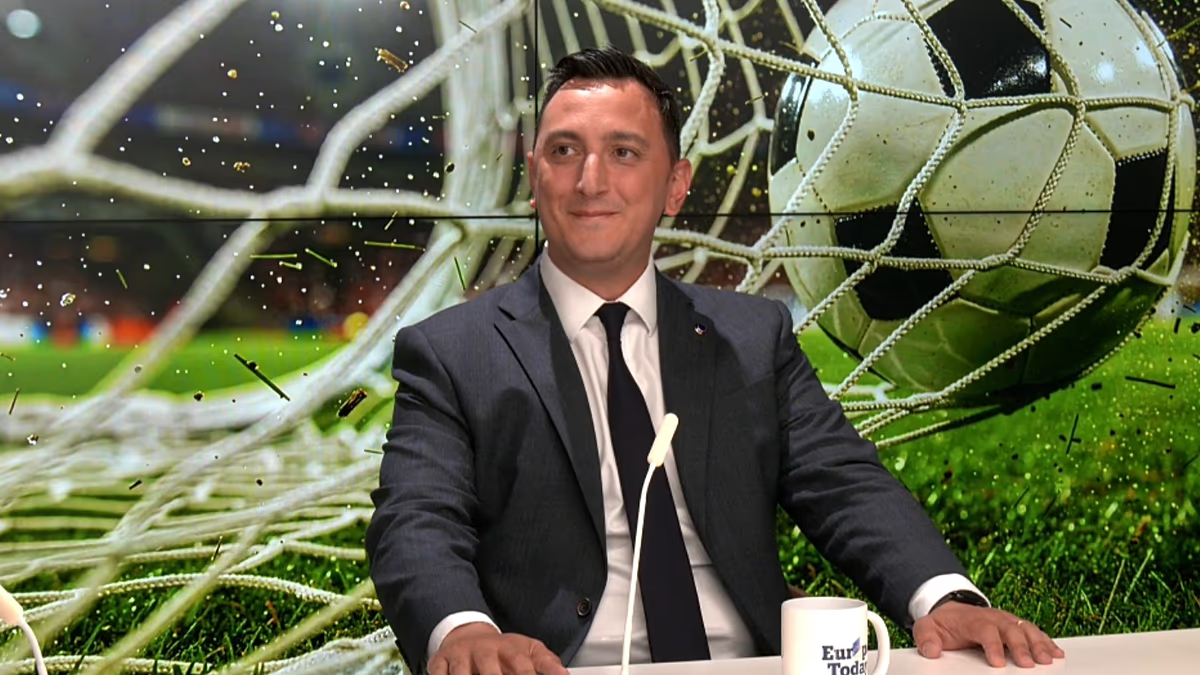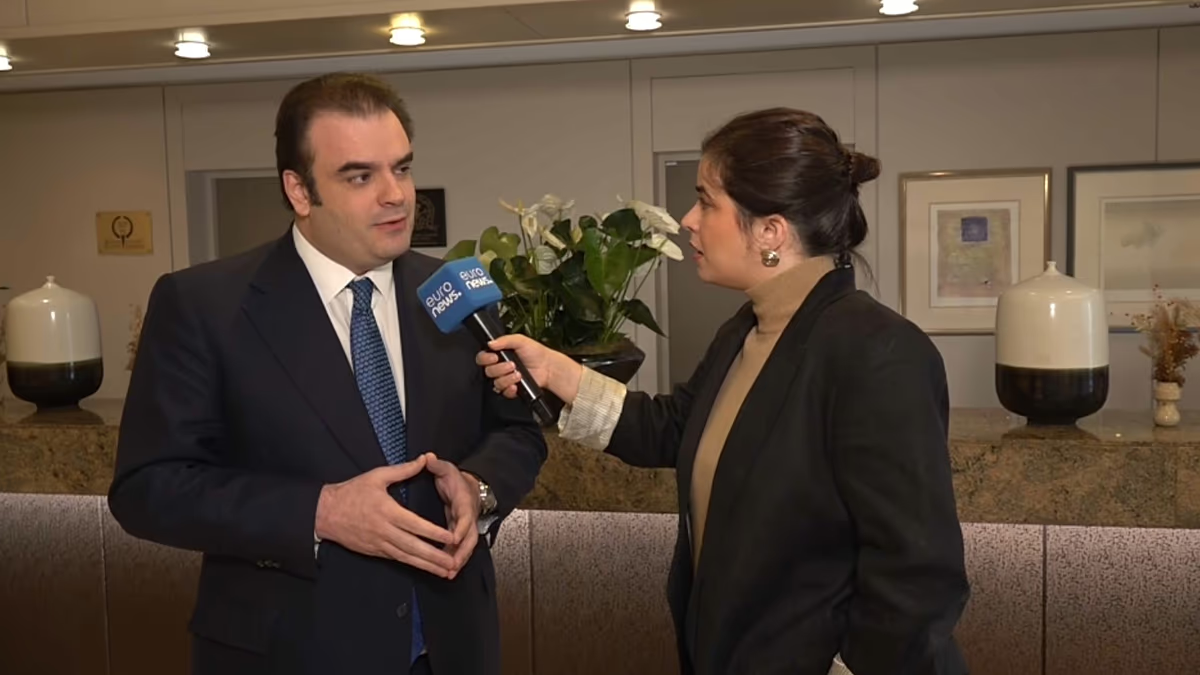


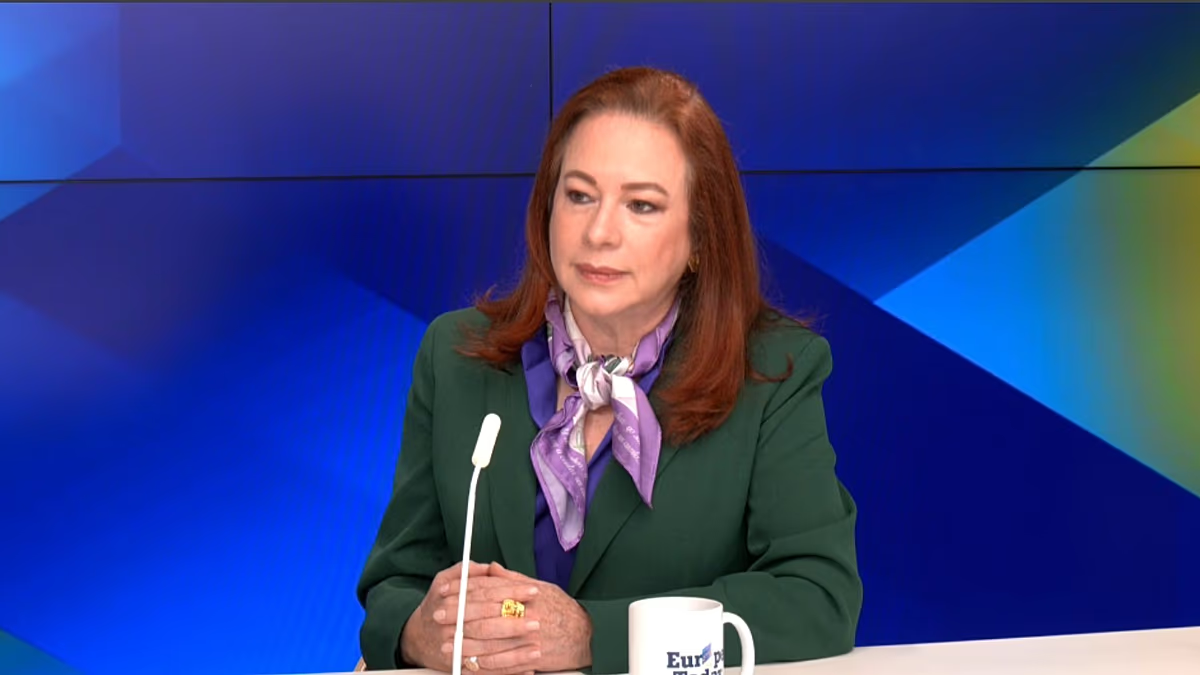
In today’s rapidly shifting global landscape, multilateral institutions are being tested like never before. According to María Fernanda Espinosa—President of the UN’s Cities Alliance, former President of the UN General Assembly, and former foreign affairs and defence minister of Ecuador—the United Nations stands at a critical juncture. In an interview with Euronews’ Europe Today, she argued that the UN must urgently “reform, transform, or die” to remain relevant in a world far more volatile than the one in which it was founded nearly eight decades ago. While she firmly believes the UN will survive in some form, she stresses that the real question is how it will adapt to contemporary challenges, from geopolitical fragmentation and rising conflict to climate disasters and deepening inequality. Espinosa acknowledges the organization is “facing a crisis,” yet she insists that “the world cannot live without” a body dedicated to international cooperation, peacekeeping, and humanitarian aid.
The urgency of reform is underscored by severe financial and political pressures. Governments worldwide are reducing development aid, and under the previous U.S. administration, funding to UN agencies was dramatically slashed—humanitarian contributions from Washington fell from historic highs of around $17 billion to just $2 billion in one recent year. In response, the UN has trimmed its annual budget and advanced the UN80 initiative, a cost-cutting and restructuring plan timed for its 80th anniversary in 2025. At the same time, the organization faces a crisis of legitimacy, as exemplified by the creation of parallel structures such as the U.S.-led “Board of Peace,” which some member states see as encroaching on the UN’s mandate. These challenges threaten to weaken the UN’s capacity precisely when global crises demand robust, coordinated action.
Despite these hurdles, Espinosa emphasizes that the UN retains unique strengths, particularly in humanitarian response and conflict mediation—roles that cannot simply be replaced by other entities. However, she advocates for a more inclusive and collaborative model of governance. The world today includes powerful regional blocs, dynamic city networks, and civil society organizations that did not exist 80 years ago. By partnering more closely with these actors, the UN could become more agile and effective. Espinosa highlights Europe’s “vital role” in this evolving architecture, describing it as a crucial “bridge-builder” with a responsibility to help plug financial gaps and foster dialogue. The European Union’s support, she suggests, will be indispensable in upholding multilateralism during this period of transition.
Much of Espinosa’s focus is on the urban dimension of global crises, a topic central to the recent Cities Alliance Assembly in Brussels. Cities, she notes, are on the front lines of today’s most pressing challenges—from conflict and climate shocks to displacement and extreme poverty. Whether in Lebanon, Ukraine, Sudan, or countless other settings, urban areas absorb the heaviest impacts of crises, yet they consistently lack adequate investment and support. More than one billion people worldwide live in slums, a reality Espinosa describes as fundamentally incompatible with the world we should aspire to build. She argues that empowering cities with greater resources and a stronger voice in international forums is not just a matter of equity but of practical necessity, as sustainable development and resilience are increasingly forged in urban centers.
This vision of a more decentralized, networked UN points toward a deeper transformation: one where the organization evolves from a primarily state-centric body into a platform that also elevates local and regional voices. Such a shift could help restore public trust and operational relevance. By embracing a model of shared responsibility—engaging mayors, regional leaders, the private sector, and grassroots movements—the UN could better address cross-border issues like migration, pandemics, and environmental degradation. This does not mean diminishing the role of national governments, but rather recognizing that complex problems require multi-level cooperation. In Espinosa’s view, reinventing the UN is about making it more responsive, representative, and capable of delivering tangible improvements in people’s lives.
Ultimately, Espinosa’s message is both a warning and a call to hope. The choice between reform, transformation, or irrelevance is real, and the time to act is now. A UN that fails to adapt risks becoming sidelined in a world that desperately needs effective multilateralism. Yet, if member states and partners rally around a renewed vision—one that embraces collaboration, prioritizes frontline communities, and champions inclusive sustainable development—the organization can emerge stronger. The path forward will demand political courage, increased and more predictable funding, and a steadfast commitment to the UN’s founding ideals of peace, justice, and human dignity. As Espinosa reminds us, the goal is not merely to preserve an institution, but to shape a world in which every person can live in safety, opportunity, and hope.