



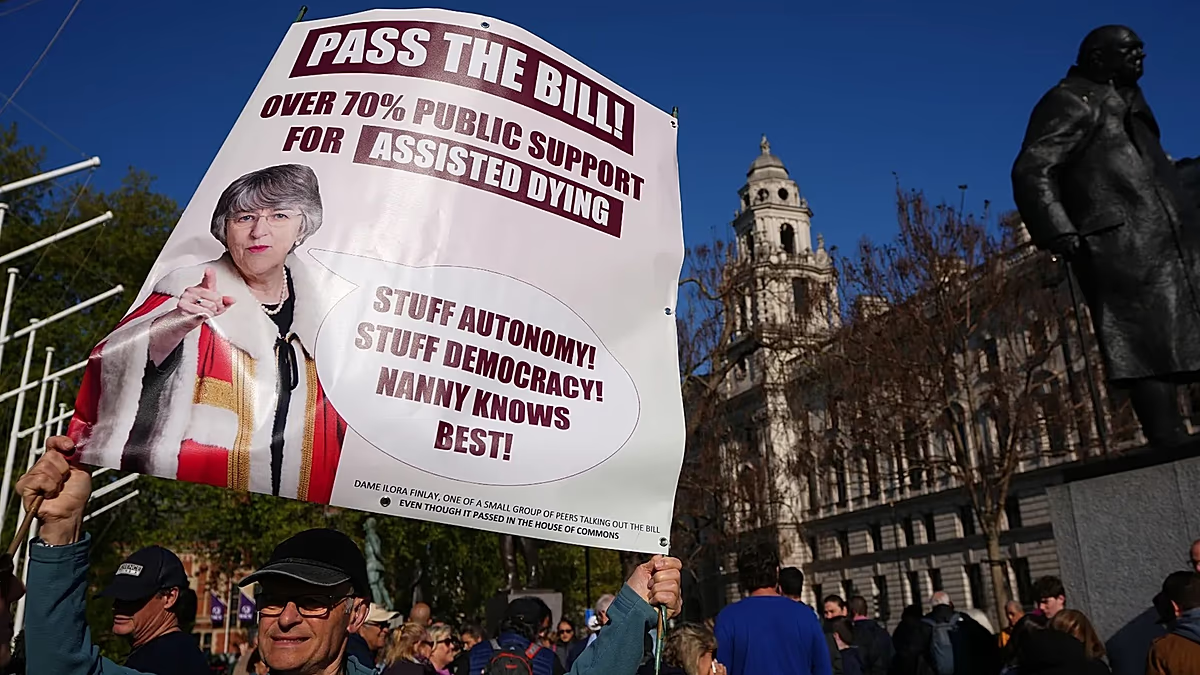
The long and deeply personal campaign to legalise assisted dying in England and Wales has suffered a significant, though its supporters insist temporary, setback. A bill that would have allowed terminally ill adults with less than six months to live to request life-ending medication failed to pass parliament, succumbing not to a definitive vote of conscience, but to a procedural stalemate in the House of Lords. The proposed legislation, known as the Terminally Ill Adults (End of Life) Bill, had already cleared a historic hurdle by winning the support of the elected House of Commons in June 2023. However, in Britain’s unelected upper chamber, the bill became entangled in a web of over 1,200 amendments, a tactic its sponsors decried as “pure obstructionism.” As Friday’s debate concluded, the parliamentary clock had simply run out, leaving the bill to expire when the current parliamentary session ends next week.
The architects of the bill expressed profound frustration and anger at the manner of its defeat. Lord Charlie Falconer, who sponsored the legislation in the Lords, described the outcome as “an absolute travesty,” accusing a small minority of peers of manipulating parliamentary processes by “talking and talking and talking” to ensure the bill could not progress. In the Commons, MP Kim Leadbeater, who originally introduced the bill, echoed this sense of injustice, stating she was “really sad, really upset, really disappointed, but also a little bit angry.” For campaigners and supportive politicians, the failure was particularly galling because it did not reflect a democratic rejection of the principle, but rather a successful filibuster that prevented the will of the elected chamber from being fully tested in the Lords.
At its heart, the debate transcends procedure and touches on the most intimate human questions of autonomy, suffering, and compassion. Supporters argue that the law would have provided a crucial, compassionate choice for individuals facing the final, often painful stages of a terminal illness, allowing them to depart with dignity on their own terms. The proposed safeguards were stringent: a patient’s request would need to be approved by two independent doctors and a specialist panel, and the individual would have to be physically capable of administering the life-ending substance themselves. Proponents point to polling showing consistent public support for such a change and note that England and Wales are increasingly out of step with other jurisdictions, including several European nations, Canada, New Zealand, and parts of the United States and Australia, where various forms of assisted dying are legal.
Yet, the opposition remains steadfast and is rooted in profound ethical and practical concerns. Groups like the Christian Medical Fellowship, which represents doctors opposed to the practice, expressed relief at the bill’s failure. They, and others, argue that no legal framework can ever be made entirely safe from coercion, whether subtle or overt, or from the risk that vulnerable individuals might feel themselves a burden on their families. The fundamental principle of “do no harm” and the fear of a slippery slope, where the criteria for eligibility might gradually expand, form the bedrock of their resistance. For them, the duty of society is to improve palliative care universally, not to provide a medical pathway to death, however well-intentioned.
Despite the setback, the movement’s leaders are adamant that this is a pause, not an end. Campaigner Rebecca Wilcox captured this defiant spirit, stating, “We’re incredibly angry with what’s happened but we’re determined to get it through, this is not the end, we will not be stopped.” The legislative journey must now begin anew in the next parliamentary session, likely requiring a different MP to take up the mantle. Kim Leadbeater vowed that supportive MPs will “go again,” acknowledging the reset while affirming that “the issue is not going away.” They take solace in what they see as an irreversible “direction of travel” in public opinion and global practice, believing it is only a matter of time before the law catches up.
The episode leaves a nation divided on a fundamental question of life and death, and countless families in a state of painful limbo. For terminally ill individuals who had hoped for this legal option, the delay means continued uncertainty and the potential for suffering they deem unbearable. The parliamentary drama, with its arcane tactics and procedural wrangling, stands in stark contrast to the raw, personal realities that fuel the debate. As the political process resets, the underlying human stories—of pain, of fear, of a desire for control in the face of the uncontrollable—will persist, ensuring that this deeply emotional and ethical conversation will return to the halls of parliament, demanding a more conclusive answer.