



In a case that has sent ripples through Sweden’s diplomatic and security circles, a senior Swedish diplomat tasked with the sensitive role of special envoy to Syria has been formally charged with the unauthorized possession of highly classified documents. The charges, announced by prosecutors on a Friday in April 2026, allege that the diplomat’s actions could have seriously jeopardized Sweden’s national security had the materials fallen into the hands of a foreign power. According to prosecutor Mats Ljungqvist, the individual unlawfully removed and retained classified documents from his official duties, storing them not only at his primary residence but also at a holiday home. This was not, however, framed as a classic espionage case; prosecutors explicitly stated that the diplomat acted without any intention of aiding a foreign country. Instead, the core allegation is one of gross negligence and the illicit appropriation of state secrets, creating a profound vulnerability.
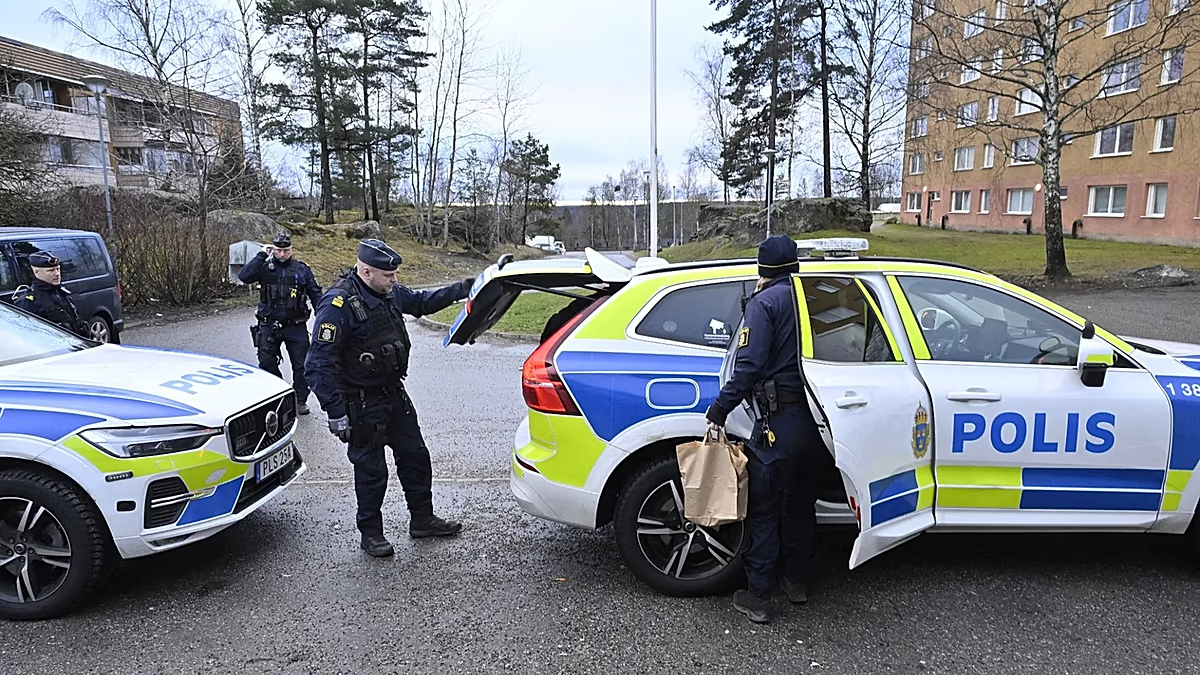
The origins of this case trace back to a dramatic spring day in May 2025, when Sweden’s security service, Sapo, executed coordinated raids. Disguised as construction workers, agents descended upon the diplomat’s homes at dawn, leading to his arrest and that of another individual, who was later cleared of suspicion. This operation occurred against a backdrop of heightened anxiety within Sweden’s intelligence community. Astonishingly, on that very same day, another diplomat, Joachim Bergström, was arrested in a separate but equally startling spy probe, which saw masked agents storm his apartment and detain him in his pyjamas. The Bergström case ended in profound tragedy less than 48 hours later when, after being released from custody but still under suspicion, he took his own life. This somber context casts a long shadow over the current proceedings, highlighting the intense pressure and high-stakes environment surrounding investigations into the mishandling of state secrets.
In response to the charges, the accused diplomat’s defense has mounted a vigorous challenge, framing the issue as a bureaucratic procedural matter rather than a criminal security threat. His lawyer, Thomas Olsson, stated unequivocally to the AFP news agency that his client denies all wrongdoing and finds the allegations “completely unfounded.” Olsson argued that over a decades-long career at the foreign service, his client had handled “tens of thousands of different documents,” including the ones in question. The defense’s pivotal claim is that possessing these documents at home constituted, at worst, a violation of internal ministry protocols—a disciplinary infraction to be handled internally, not a grave criminal act warranting the intervention of the Security Service. This line of argument seeks to demote the accusation from one of national betrayal to one of administrative oversight.
Despite the defense’s characterization, prosecutors maintain that the nature of the documents elevates the offense far beyond a simple clerical error. The charge sheet underscores that the information was “highly-classified” and that its disclosure “may be detrimental to Sweden’s security.” This suggests the materials pertained to matters of supreme national interest, potentially related to Sweden’s role in complex international issues like the Syrian conflict, its NATO accession process, or intelligence-sharing partnerships. The fact that the diplomat kept such materials in relatively unsecured private locations, regardless of intent, created an untenable risk. Furthermore, prosecutors initially explored an even more serious avenue, investigating whether the diplomat transmitted documents to a former politician in Gävle, but that thread was dropped due to insufficient evidence, leaving the core charge of unauthorized possession.
The case opens a window into the often-opaque world of diplomatic security and the immense trust placed in senior officials. It raises difficult questions about internal controls within the foreign ministry, the clarity of protocols for handling classified information, and the point at which a procedural lapse morphs into a prosecutable crime. For the diplomatic corps, it is a sobering reminder of the perpetual scrutiny they operate under, especially in roles involving conflict zones like Syria. For the public, it underscores the fragile balance between operational necessity and security in a geopolitically tense era, where Sweden’s foreign policy posture has become increasingly significant. The human cost of such investigations has already been starkly revealed, lending a heavy gravity to the ongoing legal process.
As the case moves forward, it sits at the intersection of law, security protocol, and human judgment. The court will be tasked with a delicate balancing act: determining whether this was a catastrophic failure of responsibility by a trusted official or an overzealous criminalization of a veteran diplomat’s questionable filing habits. The outcome will resonate not only for the individual whose career and reputation hang in the balance but also for defining the boundaries of accountability for those entrusted with their nation’s most sensitive secrets. Regardless of the verdict, this episode will likely prompt rigorous internal reviews within Swedish institutions, aiming to safeguard national security without overlooking the human elements of administration and trust that underpin diplomatic service.