


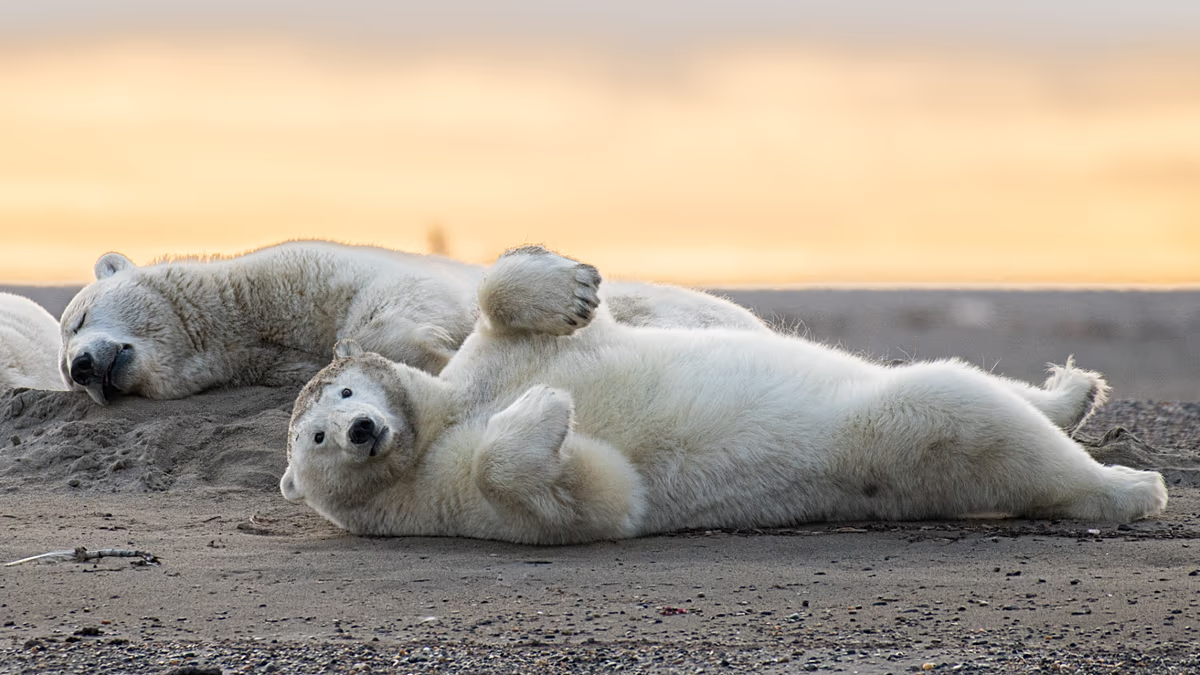
(1) Each late summer, on the remote northern edge of Alaska, a powerful gathering occurs. Above the Arctic Circle, in the tiny Iñupiat village of Kaktovik—the only settlement within the vast Arctic National Wildlife Refuge—polar bears congregate along the coast. They feast on the remains of bowhead whales harvested by local subsistence hunters, and they wait for the encroaching winter to solidify the sea ice. This dramatic scene transformed, over decades, into a magnet for travelers from across the globe. Drawn by what is often termed “last chance tourism,” people flocked here for a glimpse of these magnificent creatures in their wild habitat, against a backdrop of mounting awareness that climate change threatens their very existence. The rapid warming of the Arctic melts the sea ice the bears depend on to hunt, casting a shadow over their future and making such experiences feel both precious and precarious.
(2) For years, this spectacle brought over a thousand visitors annually to this community of roughly 250 residents. However, the surge of tourism created significant strain. Initially, in the early 1980s, any local with a boat could share this natural phenomenon with a few guests. After polar bears were listed as a threatened species in 2008, interest exploded. Federal regulations requiring permits and insurance gradually edged out small-scale local operators, while larger, out-of-town businesses moved in. Soon, Kaktovik found itself overwhelmed during the six-week viewing season. Day-trippers flew in from distant cities, bypassing local hotels and eateries. Residents reported feeling like spectacles themselves, with tourists sometimes gawking or trespassing. Practical life was disrupted: villagers competing with tourists for scarce seats on flights to cities for medical appointments could find themselves stranded, facing unexpected hotel costs. The sheer volume of outsiders challenged the community’s ability to maintain its quiet, insulated way of life.
(3) The COVID-19 pandemic forced a pause, and then in 2021, the U.S. Fish and Wildlife Service halted the boat tours entirely. The decision stemmed from dual concerns: the impact of constant human presence on bear behavior, and the strain of over-tourism on the village itself. Now, Kaktovik’s leaders, through the Kaktovik Iñupiat Corporation, are thoughtfully exploring a revival. They recognize the potential economic benefit—millions in revenue and a vital income stream for residents—but insist it cannot return to its former, intrusive form. “We definitely see the benefit for tourism,” said Corporation President Charles Lampe. “The thing is, it can’t be run like it was before.” Central to their vision is establishing firm guidelines that prioritize both the community’s well-being and the bears’ safety. They are engaged in talks with federal agencies, aiming for a possible restart by 2027, under a new, respectful framework.
(4) Key proposed changes focus directly on bear safety and human responsibility. Lampe highlights the need to limit how long tour boats can idle near the animals. Prolonged exposure habituates bears to humans, leading to dangerous scenarios where bears lose their natural wariness and venture into town seeking food. During the tourism peak, Kaktovik’s bear patrol, tasked with hazing bears away from homes using non-lethal methods, found it increasingly difficult. The frequency of bears requiring lethal removal rose to about three or four per year, compared to perhaps one annually before the boom. “Our safety was at risk,” Lampe stated. A tragic reminder of the stakes occurred in 2023, when a polar bear attack killed a woman and her child in western Alaska. Since the boat tours ceased, Lampe observes the bears have regained a healthier fear of humans, a sign the ecosystem is recovering from the disruption.
(5) Reviving tourism also means fostering deeper cultural respect. The polar bear viewing season overlaps with Kaktovik’s subsistence whaling, a core cultural and nutritional practice. When a whale is landed and butchered on the beach, the community often welcomes observers—even participant help. However, during the boom, some visitors recorded or photographed these intimate moments without permission, an act considered deeply disrespectful. Thoughtful leaders like Sherry Rupert, CEO of the American Indigenous Tourism Association, advocate for framing Kaktovik not as a fleeting day-trip, but as a multi-day immersive experience. Communities ready for tourists, she notes, “want them to come and be educated and walk away with a greater understanding of our people and our way of life and our culture.” This approach benefits everyone: visitors gain context, and the community shares its heritage on its own terms.
(6) The potential for a harmonious balance is evidenced by past respectful visits. In 2019, Roger and Sonia MacKertich from Australia sought the ultimate wild polar bear encounter. They chose Kaktovik and spent days there—joining a walking tour led by a village elder, purchasing souvenirs from local artists, and absorbing the community’s rhythm. For Roger, a professional wildlife photographer, the boat tours were the highlight: observing bears roaming barrier islands or swimming, utterly indifferent to the human presence—a sign of natural, undisturbed behavior. “That’s nearly as good as it gets,” he recalled. This model of engagement, where tourism is slow, mindful, and community-integrated, points toward a sustainable future. Kaktovik’s path forward is not about shutting the world out, but about inviting it in under conditions that safeguard the bears’ wildness, the villagers’ autonomy, and the fragile, profound beauty of this Arctic frontier.