



The irresistible allure of flowering landscapes is a timeless draw for travelers, yet in recent years, this passion has collided with the realities of overtourism and climate change, creating a need for new horizons. Iconic destinations like Japan’s cherry blossom parks and the tulip fields of the Netherlands now face immense pressure. In Japan, sites such as the Chureito Pagoda can see over 10,000 visitors in a single day during peak bloom, driven partly by social media’s viral celebration of the stunning scenes. This influx has led to strained infrastructure, safety concerns, and even the cancellation of traditional festivals, as occurred in Fujiyoshida. Moreover, the very blossoms themselves are becoming less predictable due to climatic volatility, blooming earlier and often for shorter periods, sometimes leaving travelers disappointed. Similarly, the Netherlands experiences parallel challenges. This confluence of factors is prompting nature lovers to look beyond these classic destinations, seeking equally breathtaking yet more sustainable floral spectacles across the globe.
One of the world’s most dramatic floral transformations occurs in the arid landscapes of Namaqualand, straddling the west coast of South Africa and Namibia. Between August and September, this semi-desert erupts into a breathtaking “super bloom,” a rare phenomenon dependent on annual rainfall. Over 3,500 species of wildflowers, including around 1,000 endemic to the region like the iconic Namaqualand daisy, carpet the plains and valleys in a vibrant mosaic of white, orange, and purple. The contrast between the arid base landscape and the sudden burst of life is profound. Visitors can explore this display along hiking trails and a dedicated “wild flower route” in the Namaqua National Park. The experience extends beyond the blooms, offering 4×4 adventures, exploration of Quiver tree forests and the Atlantic coast, Orange River rafting, and exceptional stargazing under clear skies. The fleeting, rain-dependent nature of this bloom makes it a particularly special and poignant spectacle of nature’s resilience.
For those specifically seeking a cherry blossom experience outside of Japan, the Jerte Valley in Spain provides a magnificent and culturally rich alternative. Here, in the Cáceres region, approximately two million cherry trees burst into simultaneous bloom in late March or early April, turning the entire valley into a sea of white for about ten days. Unlike the primarily ornamental celebration in Japan, this bloom also heralds a significant agricultural harvest of picota cherries. The valley celebrates with its own Fiesta del Cerezo en Flor, featuring music, theater, handicrafts, and local cherry-based cuisine. Travelers can explore historic villages like Cabezuela del Valle, renowned for its rustic architecture, or enjoy guided walking tours. One of the best ways to absorb the scale of the blossoms is a drive through the valley, passing through eleven municipalities and numerous viewpoints that offer stunning panoramas of the flower-clad slopes against the mountain backdrop.
In the high Himalayas of India, the Valley of Flowers presents a botanist’s paradise and a living tapestry of color. This UNESCO World Heritage Site within the Nanda Devi Biosphere Reserve boasts a unique micro-climate, making it exceptionally lush. From June to September, the valley undergoes a continuous transformation, with bloom colors shifting every few weeks against the backdrop of towering peaks. It hosts over 600 species, including rare and endangered mountain flowers such as the sacred Brahma Kamal, the Himalayan blue poppy, and the cobra lily, alongside a diverse array of orchids, primulas, and poppies. This botanical richness, combined with its role as a habitat for rare animals like the snow leopard and Asiatic black bear, makes it a haven for photographers, botanists, and trekkers. Accessible trails typically begin from Govindghat, and the journey often includes the cultural resonance of nearby Hemkund Sahib, a high-altitude Sikh pilgrimage site, adding a layer of spiritual significance to the natural wonder.
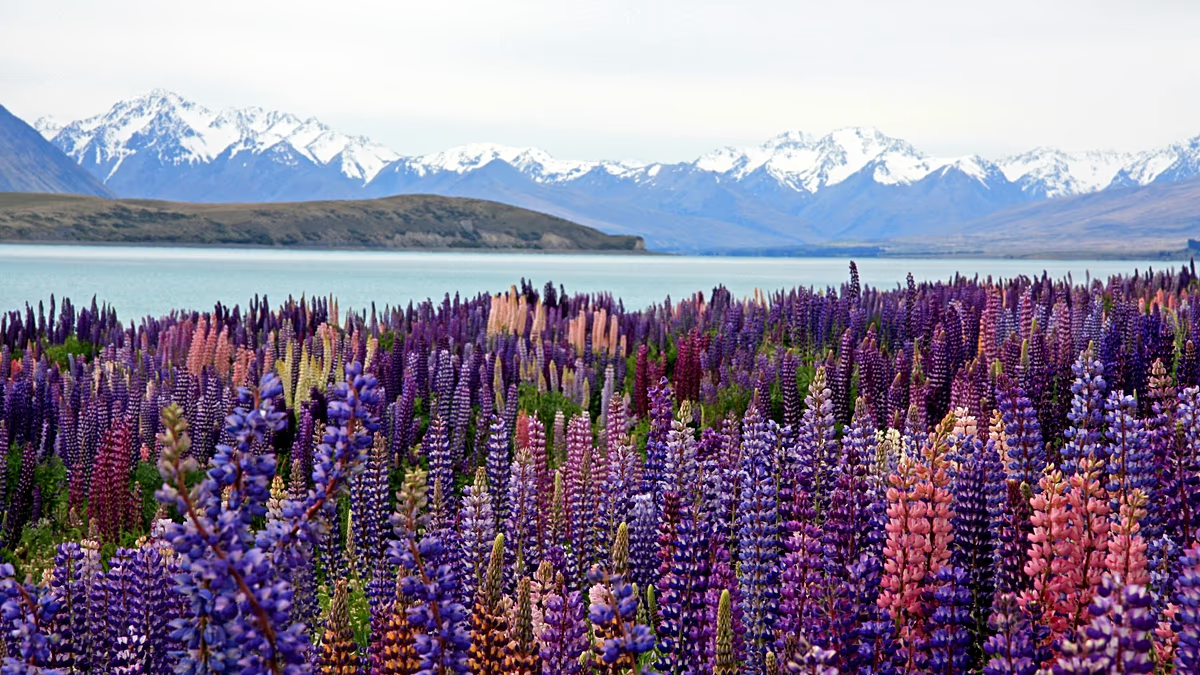
New Zealand’s Lake Tekapo offers a flower spectacle framed by one of the world’s most striking landscapes. The lake’s vivid turquoise hue, caused by glacial rock flour, provides a dramatic canvas for the vibrant fields of pink, blue, and purple Russell lupins that bloom from mid-November to December. Set against snow-capped mountains and under one of the clearest night skies on Earth, the scene is unforgettable. The area around the iconic Church of the Good Shepherd is particularly photogenic, especially during the golden hours of sunrise and sunset. This destination perfectly combines flower tourism with astrotourism and adventure. Visitors can enjoy stargazing, hiking, kayaking on the glacial lake, relaxing in hot pools, or taking scenic flights over the Southern Alps. The lupin display, while non-native and managed, creates a temporary yet magnificent integration of color within an already awe-inspiring natural setting.
For a subtly beautiful and historically textured floral experience, the traditional hay meadows of Muker in the Yorkshire Dales, England, offer a charming alternative. Blooming from mid-June to early July, these upland meadows are agricultural grasslands preserved as a Site of Specific Scientific Interest and a Coronation Meadow, representing some of the UK’s most biodiverse and well-preserved examples. Here, the beauty lies in the delicate mix of rare flowers like wood crane’s-bill and melancholy thistle alongside common buttercups and pignuts, all set within a timeless landscape of dry stone walls and historic barns. It is a scene of gentle, pastoral beauty perfect for peaceful walks, photography, and afternoon picnics. The meadows connect to broader walking routes along the River Swale or to the village of Keld, allowing visitors to soak in classic English countryside scenery where human history and natural ecology are harmoniously intertwined. This quieter, cultivated bloom provides a profound sense of place and continuity, contrasting with the dramatic, fleeting explosions of color found elsewhere.
In seeking these alternative destinations, travelers not only discover incredible beauty but also participate in a more distributed and potentially sustainable model of flower tourism. Each location—from the desert bloom of Namaqualand to the Himalayan tapestry of India—offers a unique narrative, intertwining natural phenomena with local culture, history, and ecology. This global exploration allows the passion for floral landscapes to foster deeper connections with diverse environments and communities, ensuring that the wonder of blossoms can be appreciated without overwhelming the very places that make them magical.