



The human cost of the conflict in Gaza, particularly for women and girls, is captured in devastating detail by a recent UN Women report titled “The Cost of War in Gaza on Women and Girls.” The figures are staggering: more than 38,000 women and girls were killed between October 2023 and December 2025. This tragic number represents over half of all fatalities recorded by the Gaza Ministry of Health in that period, underscoring a grim reality where women, children, and older persons collectively bear the majority of lives lost. The report cautions that the true death toll is likely even higher, as countless bodies remain trapped beneath rubble and the near-total collapse of health and reporting systems makes accurate accounting impossible. The violence has not been random; peaks in fatalities among women and children directly coincided with intense bombardment and the large-scale destruction of civilian infrastructure—homes, schools, and designated shelters—especially during the early phases of the war. Beyond the immediate loss of life, the report estimates that close to 11,000 women and girls in Gaza now live with lifelong disabilities, a somber legacy of the violence.
Despite a ceasefire agreement, the situation on the ground remains catastrophic, and the dangers for women and girls are persistent and severe. Since the truce took effect, hundreds more Palestinians have been killed and thousands injured, with accusations of violations exchanged between the parties. This so-called “peace” offers little reprieve. The collapse of basic systems has created a hidden, gendered crisis. As Sofia Calltorp, UN Women Chief of Humanitarian Action, explains, “Beyond the sheer violence, we have the collapse of the very system that women and girls depend on for their survival.” Humanitarian aid remains severely restricted, leaving desperate shortages of food, medicine, and for women and girls, essential menstrual hygiene products. The healthcare system has been decimated; hospitals, maternity wards, and fertility clinics lie in ruins. This destruction has resulted in what UN Women terms “systemic reproductive violence,” severely restricting access to sexual and reproductive health services and placing the health and dignity of countless women at risk.
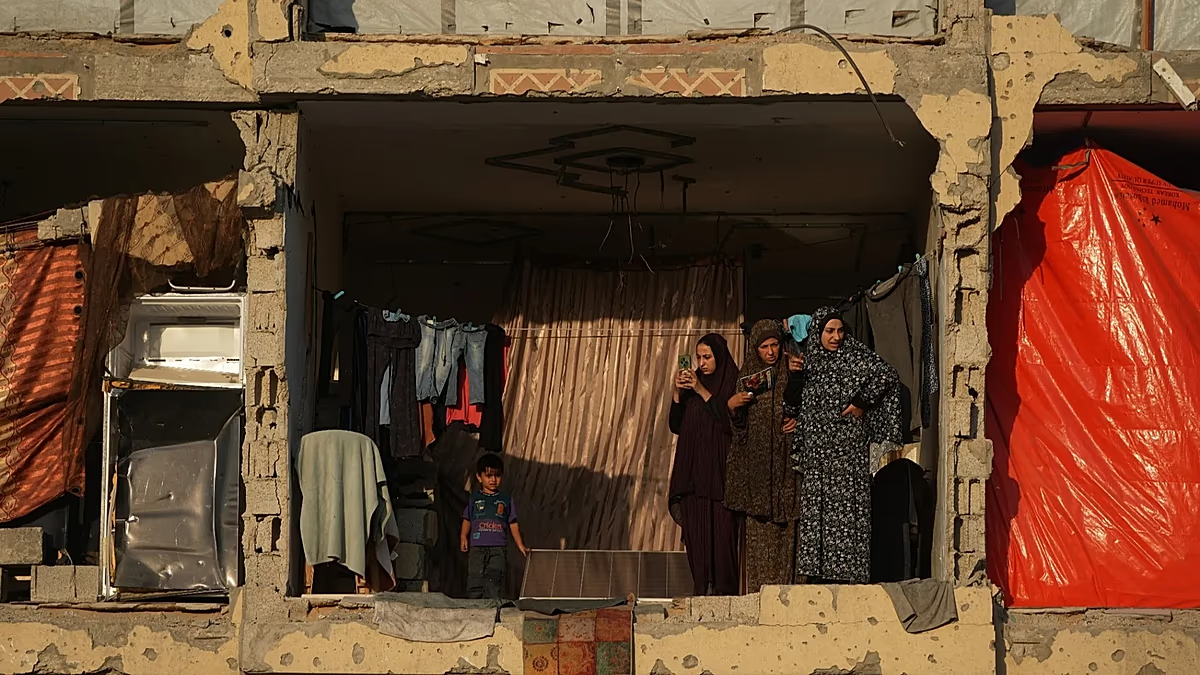
The conflict has also fundamentally shattered family and social structures, forcing women into new and overwhelming roles. Over 58,600 households in Gaza—approximately 14%, up from 9% in 2023—are now led by women. These women have suddenly become the sole providers and caregivers, managing the immense daily struggle of securing food and income while caring for children and elderly relatives, often amid ruins. Calltorp, after meeting women in a displacement centre, described their existence as a daily struggle “from the very morning to the very end of the day.” Compounding this burden is mass displacement; nearly the entire population of Gaza has been forced from their homes, often multiple times, with almost 60% losing their homes entirely. Women-headed households are not only more likely to be displaced but also face profound legal and social barriers in securing housing and land rights in a patriarchal system where property is often tied to male relatives, leaving widows and female heads of household in a precarious legal limbo.
The devastation extends to the pillars of society, with over half of Gaza’s hospitals non-functional and nearly all schools damaged or destroyed. This loss of education carries a profound gender-specific impact. When girls are deprived of schooling, the consequences are particularly severe and long-lasting. It reinforces traditional gender roles, increases economic dependence, and severely restricts their future agency and employment prospects, setting back gender equality for generations. The report emphasizes that recovery must be gender-responsive, actively working to prevent the entrenchment of these inequalities. UN Women’s calls are clear: the ceasefire must be fully implemented in compliance with international law, humanitarian aid must flow immediately and without obstruction, and all recovery and reconstruction efforts must actively prioritize the needs and rights of women and girls.
Central to any meaningful recovery is the recognition and support of women’s own role in response and resilience. Calltorp stresses, “We need to ensure that women and girls are placed at the centre of response and recovery efforts.” She highlights the irreplaceable role of women’s civil society and women-led organizations, which are often the first to respond within their communities. She shared a powerful story from her visit to Gaza, where she met a woman whose home was demolished. In front of the rubble, using debris like doors and windows as fuel, the woman had started a communal kitchen to cook for her neighbors, generating a small income while contributing to her community’s survival. This initiative, born from sheer necessity, exemplifies the resilience and leadership that women demonstrate even in the darkest times.
Therefore, supporting these women-led initiatives is not merely a humanitarian gesture but a strategic imperative. As Calltorp concludes, “To support women-led organisations in Gaza is really one of the most effective and important things we can do to meet the immediate needs, but also for long-term recovery and peace-building.” The path forward must move beyond viewing women solely as victims of this tragedy. They are essential agents of change, whose leadership, knowledge, and resilience must be empowered to guide the healing of their families, their communities, and ultimately, to build a foundation for a more just and stable future. The staggering statistics in the UN Women report are not just numbers; they represent a profound societal upheaval whose healing must begin with and be led by the women of Gaza.