


Here is a humanized and expanded summary of the provided content, structured into six paragraphs.
—
Amid the relentless grind of war, a familiar rhythm of resilience and retaliation continues to define Ukraine’s existence. On a recent Thursday, President Volodymyr Zelenskyy offered a defiant update to the nation and the world, confirming that the flow of American weaponry has not been interrupted, even as global attention fluctuates. In a series of voice messages, he painted a picture of a war effort that is not only surviving but actively striking back with increasing precision. “Of course, we are hitting what is painful for Russia, and it is very painful,” he stated, his words carrying the weight of a leader who has learned to measure success in the discomfort inflicted upon the enemy. He claimed that these long-range strikes are causing tens of billions of dollars in damage, targeting the very heart of Russia’s war economy: its oil production and manufacturing plants. While these claims are difficult to verify independently, the scale of the assertion suggests a strategic shift, one where Ukraine is using its own ingenuity—domestically developed drones and missiles—to reach targets more than a thousand kilometers inside Russian territory, turning the tables on a conflict that has long seen its own cities under siege.
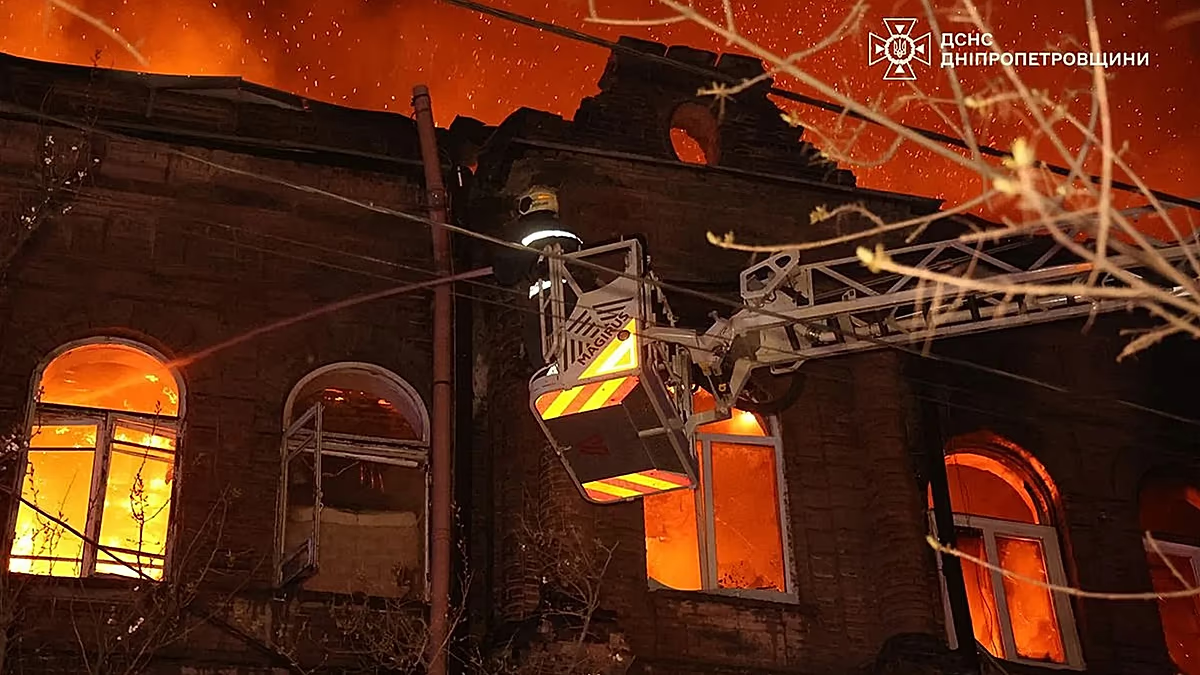
The human cost of this back-and-forth was brutally underscored in the central city of Dnipro, where the quiet of an ordinary evening was shattered by the whine of Russian drones. The attack claimed three lives and left ten others wounded, a grim tally that has become a tragically familiar headline in Ukraine. Among the wreckage was a 13-story apartment building and an administrative office, civilian spaces now scarred by shrapnel and fire. Oleksandr Hanzha, the head of the regional military administration, shared the grim news on Telegram, a platform that has become a digital morgue for the daily casualties of this invasion. The attack served as a stark reminder that while Ukraine’s leaders speak of grand strategic victories, the war’s most visceral reality remains the terror faced by ordinary people in their homes. Meanwhile, on the other side of the front, the Russian Ministry of Defense reported intercepting a massive volley of 154 Ukrainian drones over its own territory, including the annexed Crimean Peninsula and the Black Sea, indicating that the aerial war is now a two-way street of constant, high-stakes interception.
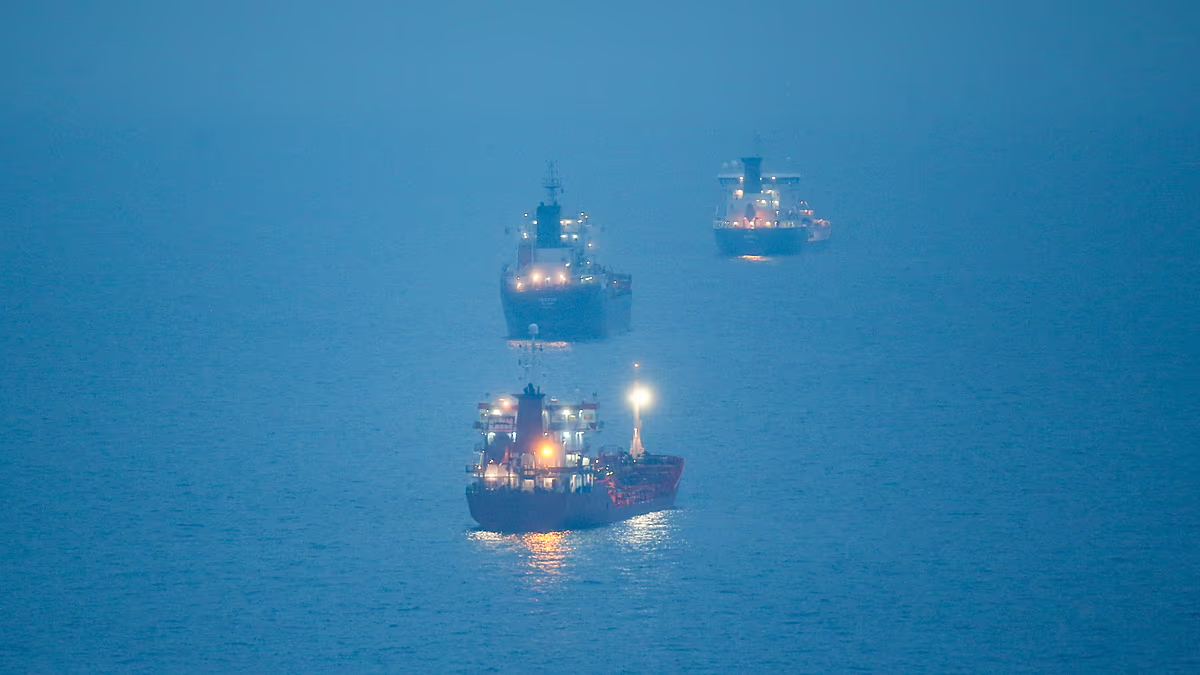
Perhaps the most dramatic example of this new phase of conflict unfolded on Russia’s own Black Sea coast, in the port city of Tuapse. There, a Ukrainian drone strike earlier in the week ignited a colossal inferno that, by the third day, still defied the efforts of 276 exhausted firefighters. The blaze was not just a logistical nightmare for Russia; it became an environmental and public health crisis for the local population. Toxic byproducts from the burning fuel mixed with the rain, falling back to earth as a fine, black layer of soot that coated entire districts of the city. Officials, in a rare admission of vulnerability, reported that the concentration of dangerous chemicals in the air had exceeded safe levels, advising residents to seal their windows and stay indoors. It was a vivid, frightening illustration of what Zelenskyy means when he says the strikes are “painful.” The war, which Moscow launched across a border, is now being felt as a toxic rain on its own soil, forcing Russian citizens to confront the immediate consequences of a conflict their government insists is distant and necessary.
In the middle of this chaos and calculation, a familiar face arrived in Kyiv, offering a different kind of support. Prince Harry, the Duke of Sussex, stepped off an overnight train from Poland—the only safe way to enter the capital—for his third visit in just over a year. His presence was a powerful symbol of sustained international solidarity, a reminder that the war in Ukraine has not been forgotten by everyone in the West. Speaking at a security conference in Kyiv, the Prince did not offer military hardware or political promises. Instead, he offered something perhaps equally vital: a tribute to the human spirit. He praised the Ukrainian people for demonstrating “strength not just in bravery and capability, but in unity, in trust.” His words resonated in the hall as he looked directly at a society that has been battered for years, telling them that they “continue to hold together, and hold together you must.” It was a simple, almost paternal plea, but one that carries immense weight from a man who knows what it means to live under the unrelenting glare of public expectation and personal trauma.
The duke’s visit also subtly underscored the logistical reality of modern warfare. He traveled by train from Poland, a journey that many Ukrainians make daily, a silent testament to the closure of airspace over the country. The fact that a member of the British royal family must enter the country by rail like everyone else is a powerful, unspoken narrative of the siege mentality that persists. While Harry was in Kyiv, President Zelenskyy was notably absent, traveling to Cyprus to attend a summit of European Union leaders. This separation highlights the dual life of a wartime leader: one foot on the battlefield, rallying a nation, and the other in the diplomatic arena, securing the funds and political backing to continue the fight. It remains unclear if the Prince and the President would meet, but the symbolism of their simultaneous, separate efforts—one on the ground offering moral support, the other in the halls of power securing material support—tells the full story of Ukraine’s struggle. It is a fight fought on multiple fronts, requiring a coalition of both soldiers and supporters, of weapons and words.
Ultimately, the news from this week serves as a microcosm of the larger war. Russia continues to press its full-scale invasion, targeting Ukraine’s energy grid and its people, as Zelenskyy grimly noted. In response, Ukraine is not just defending; it is innovating, using a blend of homegrown technology and American-supplied Patriot air defense systems to both protect its own cities and strike back at the source of its pain. The human toll remains the central, heartbreaking truth: three dead in Dnipro, a city covered in toxic soot in Tuapse, and tens of billions in damage on both sides. Yet, amidst the destruction, there is a thread of stubborn hope, personified by Prince Harry’s visit and Zelenskyy’s defiant promise: “We will respond.” The war is not static. It is a brutal, evolving dance of attack and counter-attack, of grief and grit, where the simple act of holding together—as a nation, as a city, as a family—remains the most profound act of resistance. The struggle for Ukraine is far from over, and its story continues to be written in the ashes of drone strikes and the silent resilience of people boarding night trains towards an uncertain dawn.