




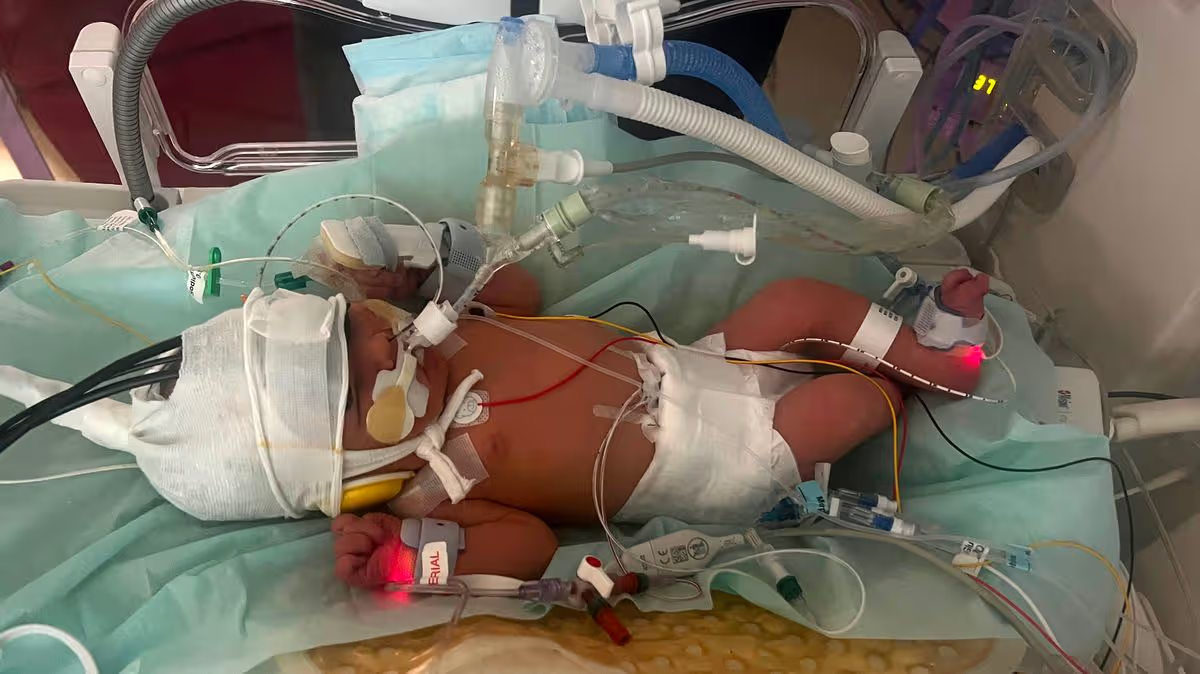
Gemma Lomas placed her trust in the NHS midwives who guided her towards a home birth, a decision made with the joyful anticipation of welcoming her daughter, Poppy Hope Lomas. She believed she was choosing a safe, natural start for her baby’s life, supported by the professionals of the Edgware Midwives team at Barnet Hospital. Tragically, Poppy was just seven days old when she died at University College Hospital in London, following severe complications during that planned home delivery. An inquest later revealed that Gemma was never made fully aware of the significant risks involved in her choice, particularly given her history of a prior Caesarean section, a factor that added considerable danger to the proceedings. She had been actively encouraged to pursue a Vaginal Birth After Caesarean (VBAC) at home, a recommendation she followed in good faith, stating she would never have consciously made a decision that could harm herself or her child.
The inquest at Barnet Coroner’s Court heard devastating clinical details: Poppy likely died from a severe hypoxic-ischaemic brain injury, caused when the brain is deprived of oxygen, which occurred in the half-hour before her birth. Senior Coroner Andrew Walker identified a cascade of serious failures by the Royal Free London NHS Foundation Trust. The trust had agreed to support an “unsafe home delivery that was against medical advice” and failed to properly manage an “accumulation of risk factors.” These included a prolonged rupture of membranes without antibiotic cover and, crucially, concerning decelerations in Poppy’s heart rate about ninety minutes before delivery—a clear warning sign that was not acted upon with the urgency it demanded.
Evidence presented showed a critical failure in basic care. Midwife Sasha Field, who attended the birth, stated in a written statement that an ambulance should have been called immediately when the baby’s heart rate slowed after a contraction. Coroner Walker emphasized that not discussing these decelerations with Gemma Lomas or making a decision to transfer to hospital constituted a “really serious failure.” This absence of timely intervention meant that Poppy was born in poor condition, with the irreversible brain damage already sustained. The midwives, working in the home environment, did not recognize or appropriately manage the escalating risks, resulting in a fatal delay in actions that could have saved her life.
Speaking with profound grief outside the court, Gemma Lomas gave voice to a family’s enduring heartbreak. “Today’s finding confirmed what we have lived every single day since losing our precious daughter Poppy,” she said. She and her family had sought the inquest to uncover the truth, because “Poppy’s life mattered and because she deserves to be remembered for more than the circumstances of her death.” While acknowledging that nothing can ever bring their daughter back, Gemma stated that hearing the truth officially acknowledged “means everything to us.” She remembered Poppy not as a statistic or a case file, but as a beloved daughter, “loved beyond words,” who will forever be cherished and missed.
Beyond seeking accountability, Gemma’s hope is that Poppy’s story will force vital changes in maternity care, particularly in how choices are presented to expectant parents. She highlighted the need for balanced, clear, and comprehensive information so that women and families can make truly informed decisions. Her own experience was one of being encouraged down a specific path without a full understanding of the potential dangers. Her call is for transparency, ensuring that no other family is left to endure the same lifelong pain borne from preventable tragedy, where trust in the system is met with professional failure.
The conclusion of the inquest paints a harrowing picture of systemic breakdown: a trusting mother, a vulnerable newborn, and a series of missed opportunities that culminated in an irreversible loss. The coroner’s findings underscore a stark deviation from fundamental standards of care, where warning signs were overlooked and the safety net of hospital transfer was not deployed. Poppy Hope Lomas’s brief life and tragic death now stand as a somber imperative for the NHS, highlighting an urgent need to audit home birth protocols, ensure rigorous risk assessment, and, above all, guarantee that informed consent is not a mere formality but a deeply ethical, comprehensive conversation that places the safety of mother and baby at its absolute core.