



A Rabbi Among Diplomats: The Enduring Thread of Jewish Life in the Middle East
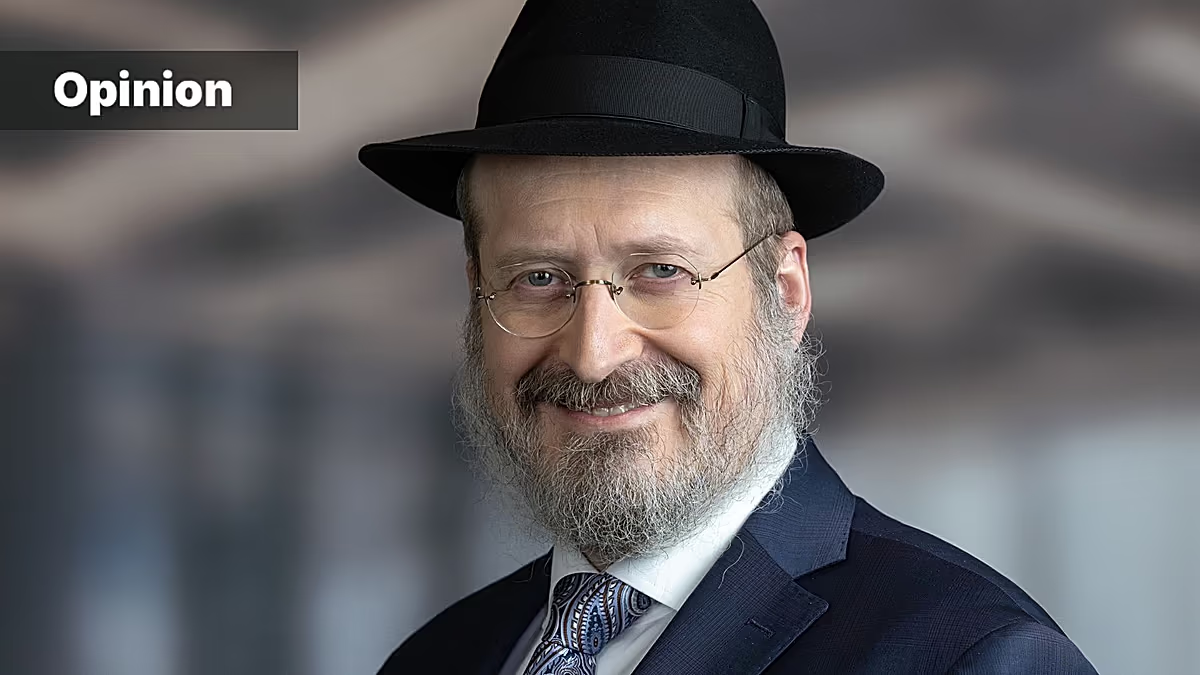
Walking through the bustling corridors of the Antalya Diplomacy Forum, surrounded by ministers, diplomats, and security officials, my kippah made me a distinct figure. The quiet surprise of a senior U.S. official—”I was not expecting to see a rabbi here”—highlighted a common, though not unkind, misconception. Yet, my presence was not an anomaly but a reconnection. Rabbis and Jewish communities are not recent additions to this landscape; they are woven into the very fabric of Turkish and Middle Eastern history. Just twenty kilometers away lies the ancient city of Side, where beneath a modern house, archaeologists uncovered a seventh-century synagogue. Its floor bears an engraved menorah and a poignant inscription in Hebrew and Greek, recording a father’s renovation in memory of his young son, closing simply with “Shalom.” This community’s roots stretch back even further, evidenced by a Roman letter from 142 BCE requesting protection for local Jews and a marble column carved with a menorah found in Antalya’s Old Town. My hope to read Torah in this region this November is not an intrusion, but a return to a continuous story that spans from antiquity to the present day.
The initial hours at the forum were a study in reserved isolation. The kippah drew glances—some amused, some frowning—as people passed by, a dynamic that, sadly, has become familiar even in parts of Europe. The shift began with the Qatari delegation. When ministers from Doha engaged with me openly and respectfully, it served as a signal to others, granting a kind of social permission. By the second day, those who had avoided eye contact were introducing themselves. This contrasted with the immediate, warm connection with former Israeli peace negotiator Daniel Levy, with whom I quickly discovered shared synagogue ties in North London. These interactions culminated in a dinner hosted by President Erdoğan and Foreign Minister Fidan, where I engaged with regional leaders, including the Emir of Qatar and President Sharaa of Syria, whom I thanked for protecting Damascus’s Jewish community. While some conversations were challenging, laden with difficult rhetoric, the outcome was practical: the tangible plans for future visits to Damascus and Doha, and the expansion of our work, like supplying kosher food to Syrian Jews.
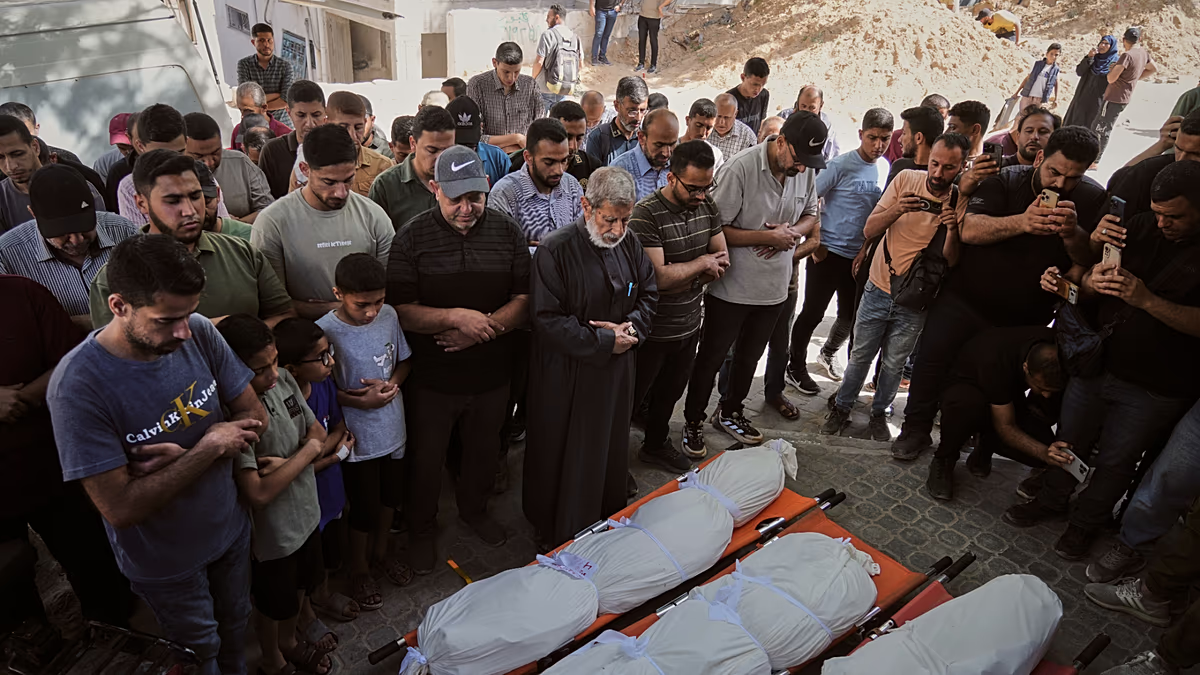
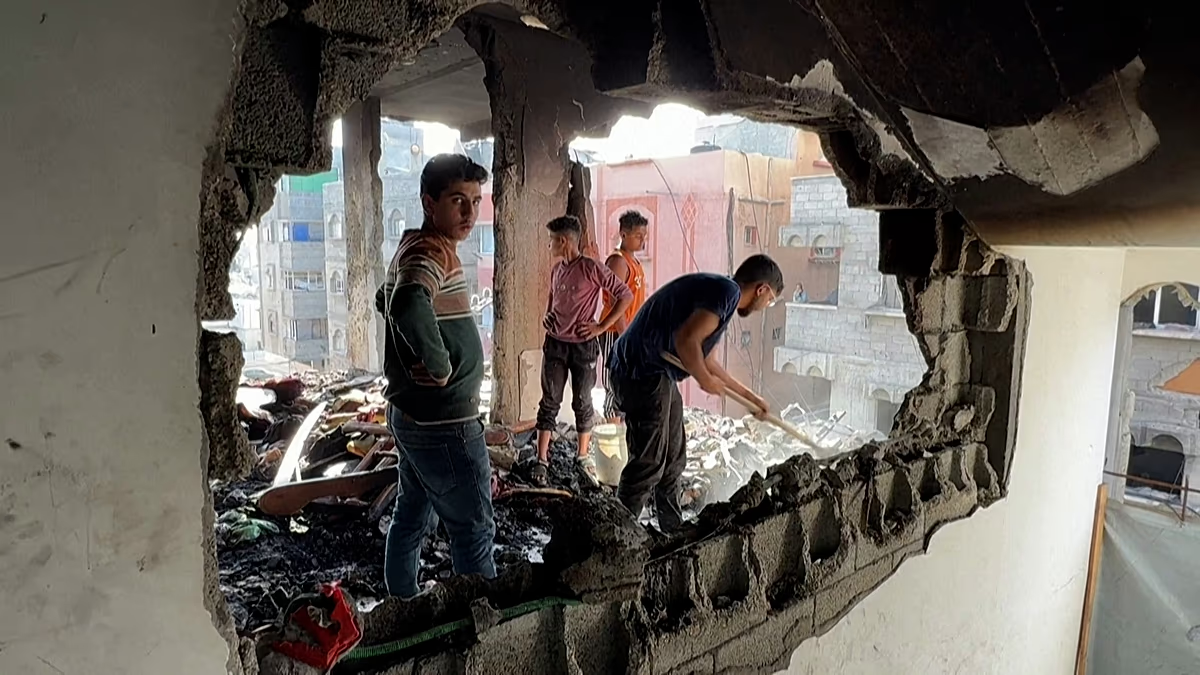
This practical work unfolds against a backdrop of profound fracture. Since October 7 and the ensuing war in Gaza, relationships that once felt natural have fallen silent. The immense suffering in Gaza understandably shapes the region’s perspective, while recurring violence against civilians in the West Bank deepens fear and erodes the fragile remnants of trust. It often feels as if the bridges between communities are being dismantled, one after another. Yet, history provides a crucial counterpoint. A kilometer from the forum’s venue in Belek stands a remarkable religious complex built in 2005, housing a synagogue, a church, and a mosque side-by-side. This modern structure is a testament to a deeper truth: Jewish life in this region is older than the current conflicts and has not ended. It is a resilient thread that persists.
This is why, when tens of thousands of delegates descend on Antalya for COP31 this November, I plan to be in Belek. We will provide kosher meals, welcome Shabbat in that very synagogue, and, if a minyan gathers, read from the Torah scroll we carry. A space built just twenty-one years ago will fulfill its purpose. This act is an answer to the quiet question that hangs in the lull after a ceasefire—not peace, but a pause: What now? As Hillel the Elder asked, “If not now, when?” Across continents, many, understandably, feel the instinct to withdraw. But we must find ways to speak, for without dialogue, there is no path forward. However, these words cannot remain abstract; they must be followed by concrete action. We are destined to live alongside one another, and we bear a responsibility to make that coexistence possible.
This journey requires a particular discipline, mirrored in the current days of counting the Omer toward the anniversary of receiving the Torah at Sinai. The counting is meticulous; you cannot skip ahead. True progress is built step by step. In this spirit, the sage Ben Azzai taught not to dismiss any person or disregard any thing, for everyone has their hour. This is not a call for uniform agreement, but for fundamental recognition of the other’s humanity and place in the world. This principle came to life at our Shabbat table in Antalya. Welcoming the Sabbath with an American journalist who has found a home in our Istanbul community, and making Havdalah together the next night, we were people who do not see every issue the same way. Yet, the table held us all the same.
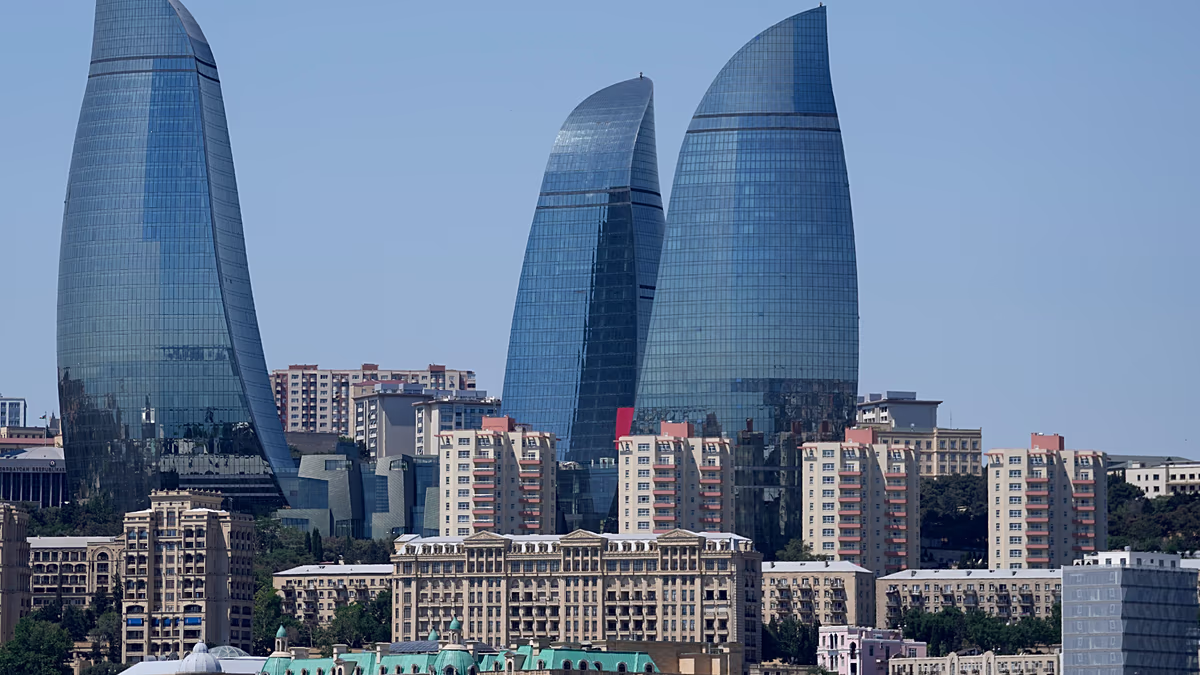
As Chairman of the Alliance of Rabbis in Islamic States, serving communities from Albania and Azerbaijan to Morocco, Turkey, and the UAE, this experience reaffirms our mission. In a time of immense pain and division, the work is to steadily rebuild the connective tissue—through shared history, practical aid, open encounter, and the simple, courageous act of showing up. It is to insist, through presence and action, that the ancient word “Shalom” inscribed on a synagogue floor centuries ago still echoes, waiting to be heard and made real in our shared, complex present.