


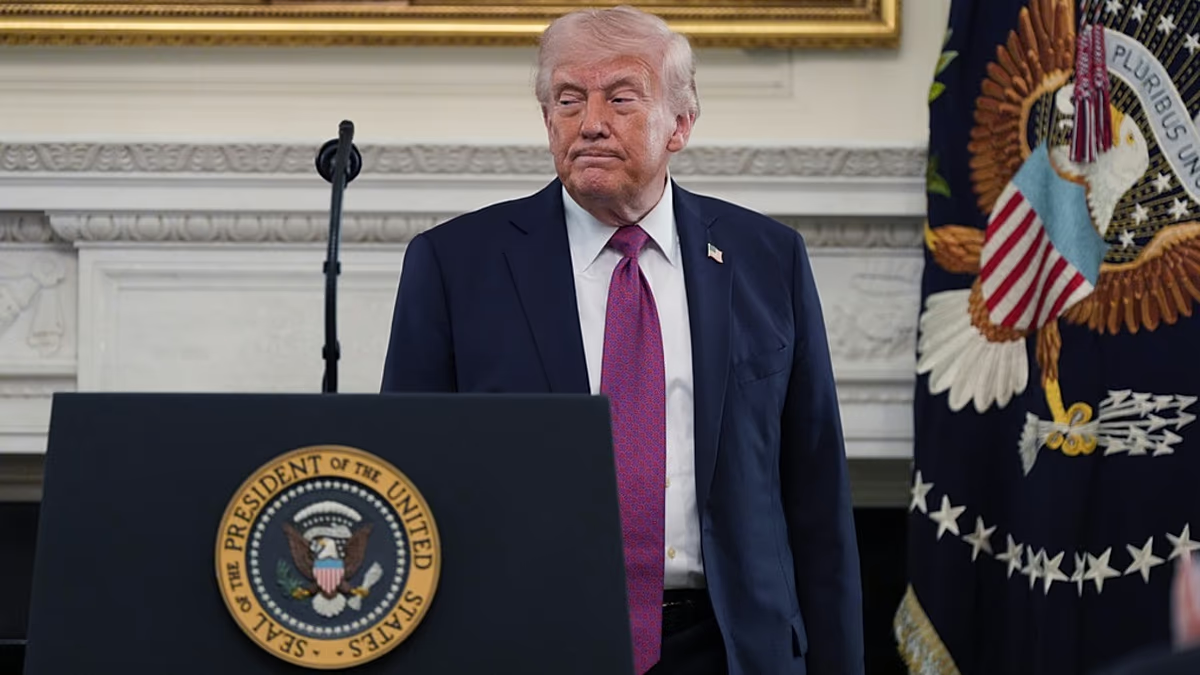
In a precarious moment of escalating tensions, the United States has agreed to extend indefinitely a fragile ceasefire with Iran, a decision announced directly by former President Donald Trump via his Truth Social platform. The extension comes as a critical diplomatic deadline loomed, with the existing truce set to expire. Trump framed the decision as a direct response to a personal appeal from Pakistan’s leadership, specifically Prime Minister Shehbaz Sharif and Field Marshal Asim Munir, who had urgently requested more time for negotiation. This move pauses, but does not resolve, a volatile standoff that has brought the two nations to the brink of renewed conflict, with global energy markets nervously watching. Sharif subsequently expressed gratitude for Trump’s “gracious acceptance,” highlighting the critical window this provides for ongoing peace efforts.
The backdrop to this eleventh-hour reprieve is a stalled diplomatic process. Pakistan, positioning itself as a neutral mediator, had planned to host a second round of talks between the adversaries. However, these plans were thrown into disarray when the White House suspended Vice President JD Vance’s planned trip to Islamabad. This pause followed Iran’s public rebuff of efforts to restart negotiations, with its Foreign Ministry spokesman citing “unacceptable actions” by the United States. The core of Iran’s grievance is a stringent U.S. naval blockade of Iranian ports, a retaliatory measure instituted after Iran itself closed the strategic Strait of Hormuz to maritime traffic. Thus, while the guns are silent for now, the fundamental economic and strategic pressures fueling the crisis remain fully in place.
President Trump’s announcement made unequivocally clear that the ceasefire extension is not a softening of the U.S. position. He explicitly stated that the punishing naval blockade would continue uninterrupted, asserting that Iran is suffering catastrophic economic losses—which he quantified at roughly $500 million per day—as a result. He portrayed the blockade as essential leverage, arguing that relieving the pressure would destroy any chance for a comprehensive deal. In his characteristically blunt rhetoric, Trump dismissed Iran’s public stance on the Strait of Hormuz as a mere face-saving gesture, insisting they desperately need it open for revenue. To underscore the blockade’s seriousness, he noted the U.S. Navy’s recent seizure of an Iranian cargo vessel attempting to evade the embargo, signaling vigorous enforcement.
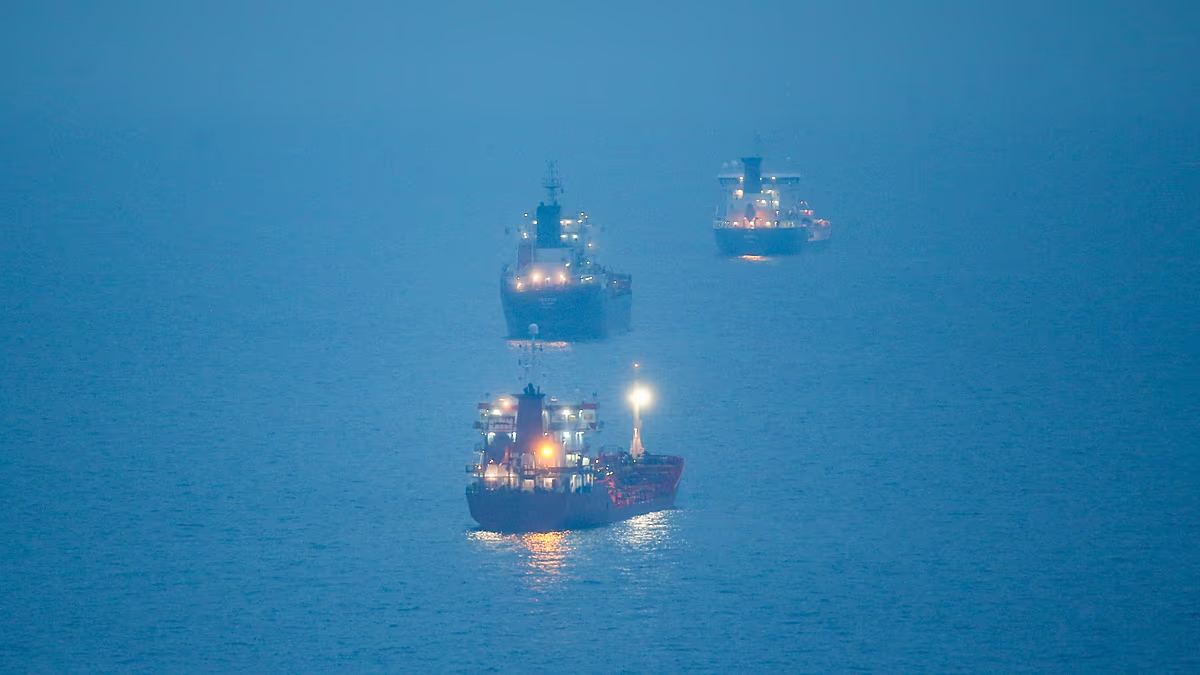
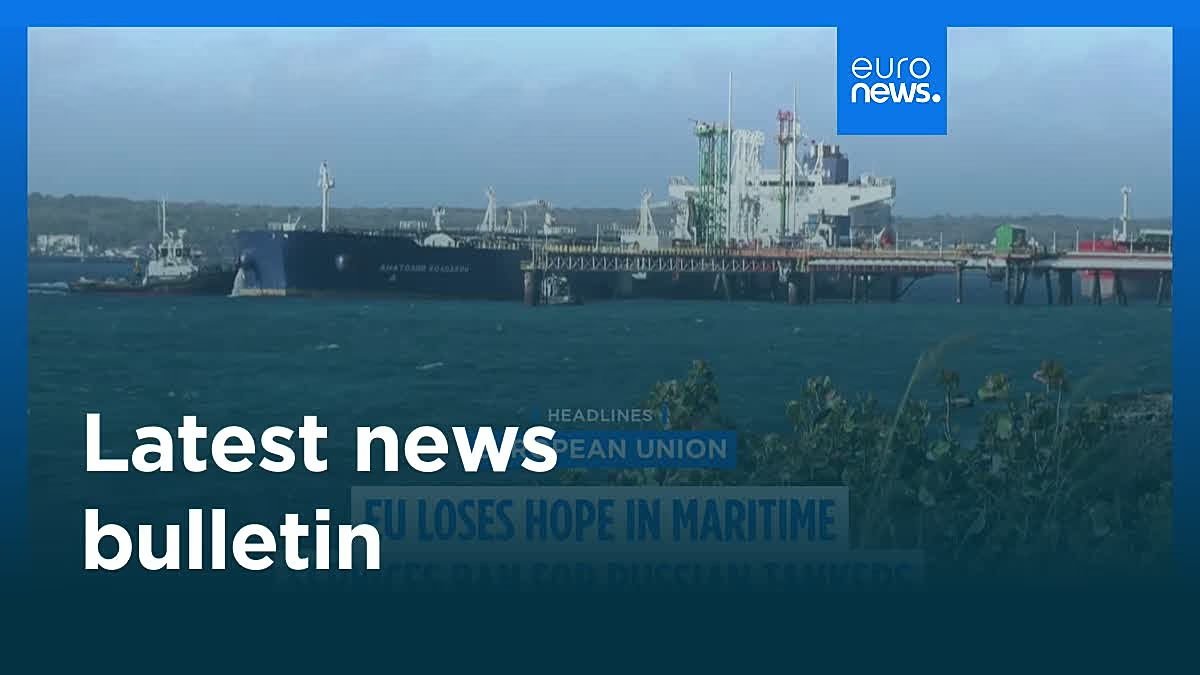
The human and economic ramifications of this prolonged confrontation are profound and global. The Strait of Hormuz is a chokepoint for approximately one-fifth of the world’s oil supply, and its effective closure has sent shockwaves through international markets. Brent crude oil prices surged toward $99 a barrel following Trump’s announcement, reflecting deep market anxiety over the potential for an immediate return to fighting. The U.S. has accused Iran of manufacturing a global oil crisis and “holding the global economy hostage,” while Iran counters that the Strait remains open to all nations except the U.S., Israel, and their allies. This war of words underscores how a bilateral conflict has rapidly metastasized into a threat to global economic stability, affecting energy prices and supply chains worldwide.
Despite the diplomatic window granted by the ceasefire, the path forward remains fraught with distrust and maximalist positions. Trump’s social media posts reiterated threats of devastating new attacks on Iranian leadership and military positions if a satisfactory deal is not reached, framing the situation as a binary choice between total submission or total destruction for Iran. Tehran, for its part, has shown no sign of capitulating under the blockade and has yet to formally respond to the ceasefire extension. The internal political fracture within Iran that Trump referenced complicates matters further, as it raises questions about whom, if anyone, can credibly negotiate a unified proposal for the Iranian side. The involvement of Pakistan adds a complex layer, as it seeks to broker peace while navigating its own regional interests.
Ultimately, the indefinite ceasefire represents a temporary de-escalation in a high-stakes game of brinksmanship where neither side is willing to publicly back down. It is a pause purchased by Pakistani mediation and sustained by the severe economic pressure of the U.S. blockade. The world now watches to see if this pressured pause can evolve into genuine dialogue or if it is merely an intermission before a more violent chapter. The continued closure of the Strait of Hormuz serves as a constant, tangible reminder of the stakes, with every day of instability translating into higher fuel costs and economic uncertainty for millions around the globe. The coming days will test whether diplomacy can overcome deep-seated hostility, or if the momentary calm is simply the eye of the storm.