


The Unseen Grieving of Gaza: Lives Lost Amid a Fragile Silence
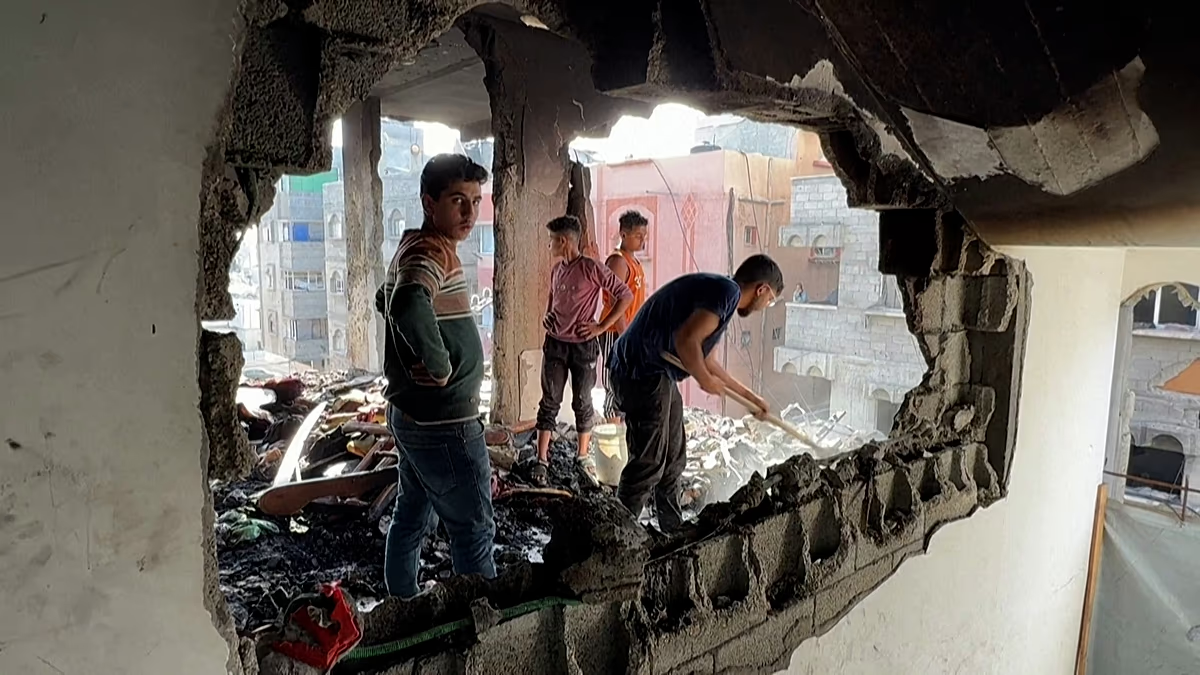
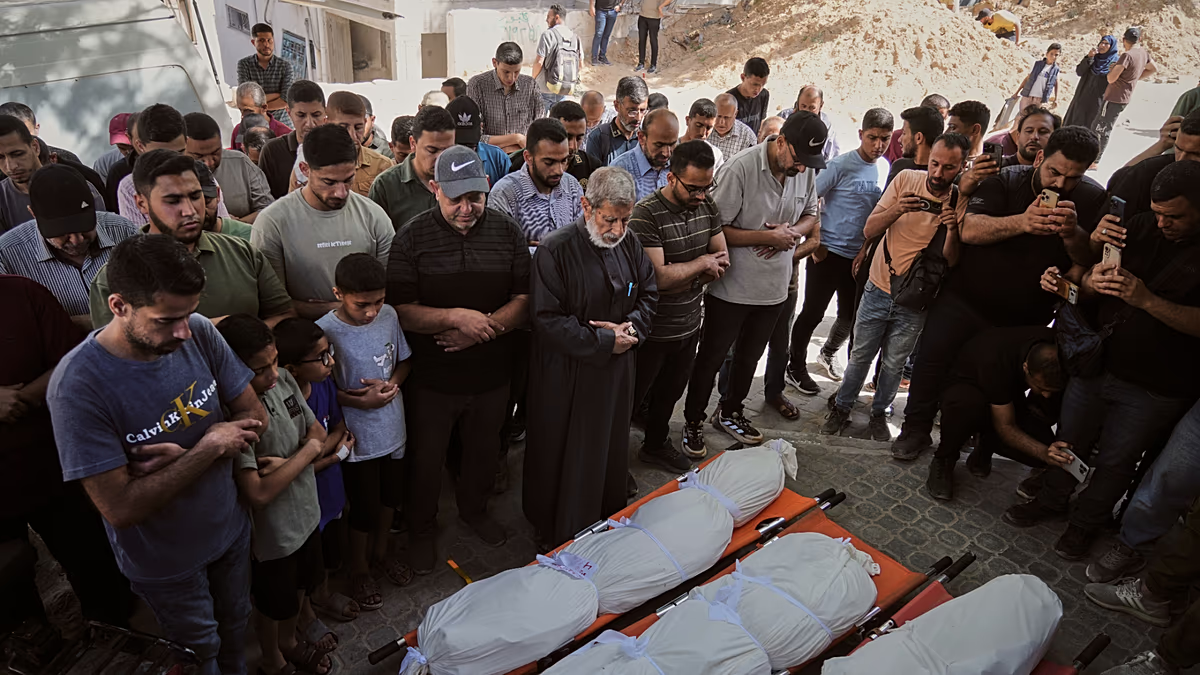
In the stark, fluorescent-lit halls of Gaza City’s Shifa Hospital, a scene of profound sorrow unfolds with a grim regularity that has become tragically familiar. Relatives gather, their faces etched with a pain beyond words, as the bodies of loved ones—this time, two women and two children—are prepared for their final journey. This intimate, harrowing ritual of grief stands in silent contrast to the explosive violence that delivered them here. Just hours before, in the dead of night, Israeli airstrikes tore through at least four separate locations across the city. The aftermath, captured in wrenching footage, reveals residential buildings reduced to skeletons of concrete and rebar, with personal belongings—toys, clothing, fragments of furniture—lying blood-stained amidst the dust and debris. Each shattered wall and scattered memento tells a silent story of a home, and a life, violently interrupted.
These deaths are a brutal testament to the fragile and fraying nature of a ceasefire that was once a beacon of hope. Agreed upon in October to halt a conflict that has raged for over two years, the truce has succeeded in stopping large-scale ground invasions and mass aerial bombardments, yet it has failed to deliver peace or safety. While the drums of full-scale war have softened, the ticking of a deadly clock has not ceased. Israeli forces continue to conduct targeted airstrikes and military operations, arguing they are necessary responses to persistent security threats and violations of the agreement. From the perspective of Gaza’s besieged residents, however, this distinction offers little solace; the explosion that shatters a bedroom window is no less deadly because it is labeled a “targeted strike” rather than an act of all-out war.
The human cost of this tense limbo is etched in grim statistics. According to Gaza’s Health Ministry, more than 936 Palestinians have been killed since the ceasefire officially took effect. This number is not an abstract figure; it represents hundreds of scenes like the one at Shifa Hospital, hundreds of families shattered, and a continuous, rolling trauma that permeates every aspect of daily life. The ceasefire, therefore, exists in a chilling paradox: it is both a real reduction in catastrophic violence and a period of sustained, lethal insecurity. For the people of Gaza, it is a peace that does not feel peaceful, a calm punctuated by sudden, terrifying noise and loss.
Compounding this tragedy is a palpable sense of global abandonment. As these latest victims were mourned, the world’s diplomatic and media attention has been largely captivated by the escalating tensions along Israel’s northern border with Lebanon, where exchanges of fire with Hezbollah threaten to ignite a second, catastrophic front. This parallel crisis, while grave, has inadvertently drawn the spotlight away from the slow-burning emergency in Gaza. The violence here continues to claim lives almost daily, yet without the dramatic, concentrated intensity that captures international headlines, creating a dangerous perception that the Gaza conflict is somehow “on hold” or resolved.
This ongoing reality reveals a profound human truth often lost in geopolitical analysis: the trauma of conflict does not end with a signed agreement. The grieving at the hospital, the search through rubble for belongings, the constant anxiety of the next sirens—these are the enduring legacies of war. The children killed were not just casualties of a single airstrike but victims of a protracted atmosphere of fear and instability. The women lost were often the pillars holding families together amidst the crisis. Their deaths perpetuate cycles of anguish and deprivation that will last for generations, long after the terms of any truce are debated in distant capitols.
Ultimately, the scene at Shifa Hospital is more than a news item; it is a stark human indictment. It challenges the international community to look beyond the headlines of broader regional escalation and recognize the unending emergency within Gaza itself. A ceasefire that still allows for daily fatalities and nightly terror is a fragile construct indeed. True peace requires more than the absence of major battles; it demands a fundamental commitment to human security and dignity, ensuring that families can mourn their elders in peace, not bury their children in war. Until that commitment is made, the quiet weeping in hospital corridors will remain the most poignant summary of a conflict unresolved.