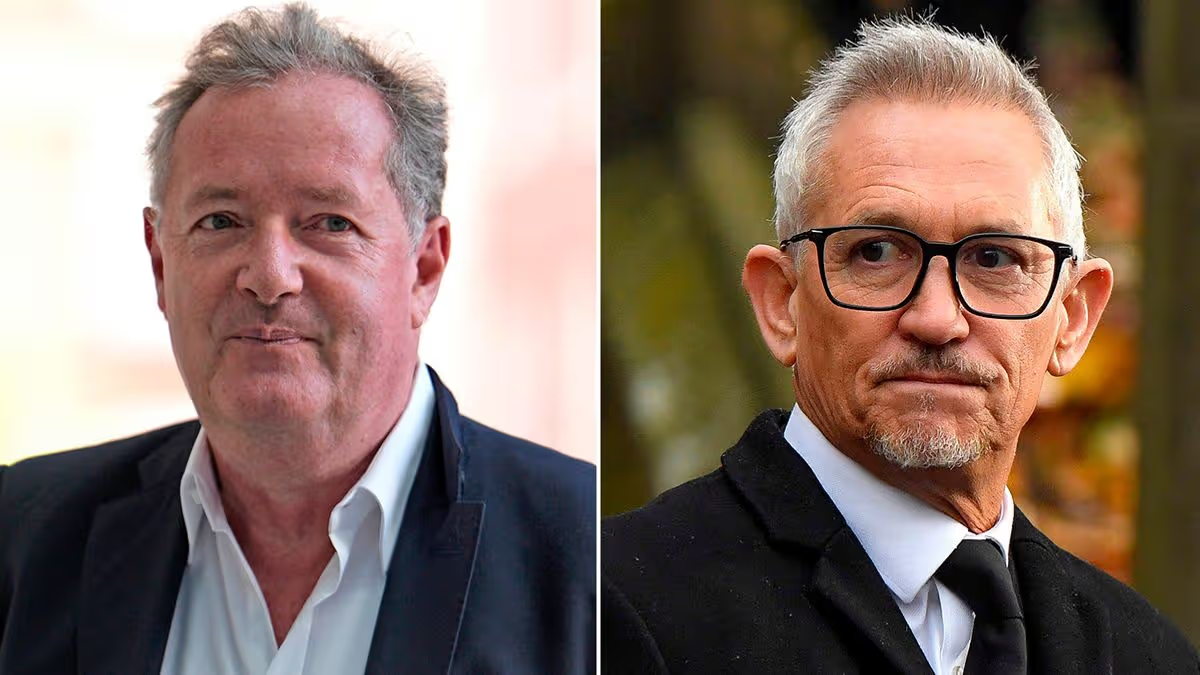



The world of sports broadcasting is heating up with a classic clash of personalities, as Piers Morgan prepares to challenge Gary Lineker’s dominance with a rival World Cup podcast. This move marks a fascinating shift in how major football tournaments are covered, moving beyond traditional networks into the dynamic and opinion-driven arena of streaming and independent media. Morgan’s new venture, World Cup Uncensored, promises unfiltered debate with guests like former England captain John Terry and commentator Simon Jordan, directly positioning itself as a brasher, more confrontational alternative to the established format. The stage is set not just in studio booths, but in the court of public opinion, where banter and rivalry are as much a part of the game as the analysis itself.
Morgan launched his salvo with characteristic cheek, taking a direct jab at Lineker’s successful The Rest is Football podcast. By tagging his own show’s promotion with the phrase “The rest is boring,” Morgan didn’t just announce a new program; he declared a friendly war. This calculated dig, aimed at Lineker’s Goalhanger productions, which holds a lucrative multi-million pound deal with Netflix, is a masterclass in Piers Morgan’s public persona—always provocative, never shy of stirring the pot. While reports suggest the quip may not have been universally appreciated within Lineker’s camp, Morgan himself downplays any genuine malice, framing it as the kind of good-natured ribbing that defines football culture.
Indeed, in subsequent comments, Morgan has been quick to express his respect for Lineker and his team, acknowledging their pioneering work in the podcasting space. He suggests there is ample room for multiple voices and styles in covering a global event like the World Cup, portraying the competition as healthy and stimulating for viewers. The image he paints—of a potential “High Noon” showdown with Lineker in New York’s Times Square—is less about animosity and more about spectacle. It highlights how modern media rivalries can generate buzz and engagement, turning analysis into must-watch entertainment. This narrative of two broadcasting titans, one the respected veteran and the other the fearless polemicist, creates a compelling subplot to the tournament itself.
For his part, Gary Lineker enters this new chapter with a notable sense of liberation. Having departed the BBC in 2025, the former England striker speaks openly about the creative freedom he now enjoys, no longer feeling constrained by the perceived “eggshells” of a public service broadcaster. His move to Netflix with Goalhanger represents a significant industry shift, where top-tier talent is building empires outside traditional TV networks. Lineker’s mild surprise at the BBC’s decision to largely broadcast from their UK studios, rather than from the heart of the action in the United States, subtly underscores his own strategic choice to be on the ground, immersed in the tournament’s atmosphere.
Lineker’s perspective frames his new project not as a direct competitor to mainstream broadcasters like the BBC or ITV, which hold the precious live match rights, but as a complementary companion piece. The Rest is Football offers deep-dive analysis, interviews, and behind-the-scenes access that live coverage often cannot accommodate. This nuanced view suggests a maturing media landscape where different formats coexist, catering to varied fan appetites. While Morgan promises “uncensored” fireworks, Lineker offers authoritative insight and camaraderie with co-hosts like Alan Shearer and Micah Richards. The audience ultimately wins, presented with a diverse menu of content styles.
As the 2026 World Cup approaches, this duel of the airwaves symbolizes a broader evolution in sports consumption. Fans are no longer passive recipients of a single narrative; they are curators of their own experience, choosing between authoritative analysis, unfiltered debate, and everything in between. The rivalry between Morgan and Lineker, fueled by a mix of genuine respect and playful provocation, enriches the tapestry of the tournament’s coverage. Whether viewers side with the fearless debate of World Cup Uncensored or the esteemed commentary of The Rest is Football, one thing is certain: the conversation around the beautiful game is more vibrant, diverse, and engaging than ever before.